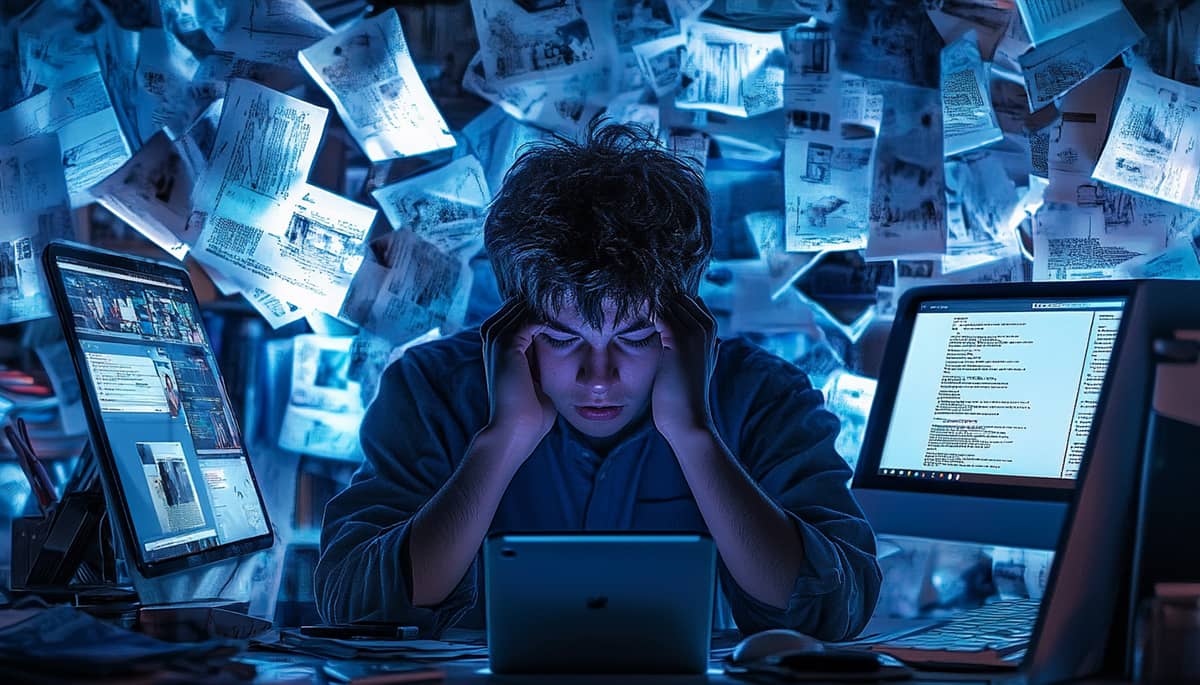


Social media has become one of the most powerful forces shaping modern human life. It is no longer just a means of entertainment or connection; it has evolved into an environment that determines how people communicate, what they think about, and in many ways, even how they view themselves. Although it offers undeniable benefits such as instant communication, global networking and access to information, its downside often outweighs these benefits. Beneath the colourful profiles, endless streams of pictures, celebratory posts and inspirational captions, there exists a deep undercurrent of pressures and dangers that affect mental health, social relationships and even cultural stability. These pressures and dangers are subtle, often invisible, but have a huge impact on individuals and societies alike.
The first pressure that emerges from social media is the demand for constant self-presentation. Unlike earlier times, when private life remained largely private, today people feel compelled to turn almost every personal experience into a public display. Holidays, meals, accomplishments, even moments of sadness are posted online not just to be shared but to invite reactions. This creates an invisible pressure to stage one’s life in a way that makes it seem better, more exciting and more successful than it really is. Birthdays are no longer a simple celebration with family; they become a carefully staged photo opportunity. Evening walks are turned into content creation exercises, with careful selection of filters and captions. The subtle danger here lies in the shift from living authentically to living for performance. People begin to value experiences not for their intrinsic joy but for their potential to be liked, commented on or shared. Over time, the line between reality and performance becomes blurred, and individuals begin to measure their worth based on how their lives appear to others, rather than how they actually feel.
This creates another serious pressure: comparison. In the material world, people naturally compare themselves to friends, neighbors, or coworkers, but social media exponentially amplifies this tendency. Instead of a handful of comparisons, a person is now confronted with thousands of carefully edited depictions of beauty, wealth, success, and happiness. When a person scrolls through their feed, they see vacation photos from exotic locations, gym selfies showing off perfect bodies, updates about new jobs or accomplishments, and pictures of flawless relationships. What is often forgotten is that these posts represent a filtered slice of reality. People rarely share their failures, insecurities, or struggles as much as their victories. Yet, the human brain internalizes these selected depictions as if they reflect the whole truth. The danger here is that individuals begin to feel inadequate, jealous, or depressed, as they are constantly convinced that others are living better lives than they are. This comparison is not only exhausting, but also extremely damaging to self-esteem, creating a cycle in which people put more pressure on themselves to keep up appearances, which further increases their stress.
Also closely linked to this cycle is the addictive nature of social media. Platforms are designed to maximize engagement by exploiting psychological triggers. Features such as endless scrolling, notifications, likes, and shares are not accidental; they are carefully engineered to release the brain’s pleasure chemical dopamine every time someone interacts with the platform. This addictive mechanism keeps users hooked for hours, even when they originally only wanted to check their feed for a few minutes. The pressure here is subtle but profound. People feel they must constantly check their phones to stay updated, as they fear they may miss out on something important, often referred to as FOMO, or fear of missing out. The danger lies in how this compulsive behavior destroys attention span, disrupts real-life interactions, and even contributes to sleep deprivation. The constant allure of social media steals time from study, work, relationships, and leisure, making it the hidden thief of productivity and well-being.
Social media also brings with it the danger of online validation dependency. Humans naturally seek approval, but the platforms amplify this desire by turning it into visible metrics—likes, followers, shares, and comments. What was once a subtle desire to be accepted into a small community has now become a public scoreboard of popularity. The pressure to get likes can lead individuals to post content that does not reflect their true identity, but rather reflects what they believe will attract attention. Young people are especially vulnerable to this pressure. A teen may post a photo and then anxiously monitor their phone, refreshing the screen to see how many likes they receive within the first few minutes. If the response is not as expected, it can trigger feelings of rejection, shame, or worthlessness. The danger here is that of psychological dependency: the individual’s self-worth becomes tied to these numbers, creating an emotional rollercoaster that is controlled not by their intrinsic values, but by the unpredictable reactions of the online audience.
Another layer of pressure comes from the demand to always be connected. Unlike in earlier times, when people would disconnect from social interactions after leaving school, work or a function, social media keeps the door open at all times. Messages, tags, mentions and notifications create the expectation that one should be constantly available. This connectivity is presented as a convenience, but it often becomes a burden. People feel guilty if they don’t respond immediately, they worry that they may appear rude, indifferent or neglectful. This pressure is particularly harmful in professional situations, where employees may feel obliged to respond to work-related messages even during their personal time. The danger here is the erosion of boundaries between personal and professional life, rest and work, private and public time. Without boundaries, stress mounts, and one finds oneself in a state of permanent partial attention, never fully relaxed, never fully engaged, always in between.
Cyberbullying represents one of the most obvious dangers of social media. Unlike face-to-face bullying, which is limited to physical presence, online harassment has no such boundaries. A single negative comment, a cruel meme, or a targeted slander campaign can spread rapidly and reach a huge audience. Victims often feel powerless, as their reputation and dignity can be publicly attacked, and they have no recourse. The anonymity offered by social media platforms emboldens attackers, who can say things online that they would never dare to say in person. This creates a great deal of pressure on individuals; they may self-censor, avoid sharing personal content, or withdraw completely to avoid becoming a target. The psychological wounds of cyberbullying can be deep, sometimes leading to depression, anxiety, and in severe cases, self-harm.
Privacy concerns add another dimension to the dangers of social media. While many people post freely, very few are fully aware of how their data is being collected, analyzed, and used. Social media companies collect massive amounts of information about users—their preferences, behaviors, locations, and connections. This data can be sold to advertisers or, worse, fall into the hands of malicious actors. The pressure here is more subtle, as individuals may feel they must give up parts of their privacy to remain socially relevant. Every photo uploaded, every like clicked, every search made becomes part of a digital footprint that can be tracked indefinitely. The threat is not only personal, but also societal, as large-scale manipulation through targeted ads or misinformation campaigns can shape public opinion, influence elections, and erode trust in democratic processes.
The psychological dangers of social media extend to the realm of mental health disorders. Studies have shown that there are strong links between excessive social media use and conditions such as anxiety, depression, and loneliness. While these platforms promise engagement, they also often create a paradoxical sense of isolation. A person may have hundreds or thousands of online friends, yet feel deeply lonely when interactions remain superficial. The pressure to appear happy, successful, and socially active exacerbates this loneliness, as individuals cannot express their real struggles for fear of shattering the illusion they have created. This disconnect between the virtual self and the real self deepens emotional exhaustion and creates a hollow sense of existence.
Furthermore, social media promotes the spread of misinformation and harmful ideologies. The algorithms that power these platforms prioritize engagement over truth. Content that is controversial, sensational, or emotionally charged attracts more attention, regardless of its accuracy. This creates a dual pressure: on individuals, who have to operate in an environment filled with unreliable information, and on society, which faces polarisation and division as false narratives spread unchecked. The danger is evident in how quickly conspiracy theories, extremist propaganda or misleading health advice can become popular, sometimes even leading to life-threatening consequences, as seen during global health crises.
In addition to these psychological and social dangers, social media also endangers physical health. Sedentary lifestyles associated with excessive screen time lead to problems such as obesity, poor posture, eye strain and disruption of sleep patterns. The blue light emitted from screens interferes with the natural sleep cycle, leaving users restless and tired. The pressure to stay online late into the night, whether for entertainment or social interaction, further exacerbates these problems. Although these physical dangers may seem secondary to mental health concerns, they are deeply intertwined, as poor physical health often leads to poor psychological well-being.
On a cultural level, social media puts pressure on society towards uniformity. Although it provides exposure to diverse viewpoints, it also encourages conformity to global trends. Local traditions, languages and identities are at risk of being overshadowed by viral challenges, fashion fads and global influencers. The danger is subtle but significant: cultures that once thrived on unique practices may gradually lose their distinctiveness in the pursuit of digital identity. This cultural flattening is not only a loss of heritage, but also a weakening of community bonds, as younger generations prefer virtual affiliations over local identities.
Even relationships are not immune to the dangers of social media. Romantic partnerships, friendships and family dynamics all face new pressures. Couples may argue over online interactions—who liked whose posts, who commented on what, who spends too much time scrolling rather than being present. Friendships are tested by the expectation of constant engagement, as not liking or commenting can be seen as neglect. Families have to grapple with the invasion of devices at dinner tables, replacing conversation with silent scrolling. The danger here is how social media erects invisible walls between people who are physically together but mentally elsewhere, trapped in digital spaces that pull them away from meaningful face-to-face connection.
The pressures and dangers of social media, when taken together, form a vast and complex web. They affect individuals psychologically, emotionally, physically and socially, while also shaping the broader cultural and political landscape. The true weight of these pressures is often invisible, as they creep in slowly through habits, expectations and subtle comparisons. Yet, their dangers are much deeper, changing the way people see themselves, their relationships with each other and the way society functions as a whole.
Read Also:
- Dangers Of Social Media Use In The Present Times
- Teens And Social Media Use In The Current Times
- Finding Fulfilment And Happiness Outside Of Social Media
- Good Ways To Use Social Media Safely
- Mental Health Effects Of Social Media
- Bad Effects Of Social Media On Health
- Why We Shouldn’t Trust Social Media Content Ads
- Seeking Help From Police And Other Official Departments To Verify Social Media Content As Genuine Or Fake
- Don’t Believe Everything You See On Social Media
- Complain Against Someone Who Shares Or Posts Bad And Fake News On Social Media To Local Police Stations, Cyber Crime Departments And Even Authorities Like The CBI
- How Bad And Fake News Are Increasing Day By Day Due To Social Media
- Criminal Cases Are Increasing Day By Day Due To Social Media
- Impact Of Social Media On Daily Life
- The Impact Of Social Media On The Worldwide Public
- The Impact Of Social Media On Politics
- Impact Of Social Media On Education
- Why Social Media Trends Are Growing Day By Day Around The World
- The Impact Of Social Media On Worldwide Society
- Bad Effects Of Social Media On Teens
- Bad Effects Of Social Media On Adults
- Bad Effects Of Social Media On Older Citizens
- Disadvantages Of Social Media
- Benefits Of Social Media
- History Of Social Media
- What Is Social Media
- Social Media Crimes
- Passwords Of 184 Million People Leaked On The Internet: Banks, Social Media And Government Portals Affected, Thus Avoiding Fraud
- Musk Accuses Ukraine Of Being Behind Cyber Attack On X: Attacks From IP Addresses There; Social Media Platform Was Down For Three And A Half Hours
- Immediate Requirement Of Judicial Reforms To Deal With Financial Fraud And To Ensure Compensation For Victims
- The Influence Of Digital Technology To Change People’s Behavior In Using The Media
- Artificial Intelligence In Healthcare – A Revolution In Social Health Care System
- Negative Social Impacts Of Artificial Intelligence
- 60 Good and Bad Effects Of Smartphones On Our Social Lives
- Big Awareness Alert: Fraudulent Contact Numbers And Playboy Job Scams In India
- Powerful And Respected Politicians Of The Current BJP Government
- Online Romance Scam
- Mamata Banerjee Good Works As Chief Minister Of West Bengal