

In this article we have provided information about the Indian space programme. The information given here will prove useful for children and students preparing for competitive examinations.
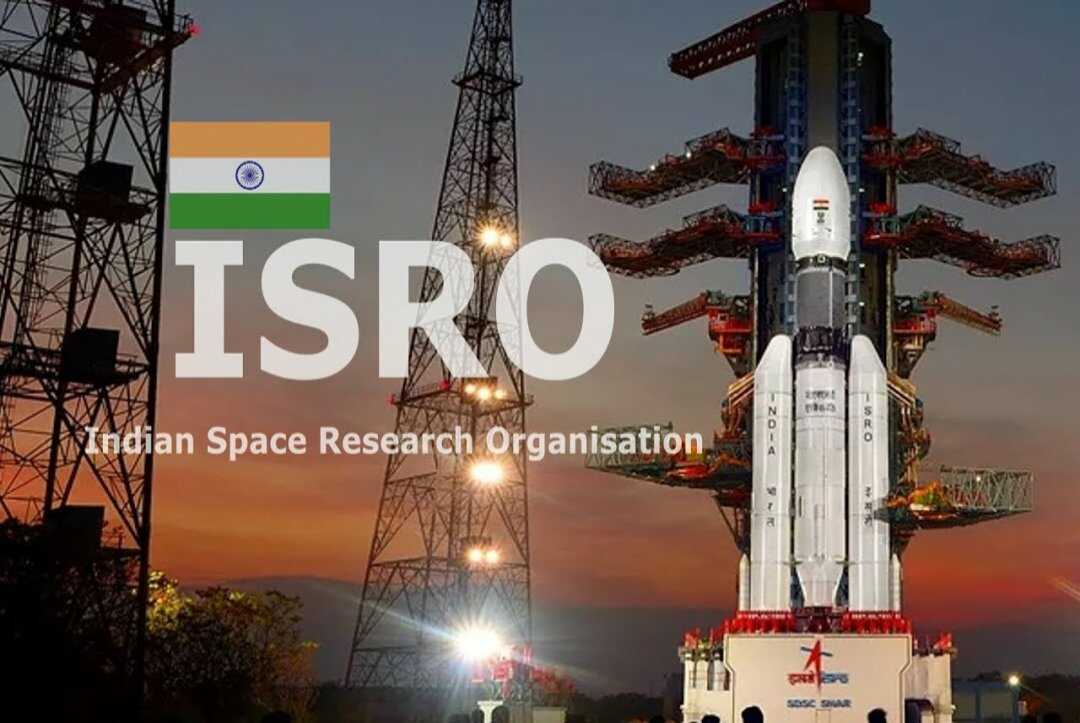
All Indian space programs are operated under the authority of the Indian Space Research Organization (ISRO). ISRO was established on 15 August 1969, with the brilliant motto of space technology in the service of mankind.
ISRO’s legacy dates back to the year 1975 when they launched the Aryabhatta satellite which is named after the famous Indian astronomer and inventor of zero. ISRO is one of six government space organizations in the world that has full launch capabilities, operates large fleets of artificial satellites, deploys cryogenic engines, and launches extra terrestrial missions.
The Indian space program began in 1962 with the establishment of INCOSPAR (Indian National Committee for Space Research). In 1972, the space program was formalized with the formation of DOS (Department of Space) and the Space Commission. This was done to formulate and implement policies related to space research and space technology in the country.
The nodal agency for coordinating research and development activities related to space science and technology is the Space Commission. And DOS is the executive wing of this Space Commission which operates through major national organizations like ISRO, NRSA, PRL, NMRF, NE-SAC etc. DOS also assists academic institutions by sponsoring projects related to space research.
In 1969, the Government of India established ISRO with the aim of rapid development in the Department of Space Technology and its application. The Indian Space Research Organization (ISRO) was founded by Dr. Vikram Sarabhai as his chairman in Ahmedabad, and the organization was headquartered in Bengaluru (then called Bangalore).
As Chairman of the apex body, Dr Vikram Sarabhai helped in formulating guidelines, formulating policies and monitoring the implementation of all national space policies. ISRO’s objective is directed towards self-reliant use of space technology and data for India’s development.
After the successful satellite launch, ISRO has helped the nation in the field of mass communication and education. ISRO also aims to monitor the survey and management of national natural resources using remote sensing technology, meteorological forecasting and environmental monitoring. Indian space programs included the development and launch of several indigenous satellites, launch vehicles, space orbits and rockets.
Apart from ISRO, some Indian space research organizations are as follows:
Space Applications Centre (Space Applications Centre): SAC is the organization based in Ahmedabad that engages in the development of payloads for satellite communications, remote sensing and meteorology.
Vikram Sarabhai Space Centre (Vikram Sarabhai Space Centre): VSSC is the lead organization for the development and launch of various satellite and satellite vehicles and similar related space technology. VSSC is located in Thiruvananthapuram, India.
Liquid Propulsion Systems Center (Liquid Propulsion System Centre): The lead organization in India to develop liquid and cryogenic propulsion for satellites and launch vehicles is LPSC.
Apart from the research and development areas of the Indian space programme, the company looking after commercial marketing of space-related products and services is called space Corporation. Space Corporation is a wholly government-owned company that was established in 1992.
Some of the major achievements of Indian space programs are the successful launch and operation of many satellites and satellite vehicles, such as Astrosat, Mangalyaan, Chandrayaan 1 and 2, PSLV, GSLV, etc. It is good to see that the government has invested a lot in Indian space programs in the last two decades. The Indian space program has come a long way, and miles have to go to establish India as the best in space science and technology in the entire world.
India has emerged as a big name in the world for the rapid progress in the field of research and development related to space. The Indian space program includes research and development in astrophysics, atmospheric science, astronomy, theoretical physics, planetary and earth sciences etc.
It can be said that the Indian space program started its legacy with the launch of its first space satellite named Aryabhatta on 19 April 1975. India did not delay launching its second satellite, named Bhaskar, on 7 June 1979, shortly after the first satellite launch. India has also left a milestone in the history of space science and technology by launching Chandrayaan for its Moon mission.
All this progress in space research great visionary scientist Dr.Started with Vikram Sarabhai. And that’s why Dr. Sarabhai is called the father of the Indian space programme. Indian space programs aim to promote the development of space science applications and technology for the benefit of the socio-economic conditions of the country.
Lines On The Indian Space Programme
- The space agency is the Indian Space Research Organization (ISRO) under the Department of Space, Government of India.
- ISRO is headquartered in Bengaluru city of Karnataka state, India.
- Jawaharlal Nehru established the Indian National Committee for Space Research (INCOSPAR) in 1972 under the Department of Atomic Energy (DAE).
- ISRO has a vision to use space technology for the development of the country and pursue space science research and planetary exploration.
- Founding father of Indian space programme, Dr.Vikram was Sarabhai, under whom space research activities were initiated during the 1960s.
- Ramanathan and Dr. Under Sarabhai’s leadership, the Indian National Committee for Space Research (INCOSPAR) was initiated.
- The Indian National Satellite (INSAT) system, established in 1983 with the commission of INSAT-1B, is one of the largest domestic communications satellite systems in the Asia-Pacific region.
- The first lunar orbiter sent by ISRO was Chandrayaan-1 on 22 October 2008.
- ISRO set a world record on 15 February 2017, when they launched one hundred and four satellites in a rocket named PSLV-C37.
- Future plans of the Indian space program include development of an integrated launch vehicle, reusable launch vehicle, small satellite launch vehicle, human space flight, solar spacecraft missions etc.
Frequently Asked Questions on Indian Space Programme
Question 1. Is it the marketing arm of ISRO?
Answer: The marketing arm of ISRO is Antrix Corporation Limited (ACL) which is responsible for the promotion, transfer of technology and commercial exploitation of space products and services.
Question 2. What are the three different elements of the Indian space programme?
Answer: Since the inception of the Indian space programme, there were three different elements, such as space transportation systems, satellites for communications and remote sensing, and application programmes.
Question 3. How are the data of satellites launched by ISRO helpful for the country?
Answer: Data collected by satellites help many areas of the country like agriculture, disaster management, urban planning, rural development, water resources, mineral prospecting etc.
Read Also:
- Importance Of Technology
- Important Information About Technology
- This Technology Will Instantly Identify Heart Diseases
- Advanced Military Technology In Russia
- Artificial Intelligence (AI) And Technology In Health Care: Overview And Possible Legal Implications
- Green Artificial Intelligence(AI) Technology In Various Sectors
- Using Green Artificial Intelligence (AI) Technology In Fintech
- Negative And Positive Impacts Of Using Artificial Intelligence (AI) In The Information Technology Sector
- Key Challenges Of 6G Technology
- Wi Fi Offloading Technology Overview And Approaches
- Development Of 5G Technology