
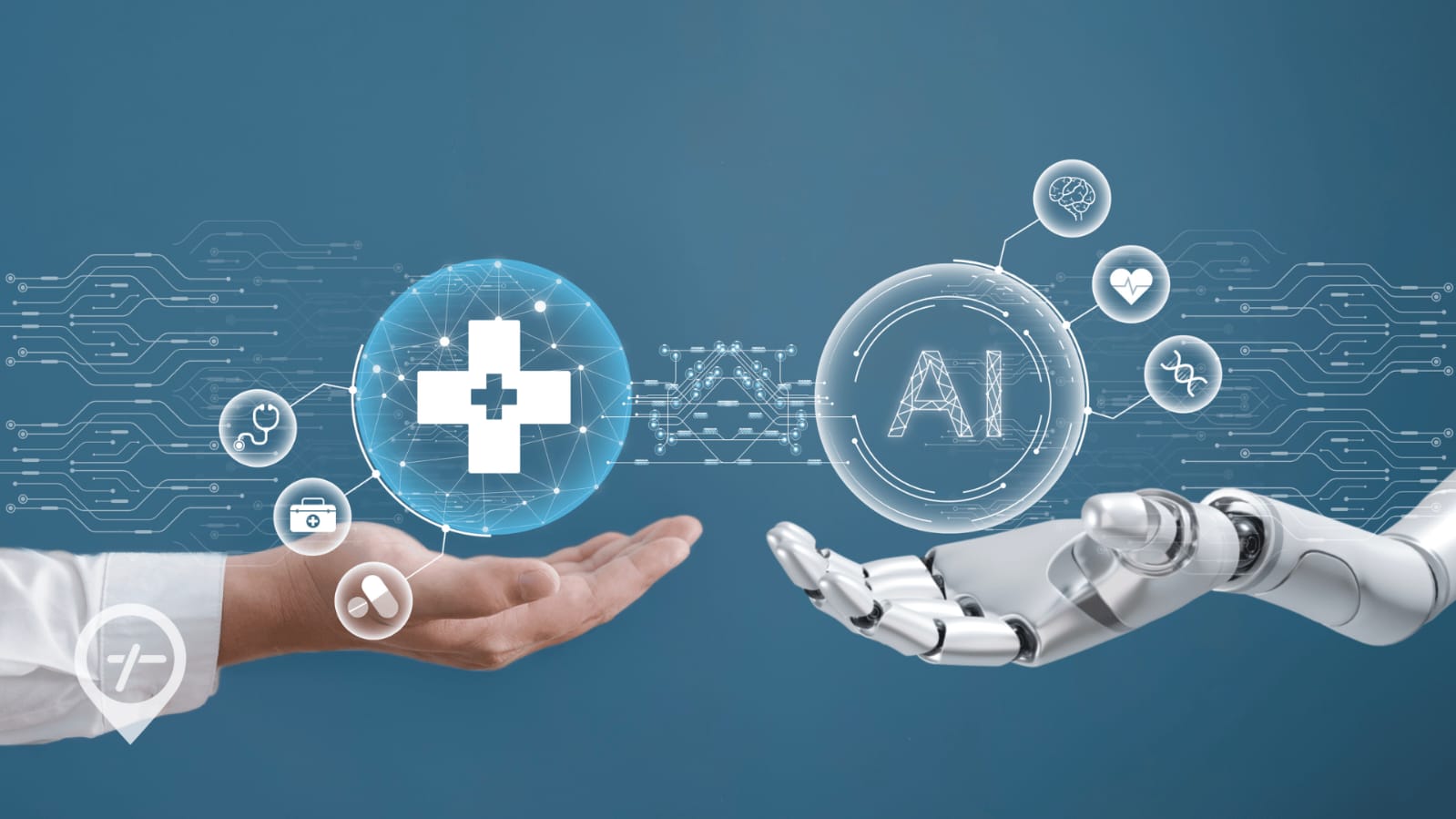


Artificial intelligence is the use of complex algorithms and software in healthcare. In other words, artificial intelligence (AI) is the simulation of human cognition in the analysis, interpretation and understanding of complex medical and healthcare data. Specifically, AI is the ability of computer algorithms to draw predictive conclusions without direct human input.
What differentiates AI technology from traditional technologies in health care is its ability to receive information, process it, and deliver a well-defined output to the end-user. AI does this through machine learning algorithms and deep learning. These algorithms can recognize patterns in behaviour and make their own logic. To reduce the chance of error, AI algorithms need to be tested frequently. AI algorithms behave differently from humans in two ways: Algorithms are literal: if you set a goal, the algorithm cannot adjust itself and can only understand what it is explicitly told, and some deep learning algorithms are unlikely to explain their internal behaviour.
The primary purpose of health-related AI applications is to analyze the relationship between prevention or treatment techniques and patient outcomes. AI programs have been developed and applied to practices such as diagnostic procedures, treatment protocol development, drug development, personalized medicine, and patient monitoring and care. Medical institutions such as the Mayo Clinic, Memorial Sloan Kettering Cancer Center, and the British National Health Service have developed AI algorithms for their departments.
Large technology companies, such as IBM and Google, have also developed AI algorithms for healthcare. Additionally, hospitals need AI software to enable operational initiatives such as increasing cost savings, improving patient satisfaction, and satisfying their staff and workforce needs. Companies are developing predictive analytics solutions that help health care managers improve business operations through increased usage, reduced patient boarding, reduced length of stay, and optimization of staffing levels.
History
Research in the 1960s and 1970s produced the first problem-solving program, or expert system, known as Dendral. While it was created for applications in organic chemistry, it provided the basis for a later system, MYCIN, which is considered one of the most important early uses of artificial intelligence in medicine. MYCIN and other systems such as Internst-1 and CASNET have not achieved routine use by physicians.
The 1980s and 1990s saw the spread of new levels of microcomputer and network connectivity. During this time, there was recognition by researchers and developers that AI systems in health care should be designed to accommodate the absence of correct data and build on the expertise of physicians. Fuzzy set theory and approaches related to Bayesian networks and artificial neural networks have been applied to intelligent computing systems in healthcare.
Medical and technological advances occurring over this half-century period have enabled the health-related development applications of artificial intelligence:
1. Data collection and data processing sped up as a result of improvements in computing power.
2. Growth of genomic sequencing databases
3. Comprehensive implementation of electronic health record systems
4. Improving natural language processing and computer specification, enabling machines to replicate human perceptual processes
5. Enhanced the accuracy of robot-assisted surgery
6. Improving depleting technology and data logs in rare diseases
Nowadays, Amendments
Various specialties in medicine have shown an increase in research regarding artificial intelligence.
1. Radiology
The ability to interpret imaging results with radiology can assist physicians in detecting a minute change in an image that a physician may accidentally remember. A Stanford study created an algorithm that could detect pneumonia in that trial, with a better average F1 metric (a statistical metric based on accuracy and recall) in the patients involved than in the radiologists involved in that trial. Several companies (Ecometrix, QUIBIM, Robovision) have popped up that offer AI platforms to upload images.
UMC is also vendor-neutral systems such as Utrecht’s IMAGR AI. These platforms are trained through deep learning to detect a wide range of specific diseases and disorders. The Radiology Conference of the Radiological Society of North America has implemented presentations on AI in imaging during its annual meeting. The emergence of AI technology in radiology is perceived by some experts as a threat, as the technology can achieve improvements in certain statistical metrics in isolated cases, as opposed to experts doing so.
2. AI tools used in healthcare
Viva AI tools are playing many important roles in the health care sector. These tools are helping in disease diagnosis, medical decision support, improving patient experience, and other areas. Viva AI tools help healthcare professionals save time and resources plus better care for patients.
3. Imaging
Recent advances have suggested the use of artificial intelligence to evaluate the outcome of maxillo-facial surgery or the outcome of dissolved palatal therapy in relation to facial attractiveness or age.
In 2018, a paper published in the journal History of Cancer Science (Annals of Oncology) noted that skin cancer can be detected more accurately by an AI system (which used a deep learning convolutional neural network) than by a dermatologist. On average human dermatologists accurately detected 86.6% of skin cancers from images, compared to 95% for the CNN machine.
4. Psychiatry
In psychiatry, AI applications are still at a stage of proof-of-concept. Other areas in which evidence is quickly widening include chatbots, conversational agents that mimic human behavior and have been studied for anxiety and depression.
The challenges encompass the fact that many applications are developed and proposed in the field by private corporations, such as the screening of the suicide idol implemented by Facebook in 2017. Such applications outside the healthcare system raise various professional, ethical, and regulatory questions.
4. Diagnosis of disease
There are many diseases, and there are many ways that AI has been used to diagnose them efficiently and accurately. Some of the diseases that are most infamous, such as diabetes and cardiovascular diseases (CVD), that are in the top ten for causes of death worldwide have been the basis behind a lot of research to help get an accurate diagnosis. Tests. Due to such high mortality rates associated with these diseases, efforts have been made to integrate different ways to help get an accurate diagnosis.’
An article by Jiang et al. (201 AI) demonstrated that there are many types of AI techniques that are used for a variety of diseases. Discussed some of these techniques Jiang et al. Includes: support vector machines, neural networks, decision trees, and many more. Each of these techniques is described as a “training goal,” so “classifications agree with the results as much as possible…”
Two different techniques are used in the classification of these diseases to demonstrate some nuances for disease diagnosis/classification, including using “artificial neural networks (ANN) and Bayesian networks (BN).” A review of several different papers within the 2008-2017 timeframe looked within them to see which of the two techniques was better. The conclusion that was drawn was that “the initial classification of these diseases can be obtained to develop machine learning models such as artificial neural networks and Bayesian networks.” Another conclusion Alik et al. (2017) were able to draw was that between two ANNs and BNs, the ANN was superior and more accurately classified diabetes/CVD into both cases (87.29 for diabetes and 89.38 for CVD) “with precision.”
5. Telehealth
The growth of telemedicine has shown the rise of potential AI applications. The ability to monitor patients using AI may allow physicians to communicate information that may lead to disease activity if possible. A wearable device can allow for continuous monitoring of a patient and also for the ability to notice changes that may be less varied by humans.
6. Electronic health records
Electronic health records are crucial for the digitization and information dissemination of the healthcare industry. However, logging this data comes with its own problems for users such as cognitive overload and burnout. EHR developers are now automating this process a lot and even starting to use natural language processing (NLP) tools to improve this process. A study conducted by the Centerstone Research Institute found that predictive modeling of EHR data achieved 70-72% accuracy in predicting individual treatment response at baseline. [citation needed] Using an AI tool that scans EHR data. It can accurately predict the course of disease in an individual.
7. Interpersonal effects of drugs
Improvements in natural language processing led to the development of algorithms to identify drug-drug interactions in the medical literature. Drug-drug interactions pose a risk to those taking multiple drugs simultaneously, and this risk increases with the number of times the drug is taken. To overcome the difficulty of tracking all known or suspected drug-drug interactions, machine learning algorithms have been created to extract information about drugs and their potential effects from the medical literature.
Efforts were consolidated in 2013 at the DDI Extraction Challenge, in which a team of researchers from Carlos III University gathered a corpus of literature on drug-drug interactions to create standardized tests for such algorithms. The contestant was tested on their ability to correctly determine, from the test, which drugs were shown to interact and what their interaction characteristics were. Researchers have continued to use this corpus to standardize the measure of effectiveness of their algorithms. Organizations such as the FDA Adverse Event Reporting System (FAERS) and the World Health Organization’s VigiBase allow doctors to submit reports of possible negative reactions to medications. The deep learning algorithm has been developed to parse these reports, and it detects patterns that indicate drug-drug interactions.
8. Manufacture of new medicines
DSP-1181, a molecule of drug for OCD (obsessive-compulsive disorder) treatment, was invented by artificial intelligence through the joint efforts of Exsentia (British start-up) and Sumitomo Dainipan Pharma (Japanese pharmaceutical firm). The drug took a year to develop, while pharmaceutical companies typically spend about five years on similar projects. DSP-1181 accepted for human trials.
Industry
The latter objective of large-based health companies merging with other health companies, allowing for greater health data access. Greater health data could allow for greater implementation of AI algorithms.
A large proportion of the industry’s interest in the implementation of AI in the healthcare sector is in clinical decision support systems. As the amount of data increases, AI decision support systems become more efficient. Many companies are exploring the possibilities of incorporating big data into the health care industry.
The following are examples of large companies contributing AI algorithms for use in healthcare:
1. IBM’s Watson Oncology Memorial Sloan Kettering is in development at the Cancer Center and Cleveland Clinic. IBM is also working with Johnson & Johnson on the analysis of scientific papers to find new connections to CVS Health and drug development on AI applications in chronic disease treatment. In May 2017, IBM and the Rensselaer Polytechnic Institute launched a joint project called Health Empowerment by Analytics, Learning, and Semantics (HEALS) to use AI technology to enhance healthcare.
2. Microsoft’s Hanover project, in partnership with Oregon Health & Science University’s Knight Cancer Institute, analyzes medical research to predict the most effective cancer drug treatment options for patients. Other projects include medical image analysis of tumor progression and development of programmed cells.
3. Google’s DeepMind platform is being used by the UK National Health Service to detect certain health risks through data collected through a mobile app. A second project with the NHS involves the analysis of medical images collected from NHS patients to develop computer vision algorithms for detecting cancerous tissue.
4. Tencent is working on several medical systems and services. These include the AI Medical Innovation System (AIMIS), an AI-powered diagnostic medical imaging service; WeChat Intelligent Healthcare; and Tencent Doctorwork.
5. Intel’s undertaking Capital Arm: Intel Capital recently invested in startup Lumata that uses AI to identify at-risk patients and develop care options.
6. Kheyon Medical developed deep learning software to detect breast cancer in mammograms.
7. Fractal Analytics has incubated Qure.ai, which focuses on using deep learning and AI to improve radiology and speed up the analysis of diagnostic X-rays.
Digital consultant apps such as Babylon Health’s GP at Hand, Ada Health, Alihat Doctor U, CarExpert, and Your. MDs use AI to deliver medical consultations based on personal medical history and general medical knowledge. Users report their symptoms in the app, which uses speech recognition to compare against a database of diseases. Babylon then provides a recommended action taking into account the user’s medical history. Entrepreneurs in healthcare are effectively using seven business model archetypes to take AI solutions to market. These Arctic targets depend on the value generated for the user (such as patient focus versus healthcare provider and peer focus) and the value-capturing mechanism (such as providing information or connecting stakeholders).
iFlytek launched a service robot, “GeoMan,” which integrates artificial intelligence technology to identify a registered customer and provide personalized recommendations in medical fields. It also works in the field of medical imaging. Similar robots are also being built by companies such as UBTech (“Cruiser”) and SoftBank Robotics (“Paper”).
Indian startup Hastik recently developed a WhatsApp chatbot that answers questions related to the deadly coronavirus in India.
Implications
The use of AI is predicted to reduce medical costs as there will be greater accuracy in diagnosis and better predictions in treatment planning as well as greater prevention of disease.
Other future uses of AI include brain-computer interfaces (BCIs), which are predictable for helping people with relocating, speaking, or spinal cord injury. BCI will use AI to help these patients communicate by transferring and decoding neural activation.
As technology evolves and is implemented in more workplaces, many fear that their jobs will be replaced by robots or machines. U.S. News staff (2018) writes that in the near future, doctors using AI will “win” on doctors who don’t. AI healthcare will not replace workers, but will allow them to devote more time to bedside care. Air India can burn healthcare workers and cause cognitive overload. Overall, as Kwan-Haase (2018) notes, technology “stretches to the accomplishment of social goals, including a higher level of security, better means of communication in time and space, improved health care, and increased autonomy”. As we adapt and use AI in our practice, we can enhance our care for our patients, resulting in greater outcomes for everyone.
Expanding Care To Developing Nations
With the increase in AI use, more care may be available in developing countries. AI continues to expand its capabilities, and as it is able to interpret radiology, it may be able to diagnose more people with fewer doctors required because many of these countries are deficient. AI aims to teach others in the world, which will then lead to better treatment and ultimately improved global health. The use of AI in developing countries that do not have the resources will reduce the need for outsourcing and can use AI to improve patient care. For example, natural language processing and machine learning are used for cancer treatment in places such as Thailand, China, and India. Researchers trained an AI application to use NLP through patient records and provide treatment. The final decisions made by the AI application were agreed upon 90% of the time with the expert decisions.
Regulation
While research on the use of AI in healthcare aims to validate its efficacy in improving patient outcomes before widespread adoption, its use may nevertheless introduce many new types of risk to patients and healthcare providers, such as algorithmic bias, do not address implications, and other machine ethics issues. These challenges of clinical use of AI have met a potential need for regulations.
Currently no regulations exist specifically for the use of AI in healthcare. In May 2016, the White House announced its plans to host a series of workshops of the National Council on Science and Technology (NSTC) Subcommittee on Machine Learning and Artificial Intelligence. In October 2016, the group published The National Artificial Intelligence Research and Development Strategic Plan, outlining its proposed priorities for federally funded AI research and development (within government and education). The report focuses on strategic R&D planning in the development stages of the health information technology sector.
The only agency that has expressed concern is the FDA. Bakul Patel, director of the FDA’s Associate Center for Digital Health, said in May 2017.
“We are trying to get people who have development experience with the full life cycle of the product. We already have some scientists who know artificial intelligence and machine learning, but we want complementary people who can look forward and see how this technology will evolve.”
The joint ITU-WHO focus group on Artificial Intelligence for Health (FG-AI4H) has created a platform for testing and benchmarking AI applications in the health sector. As of November 2018, eight use cases are being benchmarked, including assessing breast cancer risk from histopathological imagery, guiding anti-toxic selection from snake images, and diagnosing skin lesions.
Read Also:
- The Dark Side Of Chatgpt: 1 Million People A Week Report Suicidal Thoughts, Lawsuit Filed After A Death
- Advantages And Disadvantages Of Artificial Intelligence (AI)
- AI And Suicide: Between Hope And Danger
- AI-Driven Pathways To Health Improvement
- What Is AI? Know Its Advantages, Disadvantages, And Easy Ways To Use It
- ICMR Issues Guidelines For Use Of AI In Health Sector
- AI Is Becoming The New Weapon Of Doctors, From Identification Of Diseases To Treatment, Know How It Is Helping
- Can AI Replace Doctors? What Is The Opinion Of Experts
- Role Of AI In India Healthcare System
- The Picture Of Health Care System Will Change Through AI, Know Complete Information
- AI Will Now Conduct Shopping, Buy Button Will Be Available In Gemini: Payment Will Be Done Without Opening The Website, The Retailer Will Be Responsible For Delivery And Service
- Chatgpt Will Now Also Explain Medical Reports: Open-AI Launches Chatgpt Health Feature, Apple Health And Fitness Apps Will Be Able To Connect
- What Is Data Science? How To Become A Data Scientist – Complete Information
- What Is Data Science
- What Is Neural Network? (Types, Applications, Importance And Challenges)
- What Is Artificial Intelligence (AI)
- Introduction To Neural Network



Leave a Reply