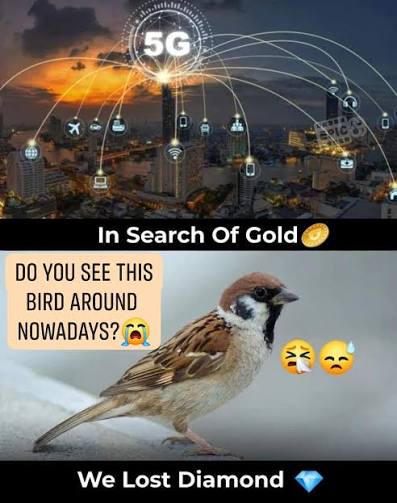



The 5G network, while acclaimed for its unmatched connectivity and speed, raises concerns about its potential impact on birds. Some fear that increased electromagnetic fields, dependent on Earth’s natural magnetic fields, could hinder bird navigation systems. Additionally, the infrastructure required for 5G, which includes more towers, can disrupt bird habitats and increase their risk of collision. While conclusive research on this is ongoing, these potential pitfalls underline the importance of evaluating the ecological impacts of our technological progress.
The advent of 5G networks is being considered as the beginning of a new digital era. With unmatched speed and connectivity, it promises to redefine our world and our engagement with technology. However, every revolution comes with its own concerns. As corporate leaders, environmentalists, and scientists, we must evaluate the overall impacts of our progress. One discussion surrounding the deployment of 5G concerns its potential impact on birds. This article deals in depth with this topic, which aims to present a balanced approach.
1. Radiation Concerns
First, there is widespread concern about electromagnetic fields (EMFs) and radiation. Although there has been extensive research into the effects of radiation on humans, statistics about its effects on birds are relatively few. It is important to remember that, like us, birds are also bioelectrical creatures. Their mechanisms operate using complex electrical signals.
Some preliminary studies have indicated possible behavioral changes in birds exposed to EMF. However, it is necessary to understand the differences between radiation generated in the laboratory and real-world scenarios where several factors play a role. To date, there is no definitive evidence that 5G-compliant radiation levels harm birds. But the lack of conclusive research itself demands more studies.
2. Interference With Navigation
Birds are skilled sailors. Their migratory patterns are one of nature’s wonders. They use Earth’s natural magnetic fields to find their way between continents. There is scientifically based speculation that increased levels of artificial EMF may hinder this intuitive compass.
Birds have specialized cells filled with magnetite (a magnetic mineral) that help them understand the Earth’s magnetic fields. The concern is whether electromagnetic waves emanating from 5G networks can confuse these internal compasses, increasing the likelihood of direction drift. Although conclusive evidence is lacking, this is an area that requires intense attention.
3. Ecosystem Disruption
5G networks require dense infrastructure, resulting in more cell towers and equipment. This can lead to direct destruction of habitats, fragmenting natural landscapes, and increasing human activities in previously unaffected areas. Additionally, there is concern that increased electromagnetic waves may hinder the natural behavior of some wildlife, particularly species such as birds and bees, which use the Earth’s magnetic fields for navigation. Thus, the expansion of 5G can inadvertently disrupt ecosystems.
5G has a high demand for infrastructure. Unlike its predecessors, 5G requires a high density of towers to function efficiently. This density can cause disruption of habitats. Although the tower itself cannot cause any problems, the changes in infrastructure associated with it—roads, maintenance activities, and human intervention—can disrupt the local ecosystem.
4. Collision Hazards
Greater density of cell towers and infrastructure is essential for 5G networks. The proliferation of these towers, especially in areas where there were previously few, poses a potential risk of collision for birds, especially migratory species, which often travel long distances at night. This additional infrastructure can become unpredictable obstacles to their flight path, increasing the potential for fatal collisions. Thus, the expansion of 5G may inadvertently increase the risks of bird collisions.
With increasing infrastructure, the risk of bird collisions also increases. Migratory birds, especially those roaming at night, may have to face challenges. While it can be argued that birds are similarly threatened by existing structures such as skyscrapers, the addition of new towers only exacerbates the existing problem.
5. Heat Emission
Electronic devices emit heat. There is concern about whether 5G antennas, especially when they are densely packed, can raise local temperatures, allowing birds to avoid nesting nearby. While heat increase may be minimal and local, fragile ecosystems, where minor changes in temperature can have wide-ranging effects, may be vulnerable.
5G technology, like other electronic systems, generates heat during operation. The need for denser infrastructure with 5G means that more antennas and equipment are located adjacent to each other. This concentration may result in increased heat emissions in local areas. Although the heat of individual 5G devices may be minimal, the collective effect of many devices located nearby can lead to a significant increase in temperature, which can affect the surrounding environment and organisms sensitive to temperature fluctuations.
6. Environmental Aesthetics And Fragmentation
There is also the case for aesthetics and environmental integration. Minarets can be laid on natural landscapes, changing the aesthetics of natural habitats. Even more subtly, this can lead to habitat fragmentation, where large continuous habitats will be fragmented into smaller patches, potentially impacting bird populations and other wildlife.
Due to the demand for 5G’s dense infrastructure, more towers and equipment are being installed in the landscapes, which can affect the natural beauty of the environment. This can impair the visual cohesion of an area, making it less attractive or less natural to observers. Moreover, the establishment of such infrastructure can lead to habitat fragmentation, where previously continuous habitats are fragmented into smaller, isolated pockets. This can disrupt the movement, reproduction, and access to resources of wildlife, affecting the overall health of the ecosystem.
The potential disadvantages of 5 G networks for birds are still the subject of exploration. While the promise of connectivity and digital growth is attractive, it is our corporate responsibility to ensure sustainable development. Its potential effects on birds are reminiscent of the wider ecological effects of our technological progress.
Moving forward on this path of progress, it is vital to move forward in step with nature, ensuring that the digital age respects all life forms, not just humans. Continued research, proactive environmental assessments,G and technological innovation taking these concerns into account will be the key to a cohesive future.
As corporate managers, let us remain committed to understanding, learning, and evolving, and ensure that our digital footprint leaves no adverse impact on the natural world.
Read Also:
- Is A 5G Mobile Tower, In Truth, Dangerous For Birds
- What Harm Can Mobile Radiation Cause To The Body? Remember These Things While Using Your Phone
- Complete Information About Mobile Radiation And Its Disadvantages
- These 6 Health Problems Can Occur Due To Mobile Radiation, Know From The Doctor Why Prevention Is Important
- What Is Radiation? Easy Information About Types, Uses And Prevention
- The Truth About Airpods And EMF Radiation: What You Need To Know
- The Truth About Acute Radiation Syndrome: 50-Year-Old Myths Of Radiation Sickness Exposed In Hollywood
- Understanding Radiation: Separating Fear From The Truth In An Unseen World
- How To Protect Yourself From Harmful EMF Radiation: 3 Free Ways To Protect Your Health
- Ignored Exposure: Mobile Phone Radiation, Increasing Health Risks, And The Need For Caution
- Cell Phone Radiation: Revealing The Science Behind The Discussion
- Cell Phones And Radiofrequency Radiation
Leave a Reply