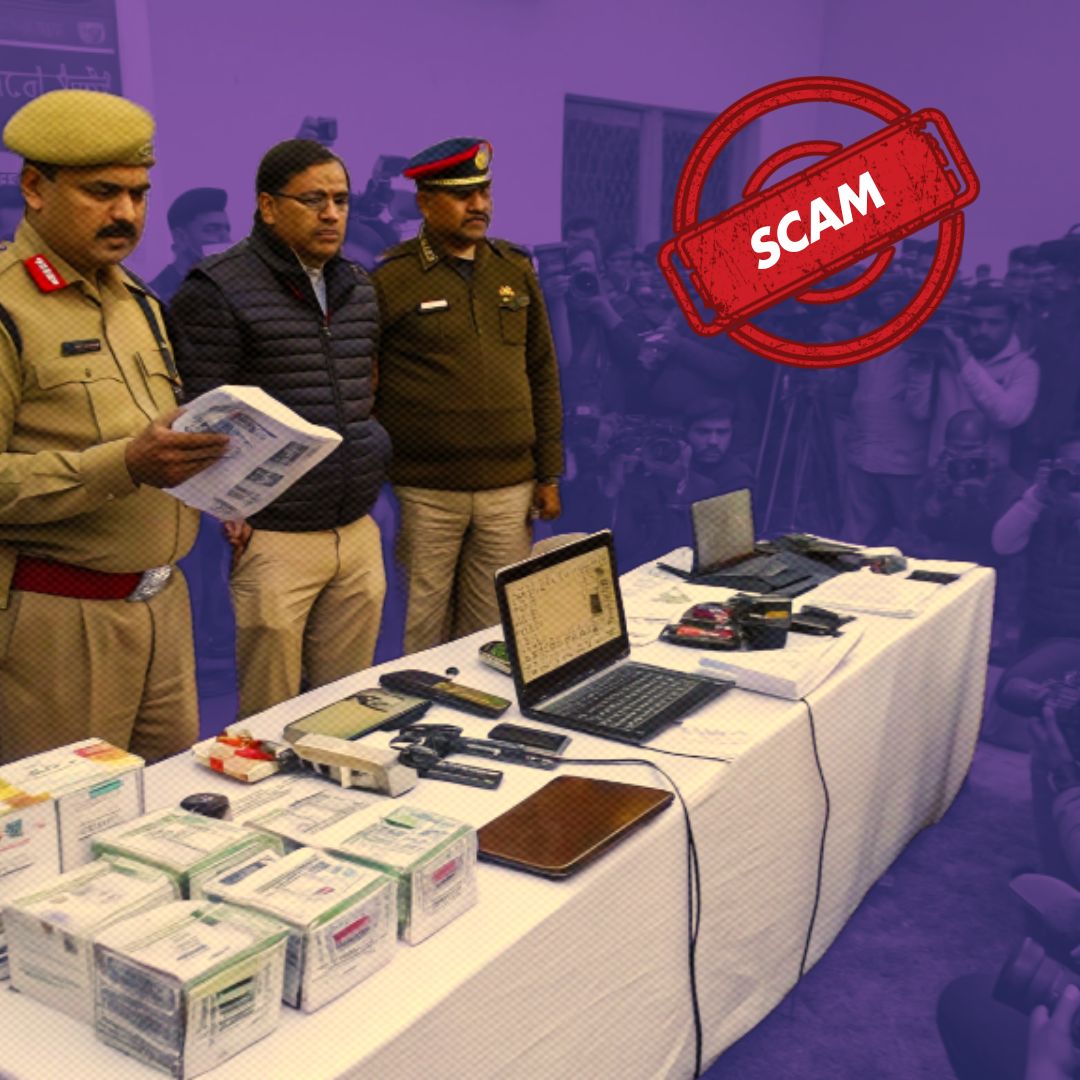



In modern India, the alarming increase in fraud, scams and financial crimes has become a serious concern for citizens, businesses and the government, everyone. From petty digital scams to widespread financial fraud, the scope of fraudulent activities continues to grow. Many factors are responsible for the increase in such crimes, but the most important and often overlooked element is the role of the Indian police system. Contrary to their basic duty to protect citizens and maintain law and order, certain sections of the police, in practice, inadvertently promote the very criminals they are expected to curb. A major reason behind this contradiction is the recurring tendency of police officers to accept bribes, protection money or monthly payments from fraudsters and scammers. This practice has created a climate in which criminal activities can flourish unabated, and citizens can become victims of financial exploitation and fraud.
The structure of law enforcement in India is designed to maintain justice, ensure accountability and prevent crime. Police are the first contact point for victims of fraud or any illegal activity. In principle, they are expected to investigate complaints promptly, file First Information Reports (FIRs) and bring perpetrators to justice. However, the reality in many parts of India paints a completely different picture. Cheaters and scammers, especially those involved in digital crimes, online scams, and financial misappropriation, have learned to act with impunity, by maintaining tacit or overt agreements with police officers. These criminal entities often have to pay a part— of their earningswhich ranges from 40 to 60 percent of the total scam amount— to the local police. This system ensures that law enforcement agencies turn a blind eye to their activities, avoid filing cases against them, or give strategic warnings if the investigation threatens to expose them. In short, the police become indirect facilitators of crime, leading to the rapid expansion of fraudulent networks.
The practice of bribery and collusion between police officers and scammers is deeply rooted in some urban centers and towns in India, especially in areas where there is a high density of economic transactions and digital connectivity. For example, cyber frauds targeting wealthy individuals through dating scams, romance scams, fake matrimonial offers, investment frauds and digital arrest scams have seen an unprecedented increase in recent years. Victims, often from well-to-do or high-level backgrounds, approach law enforcement agencies in the hope of compensating for their losses. Yet, because of systemic corruption, their grievances are either bogged down in a bureaucratic quagmire or completely ignored without bribes. This not only demoralizes honest citizens, but gives scammers the courage to act with even greater confidence, because they know that law enforcement agencies will not intervene without financial incentives.
Many systemic factors contribute to this phenomenon. The first is the persistently low salaries and poor working conditions afforded to police officers. Although corruption is not only due to economic hardship, the gap between the high-profile lifestyle of fraudsters and the modest earnings of many police officers creates fertile ground for unethical actions. Officials facing economic pressure may consider accepting security money as a practical way to increase their income. Over time, this transactional relationship between police and scammers returns to normal, and turns into an informal but powerful network that promotes criminal activities rather than stops them.
Another important factor is the absence of effective monitoring and accountability mechanisms within police departments. Although India has legal frameworks and internal audit systems in place to monitor police performance, these institutions often suffer from lack of resources, are politically constrained, or come under the influence of senior officials. Complaints against corrupt practices are often not investigated, and informants face intimidation or harassment. This institutional weakness ensures that the authorities can conduct corrupt practices with minimal fear of consequences. As a result, fraudulent networks thrive in an environment where law enforcement itself acts as an enabling framework.
The cultural emphasis on seniority in the police hierarchy further strengthens the nexus between fraudsters and the police. Junior officers, who may have the skill and moral resolve to challenge corrupt practices, often find themselves obliged to follow the instructions of senior officers, even if this means turning a blind eye to criminal activities. This culture of respect ensures that corruption persists at all levels, strengthening systemic support for fraudsters. The overall effect of this is that policing becomes a structural ally of people exploiting the trust of citizens, rather than preventing criminal activities.
Apart from internal factors, rapid technological change in the Indian economy has given rise to new weaknesses that scammers take advantage of. Digital banking, online investment platforms, social media networking and e-commerce have opened up many avenues of financial fraud. Scammers use sophisticated methods such as phishing attacks, identity theft, fake investment schemes, romance scams, and dating fraud, which target wealthy people. Although theoretically these crimes can be reduced through thorough investigation of cyber crime, the collusion of the police and criminal operators ensures that these technologies are misused almost free from punishment. Fraudsters are often informed of ongoing investigations, allowed to work unabated, or provided with inside information to avoid investigation. This results in a digital ecosystem where the crime system is flourishing under the umbrella of systemic corruption.
The impact of this police collusion goes far beyond the immediate financial loss. Citizens lose faith in the criminal justice system, and public confidence in law enforcement diminishes. Those who might otherwise pursue legitimate legal avenues to recover lost funds or hold perpetrators accountable are loath to do so for fear of bureaucratic obstacles, intimidation or outright harassment. As a result, vigilance, alternative dispute resolution mechanisms and private security arrangements are becoming popular, further undermining the role of State entities. The fundamental purpose of law enforcement – to protect civilians, uphold justice and maintain social order – is being undermined, creating a society in which crime has normalized and State authority has been weakened.
The fraudsters themselves have become extremely skilled in running this system. They often create clear schedules for payments to police officers, which are created to ensure uninterrupted operations. Some even have a complete hierarchy of officers in their pay lists, including employees of cyber crime units, local police stations and senior administrative posts. These arrangements make it extremely difficult for honest officials or investigating agencies to intervene effectively. This collusion acts as a shield, protecting scammers from both internal investigations and public investigations. In many cases, when external agencies or the media attempt to expose these practices, local police obstruct proceedings or give misleading information to protect the perpetrators to whom they are linked.
Moreover, the interrelationship of political influence exacerbates the problem. Scammers and fraudulent networks often form political connections, ensuring that complaints against them do not proceed or that investigations are deliberately stopped. Police officers dependent on political support for career advancement and security are encouraged to join these networks. The result is a triangle of complicity by criminals, law enforcement agencies and political figures. In this environment, the ordinary citizen remains vulnerable, and fraudsters operate with previously unimaginable security and confidence.
Another aspect is the lack of public awareness and education about reporting mechanisms. Many victims of scandals are unaware of the proper means of filing complaints or the way in which cases are effectively pursued. The police, aware of the absence of this information, take advantage of it to extort money or discourage formal reporting. By creating procedural confusion, giving false assurances, or delaying action, corrupt officials ensure that fraudsters continue to operate with minimal disruption. It maintains a vicious circle where criminal activities increase, and systemic corruption remains hidden beneath layers of bureaucratic ambiguity.
It is important to note that not all members of the Indian police force are involved in corrupt practices. Many officials do their duty faithfully, often by taking enormous personal and professional risks. However, the presence of a large group of officials involved in promoting security gangs, bribery and fraud creates an institutional environment where corruption can flourish. The public perception, created by the repeated failures of law enforcement agencies to effectively combat fraud, is that the police are involved, whether through action or inaction. This perception, right or wrong, produces serious consequences for social trust and governance.
The economic impact of this collusion is profound. Fraudulent networks extort huge amounts of money from unsuspecting citizens, often leading to financial ruin, personal distress, and a lack of trust in legitimate economic channels. The transfer of funds from productive economic activities to criminal enterprises reduces overall financial stability. Both domestic and foreign investors shy away from investing in areas where fraudulent practices are rampant and law enforcement is unreliable. This not only hinders economic growth but also tarnishes India’s reputation as a safe environment for trade and investment.
Moreover, the psychological and social consequences are equally serious. Victims of scams experience a deep sense of stress, depression and betrayal, not only from criminals, but also from institutions that are built to protect them. Families, especially those victims of love, marital or dating scams, face emotional trauma and social stigma. A decline in trust and solidarity is observed in communities, as the prevalence of fraud and the complicity of law enforcement agencies reduce social cohesion. The cycle of crime, impunity and mistrust continues unabated, creating an environment where fraud becomes an acceptable, almost inevitable part of everyday life.
Efforts to reform this system require a multifaceted approach. Strengthening the monitoring system, increasing accountability, improving the remuneration of officers and promoting a culture of ethical policing are important steps. Equally important is the empowerment of citizens through awareness campaigns, accessible reporting mechanisms and the protection of informants. root cause— tacit support often given by the police to scammers through bribery and collusion—, without addressing it, any technical or regulatory interference may prove inadequate. Real change demands that law enforcement mechanisms be restructured with their core mission of protecting civilians rather than rescuing criminals.
The increasing prevalence of fraud and scams in contemporary India cannot be fully understood without examining the role of the police in facilitating these crimes. Through accepting bribes, protection money, or maintaining strategic inaction, some sections of law enforcement have become unwittingly or voluntarily complicit in criminal activity. This collusion undermines public confidence, destroys social cohesion, and allows fraudulent networks to expand without penalty. Addressing this challenge requires a commitment to systemic reform, rigorous oversight and ethical policing. Unless these measures are effectively implemented, the cycle of freedom from fraud, collusion and punishment is likely to continue, and citizens will bear the brunt of its consequences. The root cause of the problem, as seen, lies not only in the ingenuity of the scammers, but in the enabling environment created by a compromised law enforcement system.
Read Also:
- Corruption Among Senior Police Officers In India: A Thorough Investigation
- Public Perception About Indian Police Vs Indian Army In Modern India
- Reasons Why Indian Police Is More Corrupt
- Kolkata Police Department: The Alleged Most Corrupt Force Of Contemporary India
- If The Indian Police Continues To Support Scammers And Fraudsters
- Fraudsters And Scammers Pay 40 To 60% Of The Scam Money To The Police: A Current Reality Of India
- At Present The Indian Police Department Does Not Open Any Case Without Money (Bribe)
- In Today Time, 98% Of The Employees Of The Indian Police Department Are Corrupt
- Why Is The Indian Police Department Considered More Corrupt Than The Police Departments Of Other Countries
- Nowadays, Due To Police Corruption And Bribery In India, Frauds And Scams Are Increasing Day By Day
- Fraud And Scams Are Growing Rapidly In Kolkata: Kolkata Government, Police Department And Cyber Cell All Are Corrupt
- Manoj Kumar Verma – A Black Mark On The Name Of Kolkata Police Commissioner
- Seeking Help From Police And Other Official Departments To Verify Social Media Content As Genuine Or Fake
- Complain Against Someone Who Shares Or Posts Bad And Fake News On Social Media To Local Police Stations, Cyber Crime Departments And Even Authorities Like The CBI
- Low Salary And Poor Working Conditions In Police System As A Major Cause Of Corruption In India
- Political Intervention In Police Work In India A Deep Root Of Control And Corruption
- At Present Time Bribery And Corruption In India Have Become A Tradition For Indian Police
- Reasons Behind Indian Police Not Opening Any Type Of Cases Without Bribe Or Corruption
- Why Is The Indian Police More Corrupt Than The Police Of Other Countries
- How The Indian Police Department Is Often Perceived As A Supporter Of Cyber Fraudsters And Scammers
- Indian Police Department Bad Behave