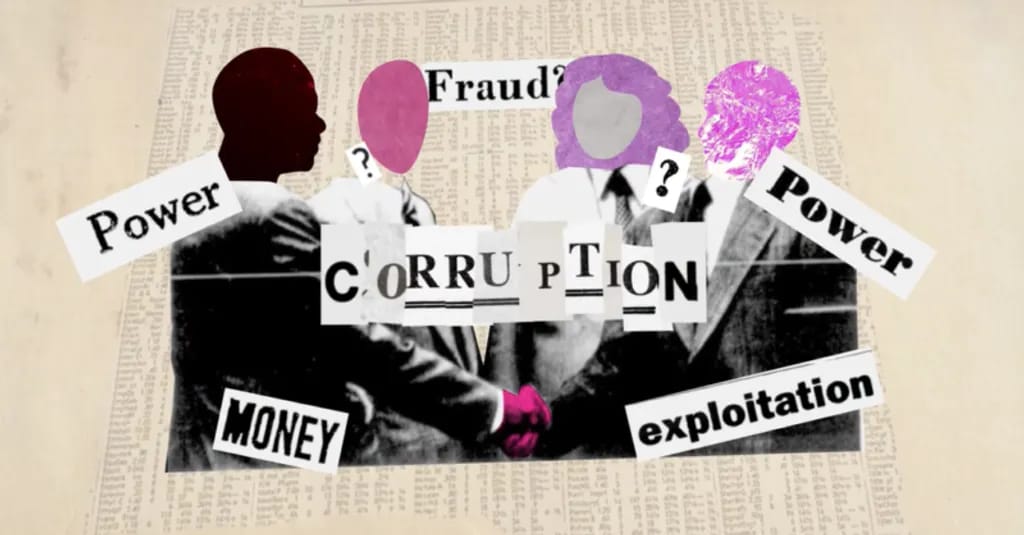



Fraud, corruption and scandals are not new phenomena; they have been an integral part of human society since the beginning of organized governance and trade. However, the scale, frequency and sophistication of fraud have increased rapidly in the modern era, affecting not only financial systems, but also social trust, governance structures and global political stability. Today the world faces a paradox: while technology, globalization and transparency measures have improved governance in some aspects, they have also created unprecedented opportunities for organized fraud. Among the many factors contributing to the rise in fraud and scams, politics emerges as the most influential factor, especially in countries like India, where political interference, policy manipulation and systemic weaknesses combine to create fertile ground for fraud.
At its core, politics is the art of gaining, retaining and exercising power. Power, when concentrated without accountability, becomes a means through which systems can be manipulated for the benefit of the individual, group or party. In India, the world’s largest democracy, political power is highly influential, affecting every aspect of economic and social life. From the allocation of government contracts to regulatory approvals and from appointments to public enterprises to discretionary policymaking, politics controls the levers of opportunities. This concentration of discretionary power allows to exploit dishonest actors—politicians, bureaucrats, business elites and middlemen— systems, often in ways that take the form of fraud or scams. Unlike petty crimes that are isolated, politically intelligible fraud can spread to millions of transactions, affecting millions of people. Notorious scope of scams in India—2G spectrum scam to coal allocation scam, from electoral malpractice to theft of public distribution system—reflects a pattern: where political influence is strong and surveillance weak, fraud flourishes.
Structural weaknesses have to be explored in depth to understand why politics plays such a decisive role in the rise of fraud. In India, the democratic structure is strong on paper, but there are inherent contradictions. Politicians work under immense pressure to raise funds for electoral campaigns and ensure the loyalty of voters. This reliance on money for political survival creates a symbiotic relationship between politics and business interests. Corporations, developers, and middlemen often invest heavily in political campaigns in hopes of making profits through contracts, policy concessions, or regulatory generosity. These arrangements, although they seem opaque, often cross the line of fraud or corrupt practices, with the public paying the ultimate price. When political survival depends on financial generosity, the temptation to manipulate arrangements—and even the perceived need— outweighs.
Furthermore, politics often shapes public perception in such a way that cheaters get shields. In India, political narratives are powerful; they can redefine crime, discredit informants, and glorify misconduct as “national service” or “essential pragmatism”. Politicians engaged in scandals, if they maintain public popularity or manipulate media narratives, rarely face immediate consequences. This impunity fosters a culture of generalized fraud, where fraudulent activities become not only a means of personal gain, but also a mechanism of political strategy. Electoral politics, loyalty to caste and community, populist schemes and patronage networks all work together to cover up fraudulent activities, whether in procurement, subsidies, banking or social welfare schemes. The larger the political stakes, the greater the incentive for actors to circumvent ethical norms and legal constraints.
Globally, the story is not fundamentally different. In various countries, political corruption has been a major promoter of complex fraud networks. In developed countries, sophisticated regulatory systems often detect and punish fraud, yet loopholes still exist, particularly when political lobbying affects legislation. In emerging economies, weak institutions, politicized law enforcement and lack of transparency create environments where scams become systemic rather than accidental. India is a clear example of this pattern. For example, public sector enterprises, which aim to serve national interests, often fall victim to political favouritism. Appointments, promotions and tender allocations are often influenced by party loyalty rather than merit. As a result, fraud becomes inherent in the functioning of institutions, making it difficult for honest officials to act effectively and for ordinary citizens to obtain justice. Political interference in law enforcement, audit agencies and regulatory bodies further exacerbates the problem, delays investigations and undermines accountability.
Another major political factor driving the development of scandals is policy manipulation. Policies aimed at creating fair opportunities, regulating markets and protecting citizens. Nevertheless, when the policy-making process is influenced by vested interests, flaws are deliberately created, ignored or exploited. For example, tax rules, licensing frameworks and subsidy schemes in India have been repeatedly manipulated to benefit select corporate entities or political affiliates. The schemes formed as a result often appear to be legitimate but are, in fact, designed to promote the misappropriation of public funds, embezzlement and other fraudulent activities. Political actors take advantage of their authority to ensure that monitoring mechanisms remain weak or ineffective, further encouraging fraud. In this sense, politics is not just a context in which fraud takes place – it is often the framework that allows it to take place on a massive scale.
In addition to direct financial fraud, politics also affects social perception, making society more tolerant of corruption. In India, politicians often describe themselves as heroes of development, while at the same time indulging in immoral acts. This dichotomy creates moral ambiguity: citizens are torn between the desire for economic progress and the moral implications of corrupt regimes. Over time, this generalization of political manipulation reduces social accountability, creating a climate where fraud is not only possible, but also expected. The psychological impact of political patronage and fraud perpetrated through the media cannot be underestimated; it shapes both the tolerance of public misconduct and the audacity of fraudsters to act openly.
The digital age has further increased these trends. Technology has expanded both the methods and scale of fraud. Online financial scams, data theft, cyber crime and even electoral manipulation are becoming increasingly associated with political agendas. Political influence can protect cybercriminals, manipulate regulatory oversight, and also exploit technical loopholes for surveillance or voter manipulation. In India, for example, the intersection of digital finance, political campaigns and weak regulatory oversight has led to massive financial scandals, affecting millions of ordinary citizens. Politically connected middlemen exploit these loopholes to commit sophisticated fraud, with minimal risk of immediate accountability. Thus, politics combined with modern technology creates new avenues for fraud, which did not exist in earlier eras.
Cultural and historical factors also increase this problem in India. The Indian political system has historically tolerated protectionism, nepotism and clientelism to maintain electoral gains. While such practices may have originated as ways of maintaining existence in pre-modern governance systems, in the modern era, these have become the instigators of rampant corruption. Political leaders often rely on networks of loyalists to maintain control, and these networks often operate through fraudulent or quasi-legal means. Electoral incentives, combined with deep-rooted social hierarchies, make it extremely challenging to root out systemic fraud without major structural reforms. The persistence of such networks over the decades demonstrates that fraud is not merely an economic or criminal problem, but a political phenomenon deeply embedded in the governance culture.
Another important aspect is the relationship between politics and media. In India, media coverage can affect the visibility of scams and frauds, sometimes underestimating political misdeeds or selectively exposing them based on party affiliation. Politicians often use media narratives to distract from wrongdoing or to present investigations as politically motivated attacks. This manipulation affects public awareness, reduces accountability pressures, and allows fraudulent practices to continue unabated. In short, politics controls not only the mechanisms of fraud, but also the social discourse around it. By shaping perception, politicians can make large-scale fraud commonplace, unimportant, or ambiguous.
A similar dynamic exists at the international level. Political corruption in developed and developing countries has led to financial scandals, corporate misreporting and Ponzi schemes. Multinational corporations sometimes exploit political connections to circumvent local regulations, evade taxes, or misuse public funds. Political lobbying, regulatory capture and opaque campaign financing systems are global advocates of fraud. However, India offers a particularly clear example because of its vast population, high stakes of governance and the complex interrelationship between social hierarchy, political patronage and economic opportunities. When political systems fail to create accountability, citizens, businesses, and institutions become vulnerable to fraudulent activities that range from small-scale deception to billions of dollars in scams.
Education and institutional awareness are also closely linked to politics and fraud. Politically motivated curricula, biased historical narratives and selective dissemination of information can undermine public vigilance and undermine institutional integrity. When political leaders influence educational policies, regulatory frameworks and public awareness campaigns, they often indirectly shape the climate in which fraud flourishes. Citizens may lack the knowledge or resources to detect or oppose fraudulent schemes, making it even more effective to politically facilitate crime. The lack of comprehensive civic education in India, combined with complex bureaucratic procedures, creates an environment where exploitation is easier and less likely to be challenged.
Political instability and frequent changes in government exacerbate the situation. In India, coalition politics and electoral instability often lead to fragmented governance. Each political party or coalition may prefer patronage networks, clientelist arrangements, or electoral advantage over institutional reforms. This creates gaps in monitoring, policy continuity and enforcement mechanisms, which fraudsters exploit. Politically motivated delays in judicial processes, interference in investigations and bureaucratic slowness further increase the incidence of scams and their scale. The cyclical nature of politics, where short-term benefits take precedence over long-term governance, is directly linked to the growing trend towards fraud.
The psychological aspect cannot be ignored. Politics in India often promotes opportunism, risk-taking and moral flexibility. Individuals seeking power or grace in political systems learn to operate in morally ambiguous areas where fraud is an acceptable instrument. This systematic encouragement of opportunistic behavior perpetuates a culture of deceit and manipulation. Ordinary citizens, while getting rid of political fraudsters from repeated punishment, can themselves also adopt unethical practices as survival strategies. Over time, fraud becomes an institutional feature of the regime, not a diversion, deeply ingrained in social, political and economic life.
The increasing prevalence of fraud and scams in India and by extension across the world is deeply linked to politics. Politics is not just a relevant factor; it is the central factor of systemic fraud. Through concentrated power, discretionary control, policy manipulation, regulatory intervention, and plot formation, political actors create situations where fraud becomes possible, profitable, and often socially tolerable. The Indian example demonstrates that when political imperatives, electoral pressures and systemic weaknesses come together, fraud becomes not only a means of personal gain, but also a structural feature of governance. Global trends show similar patterns: where politics fails to uphold transparency, accountability and justice, fraud increases. Tackling this scourge requires more than legal reform or technological solutions; it requires profound political and cultural change, a resuscitation of civic consciousness and a re-commitment to moral governance. Unless politics is made accountable, transparent and principled, fraud will remain a permanent global challenge, affecting nations, economies and societies alike.
Read Also:
- Politics As The Main Catalyst Behind The Global Rise In Fraud And Scams
- Political Corruption
- What Is Politics
- The Impact Of Social Media On Politics
- Vladimir Putin Enters Politics
- Debate On The Politics Of Reservation
- Reservation Politics In India: An Analysis Of Indian Reservation System
- Corruption In Police Criminology
- Which Jobs Are More Corrupt In India
- Amazing Facts About Vladimir Putin
- Vladimir Putin Is Famous For
- Why Are The Opposition Political Parties Afraid Of Vladimir Putin
- Vladimir Putin Award, Property And Public Image
- Organizations And Projects Founded Or Supported By Vladimir Putin
- Vladimir Putin President Tenure