

In the digital age, where connectivity and instant communication have become a major part of human interaction, the negative aspects of technology are also becoming increasingly widespread. Of these, phishing and email scams are one of the most insidious and widespread forms of cybercrime. Although the Internet has brought countless benefits, it has at the same time created a suitable environment for manipulation, fraud and exploitation. Phishing, a technique designed to trick people into obtaining sensitive information, and its various forms in email scams, have now evolved into complex activities that affect millions of people around the world economically and mentally.
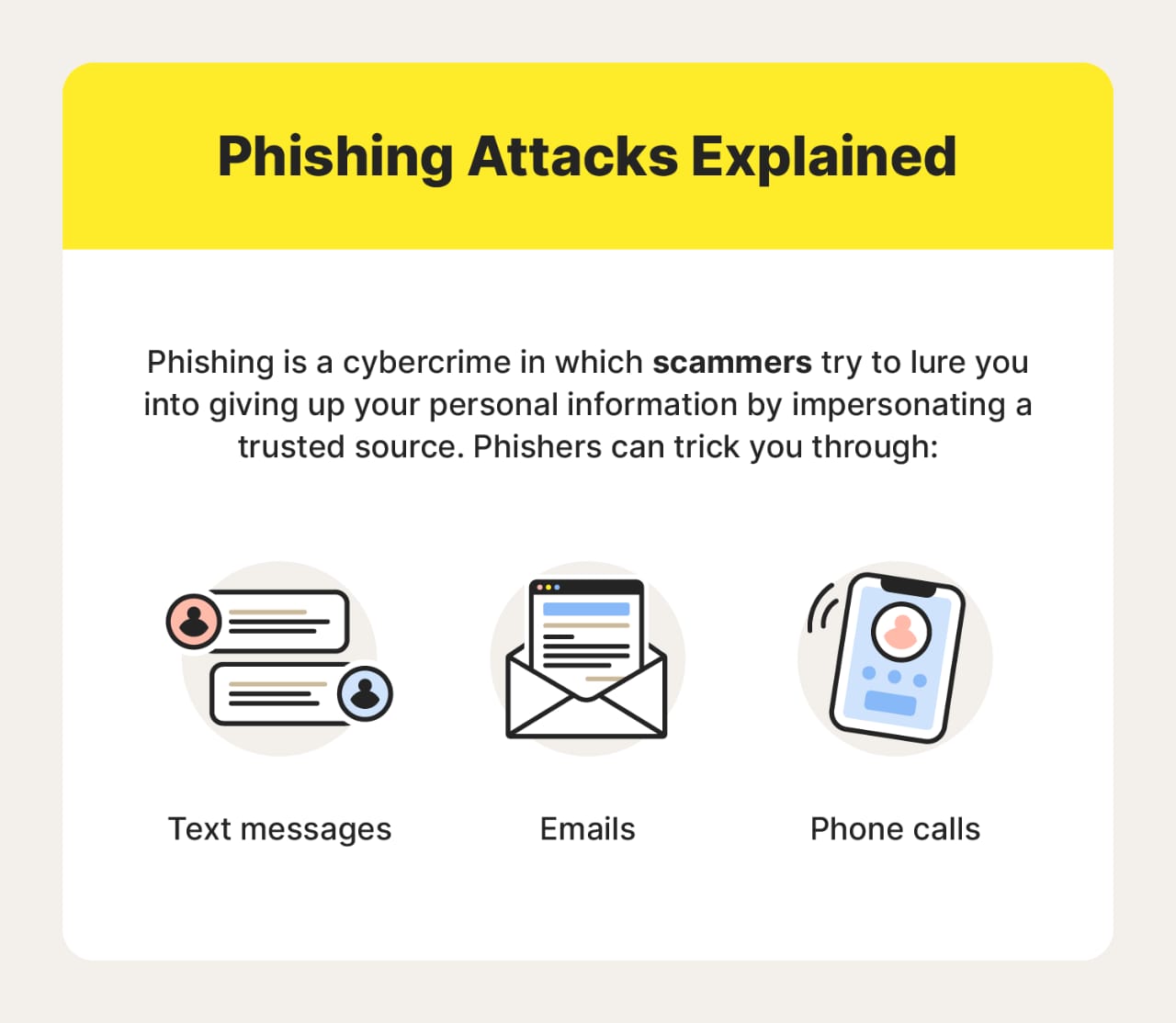
Phishing, in its simplest definition, is the attempt to obtain sensitive data, such as usernames, passwords, credit card numbers or other personal information, by impersonating a trusted entity. The term itself is similar to traditional fishing: just as a fisherman uses bait to lure fish, cybercriminals use catchy or sinister messages to lure unsuspecting victims into their nets. The “bait” in phishing is often a sense of urgency, fear, or reward, formulated to exploit the recipient’s cognitive and emotional responses. Over time, phishing has moved beyond its initial form to include spear phishing, whaling, and other targeted methods, making it a versatile and adaptable method of cyber exploitation.
Phishing originated in the early 1990’s, coinciding with the rise of the Internet as a commercial and social platform. In the early days of online communication, especially with the proliferation of services such as America Online (AOL), early phishers targeted users via chat rooms and email, often pretending to be representatives of AOL. The objective was generally simple: to obtain password or credit card information to access the services illegally. These early efforts, although rudimentary by modern standards, laid the foundation for a growing culture of online fraud. As the Internet became an integral part of daily life, phishing developed alongside technological sophistication, exploiting new channels, platforms, and communication protocols to increase its reach and effectiveness.
Email, which is the dominant medium of communication in both business and personal contexts, soon became the main vector of phishing. Unlike face-to-face scams or phone-based fraud, email allows attackers to reach large numbers of potential victims with minimal effort and cost. The asynchronous nature of email also provides criminals with a cloak of anonymity and the ability to craft messages by paying attention to detailed details. Early email scams were often simple, full of grammatical errors, and relatively easily recognizable. However, as technology advanced, phishing emails became more sophisticated, using professional designs, logos, and formatting that were similar to legitimate communication. This development underscores an important aspect of phishing: the attacker’s ability to adapt and innovate according to user awareness and technological counterarguments.
The psychological dimension of phishing is the centerpiece of its success. Unlike purely technical attacks, which exploit software vulnerabilities, phishing relies heavily on social engineering— manipulation of human behavior to achieve desired results. Criminals understand that people are often motivated by emotions rather than reason, and phishing campaigns are designed to exploit these emotional triggers. For example, emails claiming to have broken into a bank account create fear and prompt hasty action without careful scrutiny. Similarly, messages promising financial rewards, lottery wins, or special offers exploit greed or desire. By leveraging urgency, authority, curiosity, and trust, fishers can bypass the user’s rational defense, and often achieve their objectives surprisingly efficiently.
Spear phishing is another development of traditional phishing strategies. Unlike normal phishing emails sent collectively, spear phishing is highly targeted. Attackers research specific individuals or organizations to produce personal messages that increase credibility and chances of success. These attacks may cite recent transactions, professional roles, or personal interests to give an impression of legitimacy. A subset of spear phishing, whaling, targets high-ranking officials or individuals with adequate access to financial or sensitive organizational information. These attacks are carefully planned and often require extensive investigation, sometimes including data gathered from social media, professional networks, or past security breaches. The accuracy and personalization of spear phishing and whaling make them particularly dangerous, as they can bypass standard technical protections and rely solely on exploiting trust and authority.
Technically, phishing is further complicated by advances made in cybersecurity measures. Early phishing attacks were based on apparent fraud and basic manipulation of emails. Today, attackers employ techniques such as email spoofing, domain impersonation, and the use of legitimate-looking URLs to hide malicious intent. Through email spoofing, attackers can present messages as if they come from a trusted source, such as a bank, government agency, or a well-known company.
Domain impersonation involves registering domain names that resemble legitimate organizations, often differ by a letter or use alternative domain extensions to create an illusion of authenticity. Hyperlinks in emails can redirect users to fraudulent websites that mimic the design of real services, obtain login credentials or install malware. These technological strategies show that phishing is not just a matter of deception; it is a complex interrelationship between social engineering and technological manipulation.
Email scams are not limited to any one industry or demographics; These span a wide range of goals and techniques. Some common topics include financial scams, account verification schemes, subscription traps, and technical assistance fraud. Financial scams often involve fake invoices, payment requests, or notices of unusual transactions, prompting users to provide account information or transfer funds. Account verification plans may present as valid services, requesting a password reset or security confirmation that actually acquires login credentials. Subscription traps lure users with free trials or offers, but hide hidden charges or automatically renew services without consent. At the same time, technical assistance fraud usually involves unsolicited messages warning users of viruses or system failures, directing them to contact fake assistance representatives who demand payment for unnecessary or non-existent services. The diversity of these scams reflects both the creativity and opportunism of cybercriminals, who constantly change their strategies to maximize victim participation.
The most worrying aspect of phishing and email scams is their financial and psychological impact. Victims often suffer massive economic losses, ranging from small unauthorized fees to savings or massive theft of corporate funds. In addition to financial losses, victims also face stress, anxiety, and a lack of trust in digital communications. When phishing attacks affect sensitive data or systems, organizations face reputational damage, legal liabilities, and operational disruptions. The cumulative impact of these attacks contributes to the widespread erosion of confidence in digital infrastructure, underscoring the social importance of effective prevention and mitigation.
Real-life examples illustrate the pervasive and variable nature of phishing. In one notable case, a large multinational fell victim to a sophisticated spear-phishing attack targeting its finance department. The attackers, after thorough research, impersonated a senior officer and requested immediate transfer of funds to an external account. The employees, relying on the express authority of the sender, carried out the transaction, resulting in a loss of millions. In another case, a healthcare organization was sent emails that appeared to be regular patient information updates. Staff inadvertently provided login credentials, allowing attackers to access sensitive medical records. These examples highlight not only the financial consequences, but also the ethical and privacy implications of phishing, as stolen information can be used for identity theft, blackmail or other malicious purposes.
Prevention and mitigation of phishing and email scams requires a multidimensional approach. Technical measures include spam filters, anti-phishing software, secure email gateways, and multi-factor authentication (MFA). Spam filters and email gateways analyze incoming messages for known phishing signatures, suspicious links, and unusual patterns, and block potentially harmful emails before they reach users. The MFA adds an additional layer of security by requiring multiple types of verification, making it even more difficult for attackers to obtain unauthorized access, even if the credentials are compromised. Additionally, organizations often implement domain-based message authentication, reporting, and conformance (DMARC) policies to prevent email spoofing and enhance the integrity of outgoing communications.
User education and awareness are equally important. Technical safeguards alone are not enough, because phishing basically exploits human behavior. Regular training sessions, simulated phishing exercises and clear guidelines for dealing with suspicious emails can enable users to identify threats and respond appropriately. Awareness campaigns often emphasize important skills, such as verifying sender addresses, avoiding clicking unsolicited links, checking attachments, and reporting suspected phishing attempts. Encouraging a culture of alertness and suspicion can significantly reduce the chances of successful attacks, and convert potential victims into active participants in cybersecurity defense.
Regulatory frameworks and legal measures also play an important role in combating phishing and email scams. Governments around the world have enacted laws that criminalize unauthorized access to computer systems, identity theft, and fraud committed through electronic communications. Agencies such as the Federal Trade Commission (FTC) in the United States and similar bodies around the world provide mechanisms for reporting scams and taking legal action against perpetrators. International cooperation is becoming increasingly necessary, as phishing activities are often spread across multiple jurisdictions, complicating enforcement and prosecution. Cybersecurity standards, data security regulations, and industry best practices further contribute to establishing a secure digital environment, although enforcement and compliance still remain challenges.
Phishing is likely to involve further adaptation and integration with emerging technologies in the future. Artificial intelligence (AI) and machine learning provide opportunities for both attackers and defenders. Cybercriminals can leverage AI to automate the creation of highly reliable phishing messages, optimize attacks for individual users, and use large datasets for spying. In contrast, defenders can use AI-powered threat detection, behavior analysis, and automated response systems to more efficiently identify and deactivate phishing attempts. The dynamic interaction between offensive and defensive capabilities underscores the evolving nature of the threat landscape, which requires constant vigilance, innovation and collaboration among stakeholders.
In addition to AI, the proliferation of mobile devices and alternative communication platforms presents new challenges. Phishing is no longer limited to traditional email; it has also spread to SMS (smishing), voice calls (wishing), social media, and messaging apps. Attackers take advantage of the ubiquity and urgency of mobile communications, often relying on short attention spans and the casual nature of mobile interactions to increase success rates. The convergence of platforms requires a holistic approach to cybersecurity, recognizing that the principles of awareness, verification, and vigilant engagement apply across all digital channels.
Cultural, psychological, and social factors also influence susceptibility to phishing. Research suggests that cognitive biases, emotional states, and social norms play an important role in determining the victim’s response. People are more likely to fall victim to messages that provoke their desires, fears, or feelings of responsibility. Social engineering exploits these trends to create realistic scenarios that inspire immediate action, often bypassing rational evaluation. Understanding these human factors is essential not only for devising effective prevention strategies, but also for promoting resilience and adaptability to withstand increasingly sophisticated attacks.
Phishing and email scams are also associated with broader issues of trust, privacy, and digital ethics. The erosion of trust in online communication has implications for commerce, governance and social interaction. Individuals may be hesitant to engage with digital services, organizations may face barriers to adopting innovative technologies, and social trust in online institutions may decline. Dealing with phishing is therefore not just a matter of technical security; it is also about maintaining the integrity, reliability and ethical standards of the digital ecosystem.
Phishing and email scams represent a complex, evolving and multifaceted challenge in the digital age. From their origins in early Internet communications to their current manifestations as highly targeted and technologically sophisticated operations, these attacks exploit both human behavior and technological vulnerabilities. Its consequences are far-reaching, affecting individuals, organizations and society at large. Combating phishing requires a combination of technical security, user education, regulatory frameworks, and constant vigilance. As technology continues to advance, the strategies and tactics of cybercriminals will evolve, and favourable, informed and collaborative responses will be required. By understanding the history, psychology, mechanisms, and effects of phishing, individuals and organizations can better protect themselves, maintain trust in digital systems, and move forward in the digital landscape with confidence and security.
Read Also:
- The World Of Advance Fee Fraud
- The Dark Truth About Fake Job Listings And Fraudulent Websites
- Rise Of Fraudsters And Scammers In Contemporary India
- Image Of Mamata Banerjee As The Main Fraudster In India
- Understanding Skype Accounts
- Auditor Should Develop New Ways Of Preventing Fraud In Government Departments, Improving Capacity: Modi
- Digital Fraud Doubled Home Ministry Told Parliament-UPI Also Included
- Attention Cyber Attackers Are Hidden In Your Phone, Government Warns, Told The Way To Rescue
- New Law To Surf Torrent Site In India
- What You Should Do If You Are Getting Cyber-Bullies
- What To Do When Online Shopping Fraud? Cyber Fraud Complaint, Return Money And Rescue
- Damage On Social Media Defamation Streams, Punishment And Complaint Process
- What Is Cyberstalking Punishment, Act And Complaint Process
- Lime In Online Fraud, Run A Lot Of Hands And Feet, These People Do Not Get Money Back, These Are RBI Guidelines
- Scope Of Scams: Social Media Platform And Online Fraud
- Whatsapp Phishing How To Make A New Trap? Government Has Tight Waist, 7.8 Lakh Sim, 83,000 Account Blocks
- Fraud And Scams Are Growing Rapidly In Kolkata: Kolkata Government, Police Department And Cyber Cell All Are Corrupt
- Manoj Kumar Verma – A Black Mark On The Name Of Kolkata Police CommissionerLessons, Resolutions, These 10 Tips From Cyber Crime, Which Will Protect You From Cyber FraudAvoid Online Fraud? So Leave The Habit Of Clicking Without Thinking, Know 5 Easy Ways To Avoid Cyber Fraud
- Cyber Fraud: Why Is It Necessary To Avoid Fraud In The Digital Phase? Learn What To Keep From Expert
- People Years Of Hard Work And Earning Can Be Cleared In Few Minutes, These Methods Should Be Adopted To Avoid Cyber Fraud