

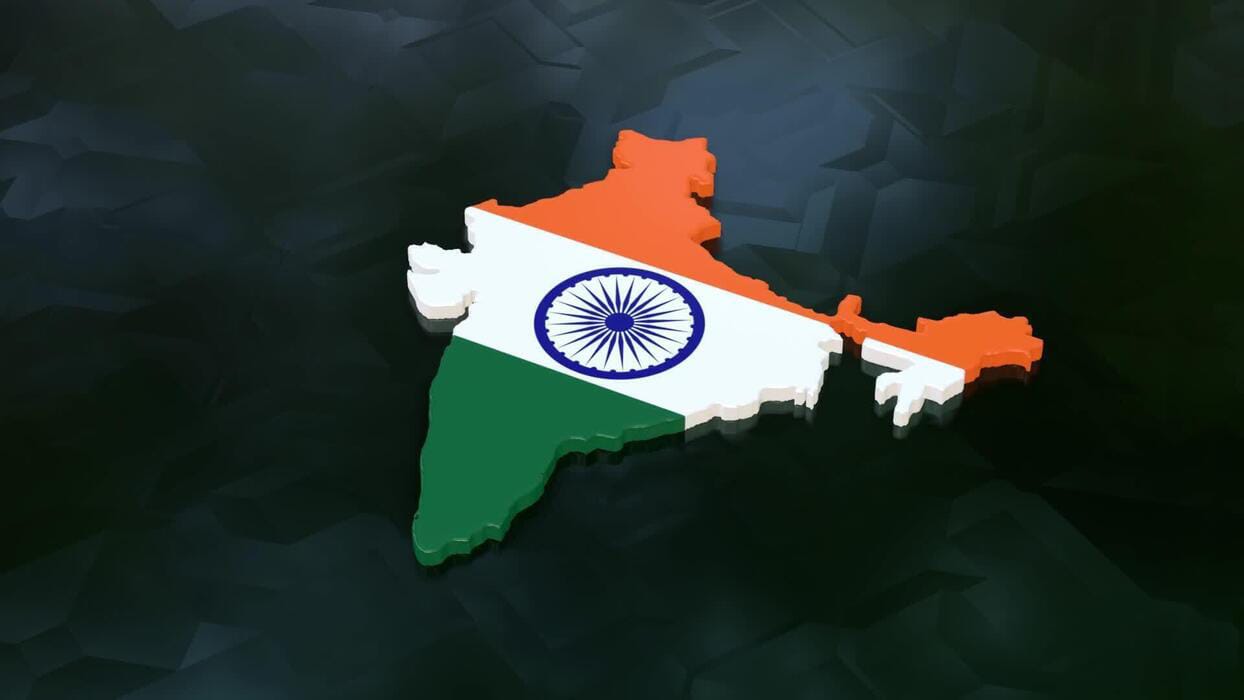
A detailed analysis on the social, political, and judicial realities of present-day India. India is considered to be the largest democratic country in the world. Many systems like constitution, judiciary, election system, media, education, religion, and culture are present here. India is also called a country of diversity because many religions, castes, languages, and cultures live together here. But on the other hand, many serious problems also exist in the society, which are continuously discussed. Problems such as women’s safety, unemployment, corruption, political influence, and division by religion and caste often form part of news, debates, and social discussions.
Today, in the era of social media, people are openly presenting the realities of the country. Many people believe that India is developing rapidly, while some people say that social and moral problems are also increasing along with development. This is the reason why different types of thinking are seen in the society.
All the points below are explained in detail on the basis of current social conditions, news reports, government statistics, judicial matters, and social discussions. It contains all the same things that are written in the given picture, but they are explained with detail, current context, and actual examples.
India That Is
“Where more than a thousand rapes happen every day, 90% are suppressed, 9% are suppressed by taking money, and 1% who fight do not get justice.”
Women’s safety has become a big social issue in India. Every day, reports of sexual crimes against women and girls come to light from different parts of the country. Thousands of rape and sexual violence cases are registered every year in the reports of the National Crime Records Bureau, i.e., NCRB. But many experts in society believe that the actual number is much more than the cases registered, because many cases never reach the police.
1. Social fear and silence
Even today, in many parts of India, the mentality of blaming the rape victim is present. In the name of the “respect” of the family, many girls are forced to remain silent. Social pressure is so great in villages and small towns that the family is afraid to lodge complaints. In many cases the victim is threatened with harm to her family if she raises her voice.
This is why many cases are suppressed. Many organizations working on women’s rights believe that far fewer cases are recorded in official records than actual incidents.
2. Money and influence game
Many times in India it is alleged that influential people suppress matters because of their money and political access. When the accused are associated with powerful families, leaders, businessmen, or influential people, pressure for compromise is put on the aggrieved party.
Several news reports have reported cases where:
- Witnesses threatened,
- Police pressured,
- Case weakened,
- A settlement was reached by paying money.
In some cases, the victims’ families openly said that they were forced to compromise instead of justice.
3. Long fight to get justice
The judicial process in India is considered very slow. Millions of cases remain pending in the courts for years. Rape victims have to make rounds of courts for many years. Many times the victim leaves the fight due to mental stress, social humiliation, and economic pressure.
4. Nirbhaya case and current situation
The 2012 Delhi Nirbhaya case was a shock to the entire nation. After that incident, changes were made in the laws, fast-track courts were created, and discussions on women’s safety intensified. But even after that, serious incidents continued to come to light in the country.
The incidents coming from time to time from the Hathras case, Unnao case, Kolkata, Rajasthan, Uttar Pradesh, Madhya Pradesh, and other states show that the problem is not only of the law but also of the thinking of the society.
5. Question on the police system
Many times the victim’s family accuses the police of the following:
- FIR not recorded,
- Complaint not taken seriously,
- Attempted to save the accused,
- Medical examination delayed.
Although there are many honest police officers who work hard to provide justice to the victims, in some cases questions have been raised about the system.
6. Women’s safety and the digital age
Today social media has given people a platform to raise their voices. The incidents, which were suppressed earlier, now go viral and reach the entire country. This has increased awareness but also problems like online trolling and defaming the victim.
7. What could be the solutions?
- Fast justice process
- Safe environment for women
- Police reform
- Mindset changes in society
- Gender education in schools
- Victim Support Center
- Witness protection arrangements
Women’s safety will be possible not only through law but also by changing the thinking of the entire society.
India That Is
“India is a country where unemployment is so high that people are suppressed in the name of religion and caste.
India is among the countries with the largest youth population in the world. Every year lakhs of students come out of schools, colleges, and universities, but not all get employment. Unemployment has become one of the biggest challenges of the country today.
1. Problem of increasing unemployment
There is constant discussion about job shortages in both government and private sectors. Many youth keep preparing for competitive exams for years, but there are very few seats.
Some key reasons:
- Population growth
- Limited government jobs
- Skill shortages
- Technological shift
- Automation
- Economic inequality
Cases of paper leaks in recruitment examinations have also come to light in many states. This increases disappointment and anger among the youth.
2. Problems of educated youth
Today lakhs of youth having engineering, graduate, and postgraduate degrees are also struggling for jobs. Many times youth with higher education are forced to do small jobs.
3. Some young people say that
- Doesn’t get a job despite being qualified
- The recruitment process is not transparent,
- Recommendation and corruption have an impact.
4. Politics of religion and caste
Religion and caste have been part of social identity in India. But many times political parties are accused of diverting attention from issues like unemployment, education, and health and doing politics of religion and caste.
5. How does division increase in society?
- Religious speech in elections
- Ethnic equations
- Hate on social media
- Communal tensions
- Incidents of mob violence
When unemployed youth are worried about their future, it becomes easier to involve them in emotional issues. Many sociologists consider this a serious problem.
6. Social media and promotion
Today the Internet and social media have greatly intensified political propaganda. People often get entangled in religious or ethnic debates more than in real economic issues.
Many times fake news and inflammatory messages increase tension in society. This may divert the attention of youth from core issues like employment, education, and development.
7. Situation of rural India
Unemployment is an even bigger problem in villages. Families dependent on farming have limited income. Many youth migrate to cities, but it is difficult to get permanent employment there too.
8. Government schemes and reality
Governments periodically run employment schemes:
- Skill India
- Startup India
- Make in India
- MNREGA
- Digital India
Many people have also benefited from these schemes, but critics say that the pace of employment is still not sufficient for the population.
9. Impact on youth mental health
By being unemployed for a long period of time:
- Stress increases,
- Low confidence,
- Depression can be a problem.
- Financial burden on family increases.
In some cases, tragic events such as suicide by young people also come to light.
10. Direction of solution
- Quality education
- Expansion of industries
- Local employment
- Control of corruption
- Transparent recruitment
- Skill development
- Social cohesion
India’s youth power can become the biggest strength of the country if it gets the right opportunity.
India That Is
“India, a country where once an M.L.A. is made, 7 generations sit and eat.”
In India, politics is considered a medium to serve democracy, but from time to time questions have been raised about the wealth of leaders and political nepotism.
1. Politics and property
It has been seen in many election affidavits that the assets of some leaders are worth crores of rupees. After winning the elections, their financial condition becomes stronger. This creates a perception among the common people that politics has become a means of earning more than service.
2. Politics of nepotism
The influence of political families is seen in many states of India and at the national level. Members of the same family several times:
- MP,
- Legislators,
- Minister,
- District chief,
- City leaders
Like they are in positions.
This raises the question among the general public whether there are equal opportunities for the common man in politics.
3. Features and special rights
Legislators and leaders get a variety of facilities:
- Salaries and allowances
- Government bungalows
- Security
- Pensions
- Travel features
Critics say that when the general public is struggling with inflation and unemployment, then the increase in facilities for politicians creates dissatisfaction among the people.
4. Corruption allegations
Many big scams have come to light from time to time in India. Be it a land scam, recruitment scam, coal scam, or other economic scam—these incidents have weakened people’s trust.
However, it is also true that not all leaders are corrupt. Many honest public representatives also do good work for the public. But due to some big matters, the image of all politics is affected.
5. Elections and money
Contesting elections in India is considered very expensive. A huge expenditure is incurred on publicity, rallies, posters, social media campaigns, and organization. This makes it difficult for the common man to enter politics.
6. Public expectations
People want that:
- Leaders are accountable,
- Decrease corruption,
- Public money is used properly,
- Politics becomes a medium of service.
7. Is change possible?
- Transparency in political funding
- Strictness on candidates with criminal backgrounds
- Public awareness
- Strong ombudsman system
- Media freedom
Democracy will be strong only when politics works to serve the people.
India That Is
“India is a country where religion is made to fight among itself to hide the mistakes of the government.
India is a secular country where all religions are given equal rights. But communal tensions and religious disputes have been coming to the fore from time to time.
1. Relationship between religion and politics
Religion in India is a subject related to the sentiments of the people. For this reason, political parties are often accused of using religious issues to get votes.
2. Politics of distraction
Many social workers and analysts say the following:
- When unemployment rises,
- Inflation rises,
- Corruption charges come
- Administrative failures come to light.
Religious debates are then promoted to divert public attention.
3. Examples of communal tension
There have been many riots and incidents of religious violence in the history of India. Common people lost their lives and property in these incidents.
In the era of social media, rumors spread very fast. Sometimes even small incidents take the form of big controversies.
4. Role of media
Some media organizations are accused of showing more religious debates to increase TRP. This may increase tension in the society.
However many journalists and institutions also do impartial reporting and appeal for the maintenance of peace.
5. Impact on the general public
Religious tension affects ordinary citizens the most:
- Trade suffers,
- Education is interrupted.
- Social ties break.
- Fear and insecurity increase.
6. Message of the Constitution
Indian Constitution to all citizens:
- Equality,
- Freedom of expression,
- Religious freedom
The strength of the country lies in its diversity and unity.
7. Why is social unity important?
If people are divided on the basis of religion and caste, the pace of development is affected. Issues like education, health, science, and employment are left behind.
The way forward
- Religious tolerance
- Respect for the values of the Constitution
- Education and awareness
- Control of fake news
- Responsible media
- Social dialogue
India’s future will be strong only when people focus on unity and development instead of mutual hatred.
Reality Of Present India: Both Positive And Negative Aspects
India is not just a country of problems. Many positive changes are also taking place here:
1. Digital revolution,
2. Space science,
3. Startup culture,
4. Road and railway development,
5. Improving education,
6. Increased participation of women.
But also:
1. Unemployment,
2. Social inequality,
3. Corruption,
4. Women’s safety,
5. Religious tensions
Challenges such as these also exist.
Therefore, it is not enough to see only one side to understand India. There are goods and also shortcomings in the country. Democracy means that people question problems and demand reforms.
Conclusion
India is a vast, complex, and diverse country. Crores of people live life in different circumstances here. Some people consider India a land of opportunities, while some people are worried about social and political problems.
Issues like women’s safety, unemployment, corruption, political influence, and division in the name of religion are still the subject of serious discussion. These problems can be solved not only by criticism but also by awareness, education, honest administration, and social unity.
The country will become strong only when:
1. Justice to all,
2. Youth get employment,
3. Politics become transparent.
4. Hate is not to be spread in the name of religion,
5. Women get safety and dignity.
The future of India depends on the thinking, responsibility, and unity of its citizens.
Read Also:
- NEET Paper Leak Controversy: Deep Crisis Over Hard Work, Education System, And Future Of Youth
- 2026 Epstein Files: New Names And Shocking Secrets Revealed
- Corrupt Politics Means Destruction Of Any Country
- How Politics Affects Your Life
- Politics Of Fraud: Understanding The Growing Wave Of Scams In India And Around The World
- Politics As The Main Catalyst Behind The Global Rise In Fraud And Scams
- The Impact Of Social Media On Politics
- Vladimir Putin Enters Politics
- What Is Politics
- Debate On The Politics Of Reservation
- US Intelligence Rejects Russia Claim Of Ukraine Attack On Putin Home
