
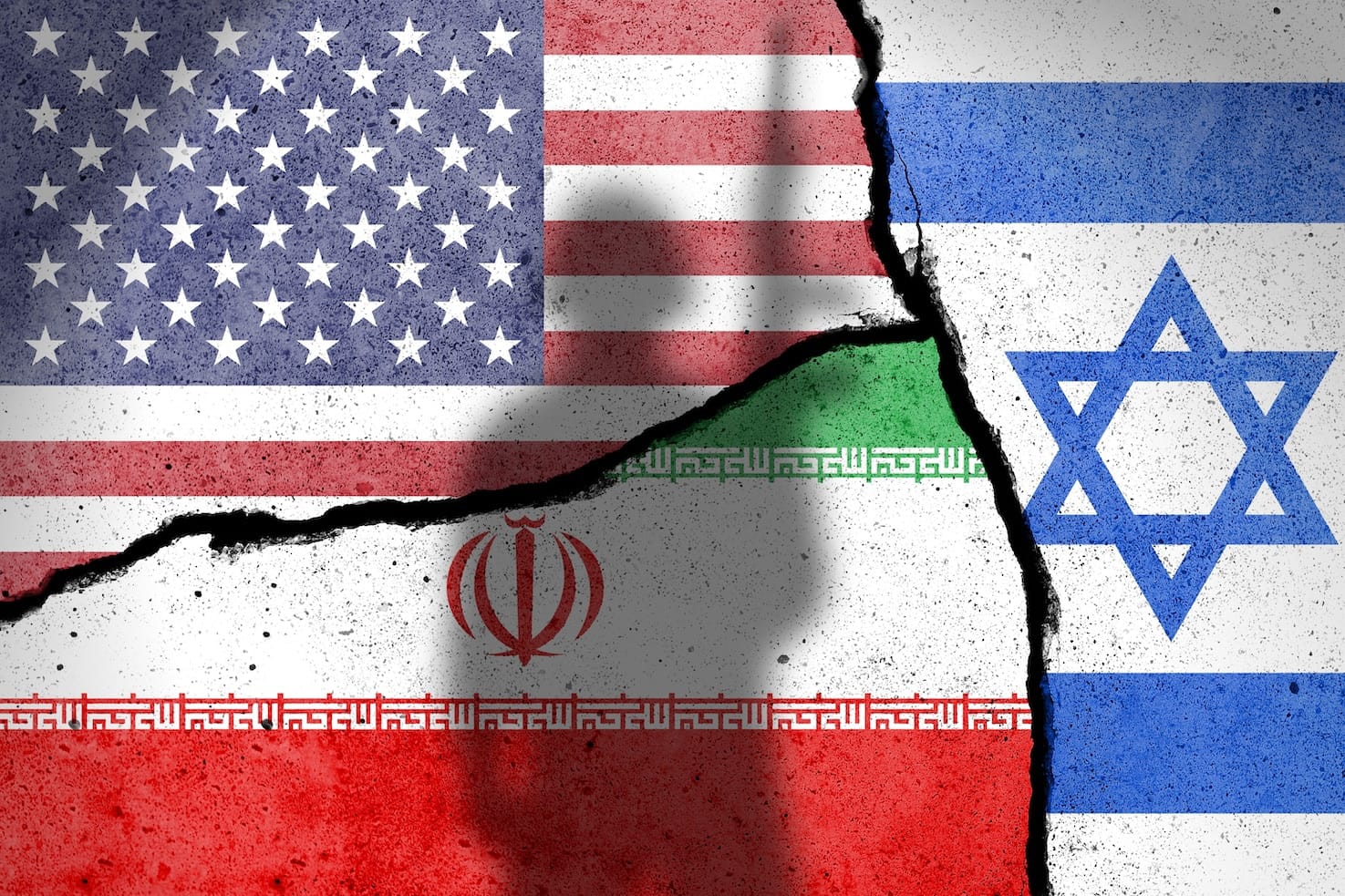


The U.S. and Israel launch a sweeping and coordinated military strike against Iran on Feb. 28. It’s being counted among the Middle East’s most serious confrontations in recent decades. Officially described as a pre-emptive attack (pre-emptive strike). America named it ‘Operation Epic Fury,’ and Israel named it ‘Operation Roaring Lion.’ Iran’s military infrastructure, leadership installations, nuclear facilities (Natanj), and advanced air defense systems were targeted during the campaign. Action exemplifies modern multi-dimensional warfare. Seen a combination of air power, cyber capability, space-based surveillance, and psychological pressure. The US and Israel call it a necessary step against the ‘existential threat’ posed by Iran’s nuclear ambitions and its regional proxy networks. Tehran, on the other hand, has termed these attacks as unprovoked aggression and a violation of international law.
Background And Strategic Context Of The War
The Iran–West collision of 20th-century events is of utmost importance to understand. Raza Shah Pahlavi took power in 1925 after Raza Khan’s coup in 1921. He pursued a policy of centralization and modernization. He had to step down in 1941 under pressure from Britain and the Soviet Union during World War II. His son Mohammad Reza Pahlavi became Shah. Israel’s first prime minister since the 1948 Arab–Israeli War, David Ben-Gurion, adopts the ‘periphery principle.’ Under it, ties to non-Arab countries like Iran were strengthened. At that time Iran gave oil to Israel, and there was intelligence and military cooperation between the two. Shah Mohammad Reza Pahlavi runs the West-backed modernization and ‘White Revolution’ program. It did lead to economic growth but also increased discontent among traditional and religious classes.
The Islamic Republic was founded after the year 1979 Islamic revolution led by Ayatollah Khomeini. Iran then pursued anti-American policy. The Iran-Iraq War of 1980–88, a long series of sanctions after, and a dispute over the nuclear program made tensions permanent. Iran’s nuclear program, ballistic missile development, and support to regional terrorist groups (Hezbollah (Lebanon), Hamas (Gaza), and Yemen’s Houthi rebels) made matters more serious. The 2015 nuclear deal (JCPOA) was a stress-reducing effort for a while. But the situation worsened again after the U.S. pullout in 2018. Current conflict is thus the result of decades-old mistrust, power politics, and historical continuity of regional competition.
Impact On Iran’s Leadership
U.S. and Israeli air and missile strikes have killed several high-ranking military and security officials, including senior commanders of the Islamic Revolutionary Guard Corps (IRGC), with the death of Iran’s supreme leader, Ayatollah Ali Khamenei. It’s generated a major vacuum in the leadership structure. Khamenei’s death has formed an interim leadership council. It includes current president Masoud Pezeshkian, judicial chief Gholam Hussein Mohseni Ejai, and senior cleric Alireza Arfi. This council is temporarily leading the country, unless a new supreme leader is elected. While this change is an effort to continue the country’s governance system, many experts believe situations like leadership vacuums and internal power struggles may arise.
Iranian society’s response isn’t even uniform. The country is torn between two pressures: an oppressive and incompetent regime inside and the threat of foreign intervention outside. People have almost given up hope of improvement, as efforts have failed time and time again. Still apprehensive about the fall of the regime, as Iraq, Libya, Syria, and Afghanistan have seen chaos and instability following Western intervention. So many Iranians rely neither on the current regime nor on outside powers.
What Is Iran’s Strategy In War?
Conflict has moved beyond traditional bilateral confrontation to multi-dimensional strategic competition.
Patience vs quick decisiveness: Ali Larijani is secretary of Iran’s Supreme National Security Council. They’re projecting war as an ‘endurance contest.’ Message that time could work in Iran’s favor, as protracted conflict would raise U.S. and Israeli military, economic, and political costs.
Erosion-based missile strategy: Iran is reportedly conducting phased strikes, first with radar and air-defense sensors, then reducing the opponents’ stockpile of interceptors from low-cost drones/missiles, and later using advanced weapons. Its goal is not immediate massive destruction but gradually reducing the opponent’s defense capability.
Psychological warfare: The continued firing of missiles at important sites in Israeli cities and allied countries of the US (Qatar, Kuwait, Bahrain, the United Arab Emirates, Saudi Arabia, Iraq, and Jordan) and at US bases located there is not only aimed at military pressure but also at causing prolonged economic losses and social fatigue by creating shelter conditions.
Energy and maritime dimension: Strictness in the Strait of Hormuz signed by Iran’s Islamic Revolutionary Guard Corps (IRGC) points to the global energy supply (about 20 percent of global oil) being used as a strategic weapon.
Decentralized Mozac defense doctrine: It’s that military strategy of Iran whereby the country is divided into 31 provincial military units. Where every commander enjoys relatively autonomous authority over drones, missiles, and local forces. This structure is built to neutralize a ‘decapitation strike,’ so operations can continue even if central communications are disrupted. It is in this context that President Masoud Pezeshkian’s extension of emergency powers, along with ensuring regime continuity and strong warnings on dissent, indicates a strategy to give top priority to internal stability and prevent potential internal instability.
This war is now raging simultaneously at military, economic, psychological, and regional levels. The decisive question is whether this multi-level pressure will hold up against U.S. and Israeli firepower.
What Are The Future Possibilities Now In War?
The U.S. claims the ongoing war against Iran is aimed at the prevention of nuclear programs, ballistic missile proliferation, and state-sponsored terrorism. The U.S. argues Iran’s up to 60 percent enriched uranium capacity, which could be quickly scaled up to 90 percent (weapons-grade), is a serious nuclear threat. Her regional networks also threaten international security. But it’d be incomplete to look at it only from a security perspective. There are also extensive geopolitical calculations behind this conflict, among them recreating the balance of power in West Asia, limiting Iran’s regional influence, and maintaining influence on strategic sea lanes. Especially on the Strait of Hormuz.
Donald Trump believes conflict could take a turning point within four to five weeks. He believes goals like regime change in Iran could be achieved relatively quickly by increasing military pressure through intense air and missile strikes. So the US is trying to destroy Iran’s strong underground missile facilities and military structures. However, there have been many examples in history of the fact that it is difficult to make lasting political change through air strikes alone. It’ll require presence on the ground and long-term military commitment. Which can have enormous human and political costs. If Iran strategically manages to prolong conflict, it could have far-reaching consequences. A long war could lead to regional instability, expansion of proxy fronts, and global power-balance shifts.
What Is India’s Interest And Its Strategy?
Ongoing fighting between the U.S., Israel, and Iran directly affecting India’s core national interests. For India, West Asia is not just a battleground, but it could become a major cause of its energy security, diaspora welfare, trade connectivity, strategic balancing, and domestic economic concerns.
Energy security is India’s major concern. The Strait of Hormuz is located between Oman and Iran. Any kind of interruption to it could push global oil prices faster. About 50 percent of India’s crude oil and gas imports come from the Gulf region. Simultaneously, about 53 percent of LNG imports come from Qatar and the UAE, while 85 percent of LPG also comes from the Gulf. Supply bottlenecks and Brent-linked price hikes could deal India a double blow. If oil becomes $10 a barrel more expensive, the current account deficit could rise 40–50 basis points. This could reduce pressure on the rupee, raise inflation, and increase the chances of an RBI rate cut.
How Many Indians Live In West Asia?
The Indian diaspora is an urgent factor. Nearly 9 million Indians live and work in West Asia. These people mainly settled in Gulf countries. There are about 3.5 million Indians in the UAE, about 2.5 million in Saudi Arabia, about eight million in Kuwait, about seven and a half million in Qatar, and about seven million in Oman. Bahrain and other regional countries also have small but important communities. A large portion of India’s annual remittance inflows comes from Gulf countries, which surpassed $120 billion in 2023-24. In case of Iran-linked cases escalating, evacuation operations like the 2015 Yemen mission (Operation Relief) may be needed. Ensuring the safety of millions of Indian workers will be a humanitarian responsibility and politically sensitive priority for New Delhi.
Connectivity and strategic projects are at stake. India’s investment in Iran’s Chabahar Port is necessary to reach Afghanistan and Central Asia by bypassing Pakistan. Cases escalating could slow infrastructure development and make sanctions difficult to follow.
Fourth, strategic balancing is necessary. India’s strategic autonomy is based on three complex balances: deep defense technology and security cooperation with Israel, a comprehensive strategic partnership with the US and Chabahar port, and energy ties with Iran. India traditionally supports de-escalation, international law, and dialogue without joining a bloc. As such, this military operation could become a defining moment in modern Middle East history.
Read Also:
- Israel-Iran War: Why Are Israel And Iran Thirsty For Each Other Blood? What Is The Role Of America? Know The Root Of The Entire Controversy
- Iran-Israel War: On What Issue Did The War Between Israel And Iran Break Out? Understand The Full Story From 1957 To 2026
- Iran-Israel War 2025 Reason: What Causes The Iran-Israel War? Not Just The Atomic Bomb—Know The 5 Reasons For The Fight
- Why Did Israel And America Attack Iran? 5 Big Reasons That Forced Superpowers
- How Did Iran And Israel, Who Were Once Friends, Become Staunch Enemies Of Each Other? Why Is This War Happening
- ₹62,000-Crore Power Scam Is Creating A Stir In Bihar: Former Minister Demands CBI Probe
- Foundation Of India: What Nehru Made For A Modern Nation
- Why Is Indian Prime Minister Narendra Modi Considered To Have Close Relations With Big Indian Businessmen Like Gautam Adani And Mukesh Ambani
- The Outcome Of Electoral Bonds: An Analysis Of The Government Defence And The Opposition Investigation
- Electoral Bond Scandal: Opaque Political Funding That Has Been Going On In India For Decades Exposed
- Electoral Bond Scam: India Biggest Extortion Racket Exposed
- Washington Post Reveals: How LIC Funds Were Used To Support Adani
- LIC And Adani: Understanding The Debate On Investment Of Rupees 33,000 Crore
- The Rise Of Gautam Adani: Understanding His Business Empire And Wealth
- Real Story Of Narendra Modi
- Inept Leadership: How The Lack Of Ground Reality Is Weakening Indian Governance
- The Scary Truth Of Life Under Kim Jong Un: Control, Fear, And A Silent Revolution
- Electoral Bond Scam Comes To Light: Freedom India Biggest Extortion Racket
- The Real Narendra Modi: Psychologist Ashish Nandy Disturbing Discovery And Authoritarian Blueprint
- How Politics Affects Your Life
- Politics Of Fraud: Understanding The Growing Wave Of Scams In India And Around The World

Leave a Reply