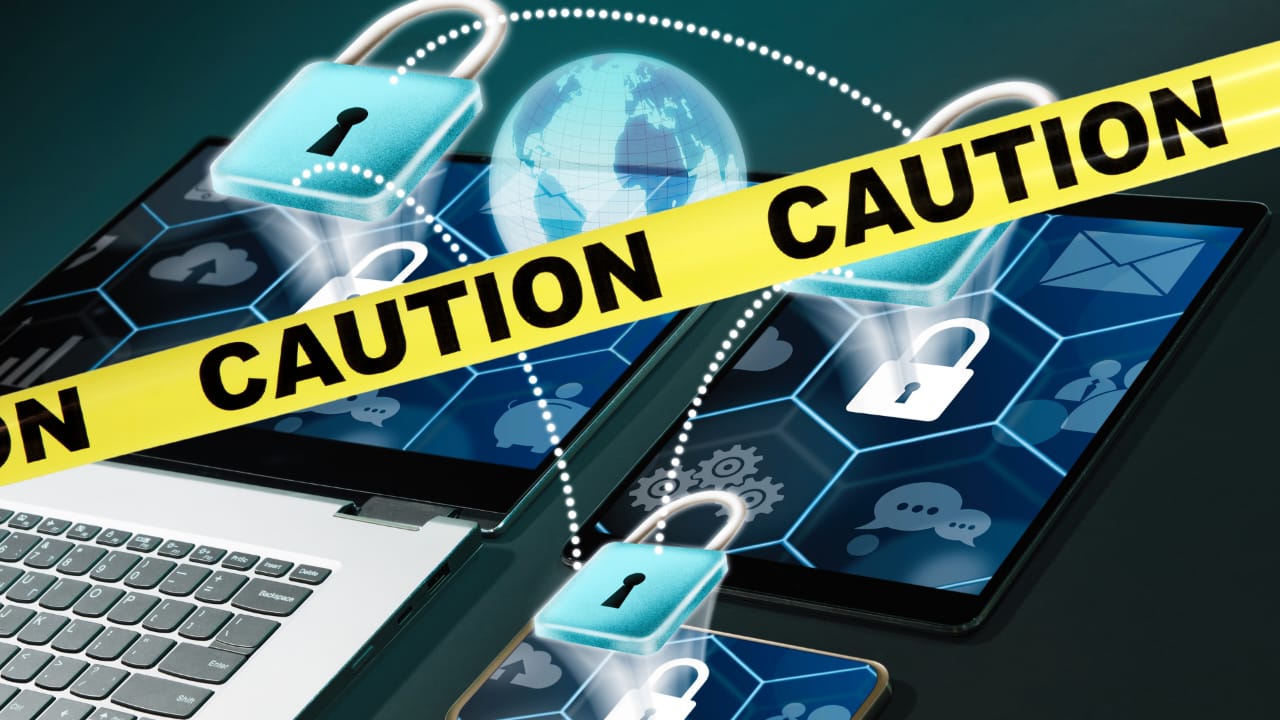



The phrase “caution is security” in the context of cyber crimes means that being alert, careful, and aware when using digital technology is the best defense against online threats. In simple words, it teaches that prevention is always better than cure in the digital world. Just as a person who drives carefully avoids accidents, a person who uses the Internet carefully avoids cyberattacks, scams, and data theft. Cyber crimes are on the rise every day – from hacking and phishing to identity theft and ransomware. In such a situation, taking precautions to survive in the digital world is not just an option but a necessity.
Caution in the cyber world refers to everything that protects your personal, financial and business information from unauthorized access. This means thinking before clicking on any link, downloading a file, or sharing your personal information online. Many cybercrimes are not caused by technology failure, but by people’s negligence – such as sharing passwords, using public Wi-Fi for transactions, or relying on anonymous messages. Thus, “Caution is Security” reminds every Internet user that awareness and caution are the real shield against cybercriminals.
The meaning of this idiom also extends to developing the habit of digital hygiene – such as regularly updating software, using strong passwords, avoiding suspicious websites, and enabling two-factor authentication. These small steps of caution can save people from major losses. Hackers often target people who are careless, because a small mistake, such as clicking on a phishing email, can expose all personal and bank details. Therefore, being alert and suspicious of anything unusual online becomes the best defense mechanism.
Furthermore, in the context of social media, “caution is security” teaches that sharing too much personal information – such as your address, holiday plans, or daily routines – can attract cyberstalkers and cheaters. Even a simple post can be misused. Therefore, thinking twice before sharing anything publicly is an act of caution that ensures safety. The phrase also highlights that technology alone cannot make people safer; using it wisely requires human intelligence and awareness.
In the broadest sense, “caution is security” in cybercrimes emphasizes that security begins with personal responsibility. Governments can create cyber laws and companies can create security software, but if individuals are careless, no law or software can protect them completely. Therefore, being alert, disciplined and educated about online risks is the first and most important measure of safety. In the world of cyber crimes, true security belongs to those who remain alert every moment while online.
1. Awareness prevents harassment – In the context of cyber crimes, awareness acts as the first and most powerful defense line. Globally, many cyberattacks have only succeeded because individuals or organizations lacked adequate awareness of online threats. For example, the infamous WannaCry ransomware attack in 2017, which infected more than 200,000 computers in 150 countries, was largely effective because many users were unaware of security patches previously released by Microsoft. Unknown individuals clicked on malicious links or opened infected email attachments, causing it to spread. If there were more awareness campaigns and user education, millions of dollars in losses could be prevented. Similarly, a Yahoo data breach in 2013 affected more than 3 billion accounts, where phishing and poor understanding of password protection led to massive credential leaks. These cases highlight that when users remain alert, learn about modern scam strategies, and confirm suspicious digital communications, they can recognize early signs of fraud. “Caution is security” perfectly illustrates that having information transforms a person from a potential victim to an active defender against cybercrime.
2. Avoiding suspicious links – One of the simplest but most overlooked precautions is to avoid suspicious or unknown links. Cybercriminals commonly use malicious links embedded in emails, social media messages or pop-up ads to trick users into showing sensitive data or downloading harmful software. A notable example of this is the 2016 Democratic National Committee (DNC) email hack in the United States. Hackers sent election campaign officials phishing emails containing a fake Google login page link. When recipients clicked on the link and entered their passwords, attackers would have unauthorized access, affecting major political events. Similarly, Operation Fish Free in 2009 involved an international gang of cybercriminals in the US and Egypt who sent fraudulent bank emails that were taken to fake websites and stole millions of dollars. These real-world examples demonstrate how a careless click can open the door to massive cyber damage. Vigilant users who avoid unknown links reflect the concept of “caution is security”, as their careful behavior stops crimes before they even begin.
3. Strong Password as Digital Locks – A strong password is like a secure lock to protect digital assets. In the cyber world, weak passwords are the equivalent of leaving the front door open. Many international cases have proved this. For example, in a LinkedIn data breach in 2012, hackers exploited weak password storage systems and exposed more than 117 million user credentials by cracking simple passwords such as “123456”. Similarly, about 153 million accounts in Adobe Breach were damaged in 2013, many of which were using weak or repeated passwords. Hackers used these stolen credentials on multiple platforms, further adding to the damage. Modern security agencies such as the FBI and Europol insist on the use of complex passwords containing large and small letters, numbers, and symbols. These act as strong digital barriers against brute-force or dictionary attacks. According to the principle of “caution is security”, creating a strong password is a preventive measure born out of caution—every complex combination becomes a shield that protects identity, finance and private communications from global cyber threats.
4. Regular password updates – Over time, even the strongest passwords can be at risk through leaks or break-ins. Updating passwords regularly is a proactive way to reduce long-term risk. A well-known example of this need was seen in the Dropbox security break-in in 2012, where hackers managed to access millions of accounts by means of a reused password of an old break-in. Similarly, reused LinkedIn data resurfaced years later on the dark web, allowing criminals to exploit people who never changed their credentials. Companies like Twitter and Facebook have repeatedly urged users to reset passwords if vulnerabilities or massive credential leaks are detected. Cyber experts emphasize that changing passwords every few months reduces the usefulness of stolen data because old credentials don’t matter to hackers. This cautious routine is perfectly in line with the principle of “caution is safety”. This ensures that even if attackers manage to obtain login details from an old event, regular updates work like a safety valve— keys become useless and the digital space becomes safe once again.
5. Two-factor authentication (2FA) – Two-factor authentication represents a major advance in personal digital security. It adds, in addition to just the password, a second verification level, such as a one-time code or biometric scan. The significance of 2FA was highlighted during events such as the 2016 Dropbox breach and Google’s account security efforts. In both cases, accounts secured by 2FA remained secure even when hackers had login credentials. The Sony Pictures hack by North Korean hackers in 2014 also demonstrated that the absence of multi-layer authentication could expose sensitive data extensively. In response, global tech giants like Apple, Microsoft and Google mandated 2FA for administrators and high-risk accounts. “Caution is security” in this context means accepting that passwords alone are no longer sufficient. Two-factor authentication is an act of caution that has been put into practice—it turns digital care into an unbreakable habit that can prevent almost 99% of common account hijacking attempts worldwide.
6. Identification of phishing emails – Phishing remains the most common path to cyber attacks worldwide. Identification of phishing emails requires caution, attention, and education. For example, in 2013 the Target data breach, which affected more than 110 million consumers, began when employees of a third-party vendor fell for a phishing email that installed malware in Target’s network. Similarly, Google and Facebook fell victim to a $100 million phishing scheme between 2013 and 2015, in which a Lithuanian hacker impersonated a hardware vendor and incited employees to send payments to fraudulent accounts. These events show that phishing is not limited to individuals; even large companies can fall victim to it. Vigilant users who check sender details, verify URLs, and never share credentials via email prevent such crimes. This lesson aligns perfectly with “Caution is Security”, as being alert to fake communications can prevent some of the world’s most dangerous cyber intrusions before they can be harmed.
7. Secure Wi-Fi Networks – Wi-Fi networks are digital highways connecting our devices to the Internet, and it is vital to keep them secure. Many global attacks have used insecure networks to intercept sensitive data. For example, a KRACK Wi-Fi vulnerability discovered in 2017 exposed weaknesses of WPA2 encryption, affecting billions of devices worldwide. Hackers could intercept traffic and steal login information transmitted over unsecured networks. Another landmark example is the TJX Companies hack (2006-2007), where cybercriminals used unsecured Wi-Fi in retail stores to steal customers’ credit card data, causing more than $250 million in damages. The use of password-protected, encrypted Wi-Fi (WPA3) prevents such intrusions. Changing the router’s password and disabling remote access further reduces the risk. The principle of “caution is security” reminds us that digital vigilance should also be extended to home and office routers—because a single unsecured Wi-Fi connection can open the door to massive cyberattacks, as has been repeatedly proven in global cases. Has happened.
8. Avoid public Wi-Fi for banking – Public Wi-Fi found in cafes, airports or hotels is convenient, but extremely vulnerable to financial activities. Hackers often create fake hotspots or use “man-in-the-middle” attacks to intercept data. A prime example of this is Firesheep, a 2010 browser extension that allowed anyone on public Wi-Fi to hijack unencrypted sessions on platforms like Facebook. Similarly, in 2018, cybercriminals in Europe were caught running fake airport Wi-Fi networks to gain banking credentials from passengers. In another case, a British café network was hacked by attackers who were redirecting users to fake banking pages. It is therefore extremely dangerous to transact on such networks or to enter credit card information. Vigilant users who wait before using a secure, private Internet connection realize the idea that “caution is security” Avoiding convenience in favor of security ensures that financial data remains private, protecting users from theft, which could otherwise lead to devastating fraud globally.
9. Updated Software and Systems – Cyber criminals constantly take advantage of the weaknesses of old software to break into the system. WannaCry ransomware is once again a blatant example of this— in 2017 its global damage was mainly caused by unpatched Windows systems. Organisations such as Britain’s National Health Service (NHS) suffered catastrophic failures, bringing hospitals’ operations to a standstill. Similarly, the Equifax data breach in 2017, which exposed the private information of 147 million Americans, occurred because the company failed to update a known weakness in Apache Struts. These actual events emphasize that ignoring updates can turn a simple omission into a major security crisis. System updates are not just technical work; These are a defensive shield against known attack methods. “Caution is security” means taking these updates seriously, understanding that each patch is a repair of a broken wall of your digital fortress. So staying updated is not optional but an ongoing act of self-protection in the global war against cybercrime.
10. Use of trusted antivirus programs – Trusted antivirus software remains the cornerstone of digital security. Antivirus programs detect, quarantine, and remove malicious software that would otherwise go unnoticed. Historical evidence supports their importance. In 2000 the ILOVEYOU virus infected more than 45 million computers worldwide and caused $10 billion in damage, mainly because many users lacked active antivirus protection. Later, attacks such as Mydoom (2004) and Conficker (2008) quickly spread to insecure systems. Modern antivirus solutions have been able to detect not only traditional viruses, but also spyware, ransomware, and phishing attempts. In 2010, during the discovery of the Stuxnet worm—which targeted Iranian nuclear installations—security researchers revealed that antivirus software was one of the first devices to detect its abnormal behavior. Therefore, using a reliable antivirus is not crazy; This is a conscious precaution. Within the “caution is security” principle, antivirus security represents the practical side of vigilance – a digital protector that prevents invisible threats from turning into global cyber disasters.
11. Backing up data regularly – Regular data backup serves as the strongest protective shield against cyber disasters, implementing the principle of “caution is security”. In 2017, the WannaCry ransomware attack forced millions of users in 150 countries out of their own systems. Hospitals, banks and businesses lost important information overnight. Many organizations that did not have backup systems were forced to pay a ransom or lose their data forever. In contrast, organizations that maintained offline or cloud backups quickly restored operations without succumbing to hackers’ demands. Another notable example was the NotPetya cyberattack in 2017, which caused massive data corruption in companies such as Maersk and FedEx, causing billions in losses. Maersk only recovered because a backup server in Ghana survived the attack. These examples prove that persistent data backup— stored separately from the main system— is a function of digital caution that guarantees survival and continuity in the unpredictable world of global cybercrime.
12. Avoid file downloads from unknown sources – Cybercriminals often hide malware as useful software or free media files. This strategy has caught millions of users around the world. For example, the 2007 Storm Worm outbreak was spread through email attachments promising “breaking news” or “holiday screensavers”. When users downloaded these files, their systems turned into bots, creating one of the largest spam networks in history. Similarly, during the 2020 global lockdown, fake COVID-19 trackers disguised as legitimate apps infected countless devices with Trojans. CryptoLocker ransomware also spread widely through pirated or counterfeit software downloads. In all these cases, curiosity and carelessness spread widespread infection. Downloading files only from trusted, authoritative sources such as verified websites or the App Store reflects the idea that “caution is security” It means resisting temptation, confirming authenticity, and understanding that every download carries potential risk—a little caution can prevent large-scale global cyber intrusion.
13. Caution on social media – Excessive sharing on social media platforms can prove to be a gold mine for cyber criminals. Hackers, identity stealers and stalkers take advantage of personal information shared on sites like Facebook, Instagram or Twitter. The 2018 Cambridge Analytica scandal exposed how over 87 million Facebook users’ personal data was gathered without their consent and misused for political manipulation. In another case, criminals in Britain used public holiday posts to find out when people were out of the house, leading to physical looting. Cyber hunters also use personal information—birthday, pet names or addresses— to guess passwords or answer security questions. These events emphasize that every information shared online can be weaponized. Exercising restraint, limiting visibility and avoiding unnecessary disclosures, reflects the wisdom hidden behind “caution is safety”. Social media was designed for engagement, not risk; therefore, careful self-censorship ensures personal safety in a period where private life is becoming the easiest target of global digital exploitation.
14. Identification of fake apps – The increasing trend of smartphones has also given rise to fake apps that steal information or install spyware. A well-known global case of Judy malware was reported in 2017, where more than 36 million Android users downloaded infected apps disguised as children’s games. Another example is the incident of XcodeGhost in 2015, when several iOS apps made from a doctored version of Apple’s Developer Toolkit infected millions of iPhones in China and other regions. These malicious apps secretly collected data and sent it to external servers. Cybercriminals depend on user negligence—people install apps without checking reviews, permissions or developer authenticity. Identifying fake apps means checking the App Store’s publishers, number of downloads, and permissions requested. It embodies the principle of “caution is safety”, because prevention depends on vigilance, not reaction. A single fake app can endanger cameras, microphones and even banking details, proving that vigilance during installation is the difference between digital security and irreversible loss.
15. Secure Online Payments – Online financial transactions have transformed global commerce, but they are also major targets for cybercriminals. It is important to use only verified and encrypted payment gateways. In 2013, Target Retail Data Breach exposed the credit and debit card details of more than 40 million customers in the U.S, largely due to intercepting unencrypted payment data during processing. Similarly, in a British Airways data breach in 2019, hackers inserted malicious code into the airline’s website, redirecting users’ payment details to a fake domain. These international events illustrate the importance of the verification of security certificates and the use of reliable payment systems such as PayPal or verified bank portals. Vigilant users also check security indicators such as HTTPS and avoid saving card details online. “Caution is security” applies here as the guiding rule: a moment’s verification before payment can prevent years of financial distress, proving that security awareness is the real price of digital convenience.
16. HTTPS is a symbol of security – The difference between “http://” and” https://” can determine whether your online activity is secure or exposed. “S” means “secure”, denoting encrypted communication between the user and the server. Transactions on unencrypted websites led to several large-scale global data thefts. Prior to 2015, many fake banking sites without HTTPS acquired credit card information from unsuspecting users. In 2010 the Firesheep tool showed how hackers could hijack sessions on unencrypted websites over public Wi-Fi, leading giants like Facebook and Gmail to implement HTTPS by default. Google also began ranking HTTPS sites higher in order to boost security. Using only HTTPS websites is a practical example of “caution is security”—it turns awareness into security. Every time a user checks HTTPS, he or she ensures that his or her personal information travels through a secure, encrypted channel, making it impossible for cybercriminals to intercept sensitive communications or transactions globally.
17. Avoiding email attachments from anonymous senders – Email attachments are one of the oldest and most effective delivery systems for cyber attacks. The 2000 ILOVEYOU virus, which spread through an email attachment disguised as a love letter, infected more than 45 million computers worldwide and caused billions in damage. Another important example is the Melissa virus (1999), which paralyzed the network by overloading email servers. Most recently, in 2016 Locky ransomware spread through fake invoice attachments, encrypted files and demanded ransom. Despite decades of technological progress, human error— clicking on unknown attachments— remains the weakest link. Taking precautions by scanning attachments, confirming senders, and avoiding downloading from unfamiliar emails reflects the principle of “caution is security”. It emphasizes that vigilance, not just technology, is the best protection. Every uncovered suspicious attachment represents a victory for awareness over manipulation and a conscious step towards secure digital life in this era of constant cyber warfare.
18. Pseudo-identity scam detection – Pseudo-identity scams have become one of the most confusing cyber threats. Criminals often impersonate officials or trusted contacts to swindle their victims. The company lost $46 million in a 2015 CEO fraud attack on Ubiquity Networks after employees received fake emails from someone identified as the CEO instructing them to transfer money. Another case, known as the Business Email Agreement (BEC) scandal, has caused billions of dollars of corporate losses globally since 2013. Criminals have also taken the form of police officers or government officials to extort money from common citizens. Recognizing these scams requires a vigilant mindset— verifying identity by official means, questioning urgency, and not relying solely on email communications. The principle of “caution is security” fits perfectly here: every confirmation call, every moment spent verifying authenticity, acts as a barrier against deception. Pseudoidentity thrives on trust; therefore, caution becomes the only weapon to effectively eliminate it.
19. Avoid lotteries or prize scams – Lotteries or prize scams take advantage of human greed and expectation, making them one of the most frequent forms of cyber fraud. Worldwide, millions of people have been victims of fake emails or messages claiming to have won foreign lotteries or online competitions. The Nigerian 419 scandal is one of the earliest and most notorious examples of this, costing victims billions in total. Scammers promise big wins or legacies, but first ask for “processing fees” or personal information. In 2003, the Dutch lottery scandal targeted European citizens via real-looking emails, causing them huge economic losses. These scandals thrive on emotional manipulation, creating false enthusiasm for bypassing logic. Practicing doubt, ignoring unrealistic propositions, and affirming from authoritative sources reflect the true meaning of “caution is security”. Here awareness acts as a shield—those who question before believing, those who affirm before celebrating, protect themselves from the trap that constantly evolves with global technology.
20. Never share OTP – One-time passwords (OTPs) are personal security codes designed for short-term authentication, but often scammers exploit these through social engineering. In several global financial frauds, such as the 2019 European online banking scandal, victims received calls or messages from fake people claiming to be bank officials. After users shared their OTPs, criminals got instant access to their accounts. Another global case was reported during PayPal phishing campaigns in 2018, where fake customer service agents tricked victims into revealing OTP, leading to unauthorized withdrawals. Financial institutions repeatedly warn customers never to share OTP, even with employees. The principle of “caution is security” perfectly reflects this—each OTP is a digital key, and handing it over is like opening the lock of your home. A vigilante understands that no legitimate organization ever asks for OTP and therefore protects these temporary codes as if they were permanent shields of digital integrity and financial security.
21. Awareness about fake customer care numbers – Cyber criminals often exploit users who search for customer care numbers online, create fake helpline listings on search engines or social media platforms. Internationally, many users have lost thousands of dollars by calling fake support lines from companies like Amazon, Microsoft or PayPal. In 2019, Microsoft warned users around the world about scammers pretending to be “technical support” who would persuade victims to give remote access to their computers and steal sensitive financial information. Similarly, in the United States and Canada, fake airline customer care numbers appeared online, causing passengers to pay fraudsters a “rescheduling fee”. These cases emphasize that it is important to search helpline information only from official company websites. “Caution is security” means verifying any contact source before relying on it. A small step of caution—checking the authenticity of a number—can prevent data theft, financial fraud, or even the threat of thorough identification. Cyber awareness begins with careful verification at every talking point.
22. Avoid data oversharing on job portals – Online job portals often require users to submit resumes containing personal information, but oversharing sensitive data such as national identity cards, tax numbers or detailed addresses can lead to identity theft. Globally, fake job scams have increased since 2018, with criminals collecting personal details by posing as employers and misusing them for credit fraud or phishing. In LinkedIn recruitment scams exposed in the United States, fraudsters used fake job postings to entice candidates to share bank and passport information. Similarly, in Europe, there were several cases where scammers used fake “remote job” offers to steal identities and open fake accounts. The principle of “caution is security” reminds users that sharing minimum data is the safest way—only verified recruiters and legitimate companies should receive personal information. Awareness and restraint data in whatever we upload or publicly disclose can protect one’s identity from a global network of predators.
23. Monitoring bank statements – One of the simplest and most effective habits to prevent cyber fraud is to regularly review bank and credit card statements. Early detection of unusual transactions can prevent major losses. In 2014, Home Depot’s data breach exposed the payment card details of more than 56 million customers, but those who monitored their statements quickly recognized fraudulent activity and prevented further abuse. In another case, after the Equifax breach in 2017, many US citizens found that their credit history was being used for loans they had never taken out—, something that could already be identified through cautious financial monitoring. Cybercriminals often check stolen cards with small “microtransactions” before grand theft. An alert user who regularly checks accounts embodies the principle of “caution is security”. surveillance is no madness—it is financial hygiene. Early detection of unauthorized transactions helps victims act quickly, freeze accounts, and minimize losses, proving that persistent caution in the world of digital finance is what turns vulnerability into control.
24. Caution in using QR codes – The popularity of QR codes has brought new risks, as criminals can replace real codes with malicious codes that redirect payments or steal personal data. A well-known global example was seen in 2022 when fake parking meter QR codes in Texas and California led drivers to fraudulent payment pages. Similarly, European cyber agencies reported cases where scammers distributed QR codes associated with phishing websites or automated malware downloads. These “quishing” (QR phishing) attacks take advantage of trust and speed, as most users scan the code without verifying the source. The principle of “caution is security” is fully applicable here—users should only scan the code from reliable, visible sources and double-check the destination link before making any payment. A simple moment of verification—just reading the displayed URL—can prevent big financial losses. The world learned that even small black-and-white squares can be hidden in sophisticated cyber traps if not taken with caution.
25. Verify the authenticity of the website before purchasing – Online shopping provides convenience, but at the same time, opens the door to fraudulent e-commerce sites that copy legitimate brands. Around the world, thousands of buyers have fallen victim to such fake stores. In 2020, Europol reported an increase in fake sites selling fake COVID-19 content, where users paid but never found the products. Earlier, criminals in Amazon and eBay impersonation scams had created almost identical domains to trick customers into entering card details. Fake SSL certificates and stolen logos made these sites authentic. “Caution is Security” teaches consumers to check URLs, read customer reviews, and verify HTTPS connections before purchasing. The difference between “.com” and “.co” may be a sign of security or theft. As global e-commerce is expanding, caution is becoming the new currency of trust—because online stores may seem real, but only scrutiny ensures real protection from digital shopfront fraud.
26. Understanding Cyber Hygiene – Cyber Hygiene means maintaining a disciplined digital lifestyle through secure methods such as deleting spam, updating software, and avoiding suspicious links. Globally, poor cyber hygiene has led to some of the biggest violations in history. For example, during the 2017 WannaCry attack, older systems with no security patches allowed malware to spread unabated across 150 countries. Similarly, the NotPetya virus took advantage of careless update routines to cause $10 billion in worldwide damage. Good cyber hygien—, such as changing passwords regularly, clearing old data, and using secure Wi-Fi, works as a preventive medicine for technology. The idea of “caution is safety” is perfectly in tune with this thinking. Just as personal hygiene protects against physical diseases, cyber hygiene protects against digital infections. Maintaining these small daily habits makes users stronger protectors than easy targets, proving that online security is based not on complex devices, but on constant, vigilant discipline.
27. Limiting app permissions – Many mobile apps request access to contacts, cameras, microphones, or location data they don’t need. Such permissions, granted without consideration, can lead to surveillance or data theft. Around the world, many cases have exposed how apps secretly collect user data. In 2018, Facebook’s Cambridge Analytica case exposed how excessive data collection through app permissions made large-scale manipulation possible. Similarly, Android security researchers uncovered hundreds of flashlight and wallpaper apps that tracked users’ locations and sold information to advertisers. The “caution is safety” principle teaches that it is necessary to reject unnecessary permissions. Users should review each request and ask why an app needs some special access. Limiting permissions not only protects privacy, but also reduces vulnerability in the event of data breaches. Every denied permission is a digital boundary that protects identity and frees from invisible cyber intrusion.
28. Avoiding unverified plugins or extensions – Browser extensions and plugins improve the online experience, but unverified plugins can hide malware or trackers. In 2017, more than 37,000 Chrome users downloaded a fake AdBlock Plus extension, which Google removed for inserting ads and gathering data. Similarly, the DataSpii leak exposed the private information of millions of users via browser plugins. Attackers use these tools to monitor browsing activity, obtain credentials, and make changes to the page’s content. A cautious approach— installing verified, well-reviewed extensions only from the official store— in practice reflects the principle of “caution is safety”. Just as one does not install unknown software on a computer, the same care should be taken with browsers. Avoiding unverified plugins protects personal privacy, professional data, and even financial security from silent digital spying through even the smallest browser tools.
29. Identification of fake investment schemes – Promise of high returns has always attracted victims to financial cyber scams. One of the most notorious examples is the OneCoin scandal (2014-2019), in which investors from more than 175 countries lost nearly $4 billion in a fraudulent cryptocurrency scheme. Similarly, Bernard Madoff’s Ponzi scheme, although predating modern digital platforms, evolved online as scammers replicated this model via websites and email. Recently, fraudulent “getting rich quick” crypto platforms and Forex trading sites have targeted users across Europe and the US. “Caution is security” means understanding that legitimate investments never promise guaranteed profits. Verifying licenses, researching companies, and avoiding emotional decisions are important security measures. In the global financial landscape, skepticism is not negativity – it is prudence that protects money from manipulation in the rapidly changing, confusing world of online investment fraud.
30. Education on Cyber Threats – Digital literacy is the strongest social protection against cyber crime. Countries such as the United States, Singapore, and the UK have implemented national programs to educate students and staff about phishing, ransomware, and data privacy. The European Cybersecurity Month initiative, places a strong emphasis on training individuals to identify scams before they escalate. Studies show that 95% of cyber incidents are caused by human error or ignorance, highlighting why awareness campaigns are more effective than just technology. “Caution is safety” through education becomes a shared responsibility. When schools, families and workplaces discuss safe online behavior—, not clicking on suspicious links or keeping passwords safe—, they create a culture of vigilance. Global experiences prove that large-scale violations are less frequent in countries that invest in cyber education. Thus, widespread awareness transforms caution from an individual habit into a collective shield, strengthening global cyber resilience for future generations.
31. Avoid clickbait ads – When users encounter clickbait ads, the message of “Caution is Security” becomes important, as these are one of the most misleading tools used by cybercriminals around the world. Clickbats usually come with shocking titles, celebrity gossip, or “even nicer than true” offers aimed at arousing curiosity and emotional reaction. Once clicked, such links can redirect users to malicious websites that automatically download malware, steal cookies or capture login data. A well-known case was the Facebook clickjacking scandal of 2011, in which fake titles such as “See Who Saw Your Profile” defrauded millions of users. Clicking on these links allowed hackers to access user accounts and spread malware. Similarly, in 2017, fake cryptocurrency Giveaway ads on Twitter led to phishing attacks impersonating Elon Musk and major companies, stealing thousands of the victims’ dollars. These events show that digital caution— avoiding suspicious links and relying only on verified ads— acts as the first shield against online fraud.
32. Protection of children online – In the cyber age, the principle of “caution is security” is fully applicable to the protection of minors, since they are the most vulnerable group online. Children often lack awareness of digital risks, such as grooming, cyberbullying, and exposure to harmful content. A tragic global case is the Blue Whale Challenge, which unfolded in Russia around 2016, spread to several countries and caused several suicides. It tricked teenagers through psychological games, which ended in self-harm. Similarly, online hunters have been caught exploiting minors by befriending them and asking for their personal photos using social platforms like Roblox, TikTok and Snapchat. According to UNICEF reports, millions of children experience cyber-exploitation every year. Therefore, parental caution—using parental control, teaching secure communication and monitoring digital behavior— is extremely important. A careful approach ensures that technology becomes a means of learning and creativity rather than a threat to childhood safety.
33. Early reporting of cyber crimes – The principle of “caution is security” also emphasizes timely reporting of cyber crimes. Delays in reporting often give criminals the chance to erase tracks, transfer stolen funds, or cause further harm. For example, in the 2017 WannaCry ransomware attack that affected more than 2,00,000 computers in 150 countries, prompt notification by affected organizations helped cybersecurity teams release patches and limit global spread. In contrast, many small companies that delayed reporting suffered total data loss and financial collapse. FBI’s Internet Crime Complaints Center (IC3) receives millions of complaints annually, yet only a fraction are reported in the early few hours, when digital evidence is most obtainable. Immediate communication with cyber authorities or financial institutions can freeze stolen assets or block compromised accounts. Thus, early caution and informing can translate fear into action, protecting not only individuals but also the broader digital ecosystem.
34. Avoiding shared devices for confidential tasks – Using public or shared computers for sensitive activities such as online banking or official communications poses enormous cyber risks. Shared devices in cybercafes or public libraries may contain keyloggers, spyware, or cached data that record personal credentials. The Cambridge Analytica data scandal indirectly exposed how shared or insecure devices can leak data from logged-in sessions, which are then used for manipulation. Another case occurred in the US in 2013, when hackers gained access to personal accounts from public terminals by installing USB-based malware that copied stored passwords. “Caution is security” means accepting that public systems are never entirely private. Avoiding their use for confidential tasks, clearing browsing history and enabling two-factor authentication are necessary precautions. Ultimately, the safest tool is one that is controlled and maintained only by the user, making careful digital habits a daily safety measure.
35. Encryption of sensitive files – “Caution is security” principle is technically robust in encryption—, a security method that converts readable data into unreadable code. If files are stolen or intercepted, they remain useless without encryption keys. For example, when Sony Pictures was hacked in 2014, a huge amount of unencrypted data, including staff emails and unreleased films, was leaked, causing millions in losses. In contrast, companies like Apple and Signal protect user data with end-to-end encryption, ensuring that even servers cannot read messages. Similarly, following the Yahoo data breaches of 2013-2014, experts outlined encryption as the main solution to prevent mass identity theft. Vigilant individuals and organizations that encrypt backups, documents, and emails effectively reduce the risk of data misuse. Thus, encryption represents turning digital caution into practice— a tacit protection against unauthorized access.
36. Identification of ransomware behavior – “Caution is security” This principle is fully applicable to early identification of ransomware symptoms. Ransomware encrypts files and demands payment for releasing them, often spread through malicious attachments or software vulnerabilities. Global WannaCry and Petya outbreaks have proven that delayed response multiplies losses. Victims who saw files being renamed early or the system’s unusual deadlocks and disconnected networks immediately stopped full encryption. However, key institutions such as the UK’s National Health Service (NHS) faced heavy operational stalling as the infection went unnoticed for hours. In 2021, a colonial pipeline attack in the U.S. disrupted fuel supplies along the East Coast, causing millions in losses. Sudden file locks, unauthorized access messages, or high CPU usage identification may indicate ongoing ransomware activity. Thus, cautious observation and prompt isolation of affected equipment turn a potential disaster into recoverable loss, confirming that awareness is the best cybersecurity tool.
37. Avoid unknown Bluetooth connections – Wireless technologies like Bluetooth provide convenience, but also open invisible doors for attackers. “Caution is security” applies perfectly here, as cybercriminals use methods like bluejacking, bluesnarfing and bluebugging to steal information or gain control over devices. For example, in 2017, cybersecurity researchers revealed a BlueBorn vulnerability that affected billions of Android, iOS, and Windows devices, allowing hackers to infiltrate systems without user interaction. Earlier, during the 2004 CeBIT Expo in Germany, protesters had hacked phones within seconds using Bluetooth. Accepting random pairing requests or leaving Bluetooth “searchable” can lead to the disclosure of sensitive data such as contacts, photos, or business files. Disabling Bluetooth when not in use, pairing only with known devices, and updating firmware are important precautions. Careful use of this everyday feature ensures that the wireless feature does not turn into a silent threat.
38. Checking privacy settings on social media – “Caution is security” is important on social media platforms, where sharing excessive information can lead to identity theft or stalking. Many users inadvertently provide public access to their personal information, which criminals take advantage of for phishing or harassment. Cambridge Analytica Scandal Once again proof of this— more than 87 million Facebook profiles data misused for political targeting, simply because privacy permissions were relaxed. Similarly, cyber stalkers around the world have used data from Instagram and Twitter to track people’s location or routines. Limiting visibility by adjusting privacy settings, hiding personal contact details, and limiting friendliness requests from strangers are basic but effective measures of digital caution. Social media should connect people, not expose them. A cautious approach to privacy ensures personal safety in a world where information is as valuable as currency.
39. Caution in using USB devices – Removable drives are often considered harmless, but these are among the oldest and most frequent carriers of malware. Stuxnet worm (2010), one of the most sophisticated cyber weapons ever created, spread via infected USB drives and damaged Iran’s nuclear installations. This international case highlighted how a simple USB stick could endanger industrial systems. Even in the corporate world, employees who put up unknown drives have committed massive burglaries. IBM, for example, once banned all removable media in its network after repeatedly detecting malware infections from employees’ devices. Therefore, scanning USB before use, disabling the auto-run function, and avoiding distributing free or unknown drives to public events are important security steps. “Caution is security” means not blindly trusting an external device— because a careless plug-in can open the way to cyber attacks.
40. Digital reductionism – In the modern age of information overload, “caution is security” means adhering to digital reductionism. Every new app, online account or subscription expands a person’s digital footprint and increases vulnerability. Hackers take advantage of closed accounts or old apps with weak security. The 2019 Collection #1–5 data leak uncovered more than 3 billion credentials, many of them from old, unused accounts. Similarly, over-installing apps causes unnecessary permission sharing and background tracking issues. Digital reductionism encourages users to keep only essential tools, remove unused apps, unsubscribe from unnecessary services, and reduce online exposure. It also improves focus, privacy and system performance. Being digitally alert means not only protecting yourself from external threats, but also managing your habits wisely. In short, restraint is security—the fewer digital doors open, the less likely cybercriminals are to enter.
41. Avoiding password reuse – The saying “Caution is security” is extremely important in the case of password security. Using the same password for multiple websites or services has a digital domino effect—If one account is leaked, all linked accounts are at risk. A notable international example of this was the LinkedIn data leak in 2012, where over 117 million passwords were leaked. Many users had reused those passwords on Gmail, Facebook, and financial platforms, leading to massive identity theft and financial fraud. Similarly, in 2016, a dropbox leak revealed that millions of hacked passwords had been reused elsewhere, giving hackers the chance to access many unrelated services. Cybercriminals often use “credential stuffing”, an automated way to check stolen passwords on websites. Taking precautions using different passwords and password managers ensures that every account acts as an independent security cover. Thus, the wisdom of taking precautions translates into real security in digital identity and protection of financial assets.
42. Secure Cloud Storage Practices – As data quickly moves toward the cloud, “Caution is Security” becomes imperative when deciding how and where to store it. Cloud services provide convenience, but misconfiguration or insecure storage can expose sensitive data to breaches globally. In 2019, a Capital One data breach in the U.S. exposed 100 million customers’ information due to improper cloud firewall configuration. Similarly, in 2017, several Fortune 500 companies accidentally leaked data from Amazon Web Services (AWS) because their cloud buckets were publicly accessible. These events highlight that cloud security depends not only on providers but also on user caution. Selecting reputable services with end-to-end encryption, enabling two-factor authentication, and avoiding free or unverified storage platforms reduces the risks. Data stored securely in the cloud reflects digital sanity—a combination of convenience and caution ensures that technological advancements do not become a nightmare for privacy.
43. Regular Cyber Audits in Companies – The concept of “Caution is Security” is deeply applicable to organizations where regular cyber security audits perform digital health checks. Without these, unseen vulnerabilities can lead to massive data theft and financial losses. 2017 occurred equifax breach is a typical international case—hackers took advantage of an unpatched software flaw, leaking personal data of 147 million people. A simple internal audit could have detected missing updates in time. Similarly, the Target Corporation hack that occurred in 2013 was caused by poor network monitoring, resulting in the destruction of 40 million credit card records. Regular cyber audits evaluate systems, address vulnerabilities, test firewalls, and train employees. These transform reactive protection into active protection. By conducting regular digital inspections, companies adhere to the principle that continued caution is the foundation for long-term cyber resilience and corporate integrity.
44. Compliance with data protection laws – “Caution is protection” also regulates adherence to global data protection frameworks, such as the General Data Protection Regulation (GDPR) in Europe or the California Consumer Privacy Act (CCPA) in the US. These laws stemmed from major violations such as the Cambridge Analytica scandal that exposed how uncontrolled data misuse can affect global politics. non-compliance with such laws has been fined hundreds of millions of dollars—, for example, British Airways and Marriott International faced fines of more than £180 million for GDPR violations in 2020. Compliance ensures that personal data is handled transparently, securely and ethically. It also increases public confidence in digital services. Companies adhering to these frameworks demonstrate cautious foresight, combining technology with responsibility. In the field of cybersecurity, legal caution is not just a requirement, but a reflection of the ethical commitment to protecting each user’s digital identity.
45. Employee training on cybersecurity – The human aspect remains the weakest link in cybersecurity, making “caution is security” an important corporate philosophy. Many of the world’s biggest data breaches started with an employee clicking a phishing link. The events at Sony Pictures and RSA Security highlighted how social engineering can bypass even advanced security measures. In a 2020 Twitter hack, attackers used phone phishing to gain access to internal systems, damaging celebrity accounts. Proper employee training can prevent such crises by increasing awareness of phishing, spoofing, password protection, and suspicious links. Regular workshops, simulated attack exercises, and updated security policies turn caution into a daily habit. Digitally educated workforce becomes first line of defence. Therefore, in the context of cyber crimes, informed caution among employees protects the entire network from intrusion.
46. Avoiding panic in cyber threats – When a cyberattack occurs, fear often prompts users or organizations to take impulsive steps that further increase the damage. The principle of “caution is safety” teaches quiet analysis before reaction. During the WannaCry ransomware attack in 2017, several institutions paid ransom in panic—, yet their files remained locked because hackers had no decryption system. In contrast, companies that calmly isolated infected systems and contacted cybersecurity experts recovered data more effectively. Panic leads to mistakes such as deleting logs, ignoring evidence, or contacting fake “recovery” services. Maintaining composure ensures taking the right steps— disconnecting networks, keeping forensic data safe and seeking verified professional help. Digital caution, even during an attack, separates survivors from victims. Thus, peace itself becomes a form of cybersecurity.
47. Multi-level security systems – Cybercriminals are constantly evolving, so relying on any one security system is insufficient. “Caution is security” in cybersecurity means the use of multiple security layers—firewalls, intrusion detection systems, antivirus, and encryption. The SolarWinds hack that took place in 2020, which affected U.S. government agencies, exposed how attackers circumvented traditional security measures using backdoor software updates. Organizations with multilevel systems quickly detected anomalies and prevented violations soon. Similarly, banks around the world apply layered security—hardware encryption, AI-based fraud detection and biometric authentication— by combining them to reduce risk. This approach mirrors real-world security: just as a castle requires multiple walls, digital infrastructure requires overlapping security measures. Caution through redundancy ensures that even if one security fails, the other remains ready, thereby protecting valuable data.
48. Avoid over-sharing information on forum – Many cyberattacks start with information provided online for free. “Caution is security” cautions against sharing too much information on tech forums, social media or gaming chats. Hackers gather information such as operating systems, company names, or software versions to conduct targeted phishing attacks. In 2020, attackers took advantage of a Reddit forum post where a user had inadvertently shared company network information, leading to a spear-phishing breach. Similarly, in 2015, an employee of a U.S. defense contractor discussed internal equipment on a developer forum, providing hackers with clues to entry. These examples show how careless disclosure becomes a weapon in the wrong hands. Exercising restraint, maintaining anonymity, and avoiding excessive sharing of technical information demonstrate sensible precautions, which protects individuals and organizations from specially designed cyber attacks.
49. Device behavior monitoring – “Caution is security” also applies to identifying abnormal digital behavior early. Cybercriminals often sneak into systems, leaving subtle signals such as system interruptions, automatic restarts, or unexplained data usage. In an APT1 cyber espionage campaign uncovered by Mandiant in 2013, hackers infiltrated global corporations for years and extracted terabytes of data. Early surveillance could have quickly exposed him. Similarly, during the NotPetya attack in 2017, victims only saw slow networks and corrupted files hours before the entire outbreak. If they had acted immediately, the damage could have been minimal. Regular checking of device performance, use of monitoring devices, and updating the system are some forms of active caution. Awareness technology transforms users from passive victims to active defenders.
50. Use of VPN for privacy – A virtual private network (VPN) realizes the concept of “caution is security” by encrypting online activity and hiding the user’s identity. Without it, Internet service providers, governments, or hackers can track browsing data. International affairs highlight the importance of VPN—During the revelation of global surveillance by Edward Snowden in 2013, it became clear that legitimate Internet activity was also being extensively monitored. VPNs also protect users over public Wi-Fi, where criminals often disrupt traffic. In 2018, many hotel Wi-Fi networks in Europe were exploited by the Darkhotel hacking group, targeted at business travelers. People using VPNs remained unaffected, as their encrypted tunnels hid communications. The use of trusted VPNs, especially from trusted providers, secures digital freedom and privacy. This cautious step ensures that users maintain control over their digital footprints in a world where surveillance and cyber threats are constant companions.
51. Avoid unknown email surveys – The principle of “caution is security” is fully applied to online surveys, which are often used as a trap for phishing or data theft. Many cybercriminals conceal malicious intent under the guise of legitimate surveys, and promise rewards or rewards in exchange for personal information. A notable international case came to light in 2017 when cyber attackers used a fake Netflix satisfaction survey to gather login credentials and credit card information from thousands of users in the U.S. and Europe. Another example is the COVID-19 relief survey scandal in 2020, in which fraudsters pretended to gather health data to provide government support and stole sensitive information from millions of people. The lesson here is clear—online surveys, unless verified by official sources, can prove to be digital landmines. The sender ensures security by checking the authenticity of the domain and taking precautions by avoiding sharing confidential information. Thus, digital vigilance turns caution into a powerful shield against data exploitation.
52. Identifying Fake Software Updates – One of the most confusing cybercrime techniques is fake software update pop-ups, which install malware instead of legitimate patches. “Caution is safety” accurately describes the avoidance of this threat. In the 2017 NotPetya ransomware attack, hackers disguised their malware as a Windows update, distributed via an accounting software from Ukraine. Similarly, in 2020, a global Google Chrome Update scam tricked users into downloading ransomware. These events shed light on how even tech-savvy individuals can be deceived without careful verification. True caution means updating the software only from official websites or built-in update mechanisms, never from random links or pop-up prompts. This practice not only prevents malicious downloads, but also reinforces the mindset that conscious verification is essential for every digital action. Awareness and skepticism ensure security in a world where even a seemingly simple “Update Now” button can become a gateway to cyber chaos.
53. Digital literacy in rural areas – “Caution is security” does not mean limited to individuals, but to the entire community, especially those who are newly connected to the digital world. Due to limited digital awareness, rural populations globally have come under new target of cyber criminals. In 2021, reports received from African and South American countries showed an increase in scams targeting rural farmers through fake online banking or government schemes. Similarly, less literate populations were targeted through mobile-based loan app fraud in South-East Asia. These events underline that technological expansion without education leads to insecurity. Promoting digital literacy—understanding strong passwords, identifying phishing messages and verifying online transactions—builds a collective protective shield. International organizations such as UNESCO and UNICEF have initiated digital awareness programmes focusing on this need. Taking precautions as a part of digital education, it turns into security for the entire society. Strong awareness is the most permanent weapon against cyber exploitation.
54. Avoid screen sharing with strangers – The warning sentence of “Caution is security” also appears in the increasing trend of screen sharing scams these days. Cybercriminals, by becoming customer service agents or financial assistants, instigate victims to share screens through apps like AnyDesk or TeamViewer. In 2020, during the pandemic, reports emerged from around the world that fraudsters are using such tools to withdraw money from accounts by securing remote access. U.K. The National Cyber Security Center (NCSC) has warned users about such social engineering attacks and insisted on not sharing screens with strangers. Once accessed, attackers can record keystrokes, view passwords, or conduct unauthorized transactions. Taking digital precautions—verifying identity, denying remote access and immediately disconnecting the connection if in doubt— prevents exploitation. Every careful decision made before clicking “Allow Access” exemplifies the wisdom hidden behind the eternal truth that vigilance and cynicism are the cornerstone of cybersecurity.
55. Secure disposal of old devices – In today’s interconnected era, throwing away old devices without erasing data invites digital theft. “Caution is security” in this context means ensuring that all information is safely erased before disposal or resale. In 2019, a global check conducted by Blanco Technology Group revealed that 40% of older hard drives sold on eBay still contained sensitive personal or corporate data. Some also included military and medical records. Such negligence has led to identity theft, blackmail and corporate espionage. Complete destruction of data is necessary for true security—factory reset, safe erasure devices, or even physical destruction of hard drives. Many multinational corporations follow strict “life-end data policies” to prevent such leaks. Taking this level of caution not only protects personal privacy, but also prevents data from falling into criminal hands, making the disposal of each device a conscious act of digital responsibility.
56. Monitoring children’s gaming platforms – The principle of “caution is safety” becomes extremely important for the safety of children in the digital space. Online games such as Roblox, Fortnite and Minecraft are exploited by hunters and scammers, who seduce or dupe minors using chat features. In 2018, a global scandal broke when hunters used Roblox’s chat feature to share inappropriate content from children. Another case was a 12-year-old in the US who was duped by Fortnite’s fake skin offers. These events prove that entertainment platforms can become traps when there is a lack of alertness. Parents and guardians should monitor gaming interactions, use parental controls, and educate children about digital boundaries. Teaching children to exercise caution changes gaming from a risky playground to a safe learning space. In cybersecurity, awareness within the family does not mean madness—it is security rooted in love and responsibility.
57. Avoid excessive trust on chatbots or AI tools – The digital age facilitates through artificial intelligence, but it also demands caution. The principle of “caution is security” is becoming increasingly relevant as fraudsters exploit the growing trust in AI systems. In 2020, a shocking incident occurred when cybercriminals used AI-generated voice to impersonate a company’s CEO and defrauded a UK-based energy company of $2,43,000. Similarly, fake customer-support chatbots have appeared on platforms like Facebook and Telegram, collecting user credentials and payment details. Blind trust in automated systems undermines security. Users should confirm official websites, avoid sharing sensitive data with unverified bots, and remember that no legitimate AI service asks for confidential information. In a world where digital intelligence is growing daily, human caution is the ultimate defense. AI can increase convenience, but only awareness can ensure safety.
58. Regular device safety scans – Regular safety scans embody the principle that prevention is better than cure. “Caution is security” means not waiting for a visible threat, but detecting hidden threats early. Malware, Trojans and spyware often sneak into the background for months, gathering undetected data. In 2018, the CCleaner malware incident put millions of computers at risk via a trusted software tool that went unnoticed until routine scans revealed intrusions. Similarly, global companies such as Cisco and Deloitte have adopted regular system audits as part of their cybersecurity hygiene. Regular scans, along with updated antivirus programs, ensure that devices remain secure and responsive. This vigilante habit turns passive users into active defenders, reinforcing the global truth that security is the reward of preparedness.
59. Avoiding pirated software – The temptation of free or cracked software often hides disastrous consequences. “Caution is security” reminds users that shortcuts in technology can open the door to cybercrime. A global study conducted by the Microsoft Digital Crimes Unit showed that 61% of pirated software downloads contained malware or spyware. In 2020, a widespread malware campaign disguised as pirated Adobe and Microsoft products infected thousands of systems worldwide. Such programs often steal login credentials, monitor activities, and use the devices as part of a botnet. 2017’s WannaCry ransomware spread quickly through outdated and pirated Windows copies, proving that unlicensed software is a high-risk gateway. Using genuine software ensures regular updates, stability and legal security. Caution here does not mean paying more—it is about valuing security and responsibility than false convenience.
60. Recognizing Deepfake and Fake News – In the digital world, where truth and illusion are interconnected, “caution is security” has a deeper meaning. Deepfake—artificial intelligence (AI) manipulated video or audio— has been used for blackmail, misinformation and political manipulation. In 2019, a deepfake by Facebook CEO Mark Zuckerberg spread false statements about data control, confusing millions of people. Similarly, during global elections and conflicts, fake news campaigns have affected public opinion, threatening democracy itself. Both the US Department of Homeland Security and Europol have warned about the increasing misuse of deepfake technology. It is extremely important to exercise caution by re-examining information, relying on reliable sources, and avoiding impulsive sharing. Critical thinking becomes the digital shield against deception. In an era where reality can be rewritten digitally, alertness becomes the biggest defense, proving that awareness is the truest form of cybersecurity.
61. Safety of Smart Devices (IoT) – The principle of “Caution is Security” becomes particularly important in the case of smart devices, also known as Internet of Things (IoT). Devices such as smart cameras, door locks, thermostats, and even bulbs are connected to the Internet, making these potential entry points for hackers. Changing the default passwords of these devices is one of the most important security measures. In 2016, the Mirai botnet attack shocked the world when it infected millions of IoT devices such as security cameras and DVRs using their default factory passwords. The infected devices were then used for a mass distributed service prohibition (DDoS) attack, temporarily shutting down major websites in the US and Europe such as Twitter, Netflix, and Reddit. This incident showed that even small devices, if not properly secured, can cause massive cyber chaos. Therefore, simple precaution—changing passwords and updating firmware— can prevent destructive consequences.
62. Avoid excessive storage of sensitive information – Cyber experts insist that the more sensitive information you store on your devices, the greater the risk of cybercrime. “Caution is security” teaches us to minimize digital footprints. Storing large amounts of personal data, such as bank details, identity documents, or intimate photos, makes you an easy target if your device breaks down. A historical example is the Equifax data breach of 2017, one of the largest in history, where hackers gained access to the personal information of more than 147 million Americans because huge amounts of sensitive data were held in one place without adequate encryption. The attackers obtained names, Social Security numbers, dates of birth, and even driving license numbers. If the company had followed the principle of limited data retention—keeping only the necessary information.
63. Secure use of online storage drives – Cloud storage platforms like Google Drive, Dropbox, and OneDrive have made data sharing easier, but careless sharing can lead to international data leaks. The essence of “caution is security” lies in carefully managing permissions and ensuring that sensitive links are shared only with trusted individuals. In 2018, researchers found that several organizations, including NASA contractors and global corporations, accidentally exposed confidential files on the Amazon S3 bucket because the links were set to “public” access. The files exposed included financial records, private communications and internal reports. This mistake allowed anyone with links to download k— or sometimes even someone without links to download—important data. Therefore, taking precautions when setting sharing permissions and regularly reviewing access rights can avoid unintended disclosures. A simple click on the wrong setting can result in irreversible international risk, so it is important to double-check access levels before sharing any data online.
64. Regular monitoring of security warnings – Keeping up to date with the latest security warnings and advice from official cyber agencies is another important aspect of digital caution. In the international context, entities such as US-CERT (United States Computer Emergency Readiness Team) and ENISA (European Union Agency for Cybersecurity) continue to issue warnings about new vulnerabilities, malware outbreaks, and security patches. The lack of heeding of these warnings has led to major global cyber incidents. For example, when Microsoft warned users about a weakness of Windows in March 2017, many organizations ignored it. Months later, there was the WannaCry ransomware attack which took advantage of the same loophole and paralyzed hospitals, logistics companies and government offices in more than 150 countries across Britain’s NHS system. Total financial losses were over $4 billion. The disaster underlined that lack of attention to security updates could lead to cyber destruction globally. Regular monitoring of alerts puts individuals and organizations one step ahead of attackers – indicating that caution is actually protection.
65. Avoiding curiosity in questionable content – Human curiosity often becomes the weakest link in cybersecurity. Many cyber crimes begin when people simply click on unfamiliar attachments out of curiosity, download strange files, or open suspicious links. The principle of “caution is safety” is directly applicable here. The ILOVEYOU virus of the year 2000 is one of the finest examples of this in global cyber history. Millions of users worldwide thoughtlessly opened an email attachment titled “ILOVEYOU”, activating a self-replicating virus that overwrote files and caused billions of dollars in damage. This one act of curiosity caused chaos around the world, throwing businesses, governments, and even military systems into disarray. Lesson was clear— Never open files or links from unknown or untrusted sources. Curiosity may seem harmless, but in the digital world, it can be destructive. exercising self-control is not a sign of fear—it is the most powerful form of digital intelligence.
66. Avoid fake technical support calls – Technical support scams have become a global threat, exploiting users’ lack of technical know-how. The “Caution is Security” rule warns us to confirm any claims before sharing personal or financial information. Scammers often impersonate representatives of companies such as Microsoft or Apple, claiming that the victim’s computer is infected with malware. After receiving remote access, they steal sensitive data or demand payment for unnecessary “repairs”. Between 2014 and 2018, the U.S. Federal Trade Commission (FTC) filed more than 143,000 technical assistance scam complaints that cost victims more than $55 million. A major case involved a global operation operating from call centres overseas, affecting users in the US, UK and Canada. The main defense against such fraud is simple caution—legitimate companies never make unsolicited calls demanding payment or access. Verifying identity before trust can protect users from catastrophic financial loss and breach of privacy.
67. Regular security patches for operating systems – Cybercriminals often exploit known vulnerabilities that are not patched. When operating systems are not updated, they become easy entry points for attackers. The concept of “caution is safety” emphasizes that regular patching is not optional—it is necessary. A prime example of this is the 2017 NotPetya ransomware attack, which targeted businesses around the world by exploiting the same Windows flaw as WannaCry. Organizations that ignored Microsoft’s security patch suffered huge data losses and financial devastation, with losses exceeding $10 billion. Multinationals such as Maersk and FedEx were hardest hit, with operations paralysed for days. This incident emphasized that carelessness in updating the system is not just carelessness—it is a direct invitation to cyber criminals. The placement of the patch closes the doors before attackers can penetrate, making the regular update one of the simplest but most powerful shields in the digital age.
68. Avoid sharing private photos publicly – In the digital age, sharing private photos online can have serious consequences. “Caution is security” reminds us that once a photo is uploaded, control over it is lost forever. Cybercriminals can use these photos for blackmail, identity theft, or even deepfake manipulation. One of the most notable global events was the 2014 iCloud photo leak where hackers accessed private photos of celebrities through weak security questions and phishing attacks. These stolen photos were distributed on online platforms, causing emotional distress and global outrage. This case showed that even the safest looking systems can fail if users are not careful. Such privacy disasters can be prevented by limiting public sharing, using strong two-factor authentication, and regularly checking account activity. Once the data is online, it can never be completely deleted—, therefore, thinking before posting is the true digital precaution.
69. Avoid “beyond the truth” offers – Cybercriminals often exploit human greed by luring untrustworthy deals or rewards. The principle of “caution is safety” is fully applicable to such digital traps. For example, global scam campaigns like Nigerian prince’s email or fake Amazon reward messages have swindled millions of people by promising money in exchange for small installments or personal information. In 2019, Europol investigated a vast network of online shopping scams, where fake websites advertised discounted luxury items and electronics. Customers paid, but never received their order, resulting in a loss of millions of euros. Similarly, cryptocurrency investment scams promising 300% returns have cost people around the world billions. Simply put, in cyberspace, unrealistic offers are almost always fraudulent. Careful checking of website authenticity, domain names and reviews can protect users from falling victim to these. doubting is not negativity—it is wisdom that turns caution into protection.
70. Use of official apps for government services – Downloading fake apps as official government platforms has become an international problem. Cyber criminals design these look-alike apps to steal sensitive information such as national identification numbers, tax credentials or banking details. The principle of “caution is security” urges users to install apps only from verified sources such as Google Play or Apple’s App Store. In 2020, during the global pandemic, a number of fake COVID-19 tracking apps surfaced around the world, such as fake versions of Canada’s “COVID Alert” and the UK’s “NHS COVID-19” app. These apps secretly installed spyware or ransomware into users’ devices. In one case, a malicious app called “CovidLock” locked users’ phones and demanded a ransom of Bitcoin. These events demonstrate how cybercriminals exploit public trust in government institutions. Checking the authenticity, reviews and official announcements of the developer before downloading any app is an essential act of digital caution. A moment’s investigation can save a lifetime of regrets.
71. Understanding data encryption in messaging apps – The idea of “caution is security” is clearly reflected in the use of end-to-end encryption in communication platforms. This technology ensures that only the sender and recipient can read the content of messages, giving them protection from hackers or even from service providers themselves. Apps like WhatsApp, Signal and Telegram use encryption to keep billions of messages secure daily around the world. The importance of encryption was dramatically highlighted during the 2013 Edward Snowden revelations, which highlighted how intelligence agencies such as the NSA were hindering global communications through tech companies. The incident led to a worldwide push for encrypted communication devices as people realized their private conversations were unsafe. Without encryption, cybercriminals or even governments can easily read, alter, or abuse sensitive communications. Therefore, understanding and prioritizing encrypted apps, in a world where digital surveillance and cybercrime are becoming increasingly interconnected, is a user’s conscious choice to protect privacy.
72. Avoid fake social media accounts – Fake profiles on social media have become a powerful weapon in the hands of cyber criminals and riggers. The principle of “caution is security” teaches that blind trust in online identity can harm emotional, economic, and reputation. Catfishing scams, where people impersonate others and deceive victims, have devastated lives around the world. For example, in 2018, a U.S. Air Force officer lost more than $300,000 in a love scandal involving a soldier’s fake social media profile. Similarly, during the 2016 U.S. elections, fake accounts linked to foreign campaigns spread misinformation and tampered with political views on platforms such as Facebook and Twitter. These incidents show that fake profiles can lead to crimes, both personal and geopolitical. Verifying profiles, avoiding excessive sharing, and maintaining skepticism about new online connections can prevent such exploitation. As such, caution becomes an invisible shield against emotional manipulation, fraud, and digital subterfuge.
73. Safe Online Meetings – The global shift towards virtual communication has made online meetings an essential part of daily life, but also a target of cyber intrusion. “Caution is security” emphasizes that without appropriate measures, even private business meetings can be hijacked. During the COVID-19 pandemic, the world witnessed incidents of “zoom-bombing” where unauthorized individuals would sneak into online classes and conferences displaying offensive content or stealing confidential data. In 2020 these disruptions became so widespread that governments and corporations around the world issued advisories on how to secure meeting links with passwords and waiting rooms. The US Justice Department even warned that such intrusions could be prosecuted as cyber crimes. This incident taught the world that convenience without caution is dangerous. Using strong access controls, updating meeting software, and sharing links privately are simple but important steps to ensuring digital security in online collaboration. In the cyber world, preparation is security.
74. Avoiding the use of common passwords – Weak and repetitive passwords remain one of the biggest causes of global cyber breaches. “Caution is security” means creating strong, unique passwords and managing them securely. Cyber criminals use tools that can estimate millions of password combinations in seconds. In 2012, LinkedIn suffered a massive data breach that exposed over 117 million user credentials, as many users’ passwords were as simple as “123456” or “Password”. The same credentials were later used in countless other attacks due to password re-use. Similarly, global studies have shown that more than 60% still use easily guessable passwords across multiple platforms. The way to exercise caution is to use a password manager, enable two-factor authentication, and avoid patterns associated with birthdays or names. Each password must act like a digital lock with its own unique key. Ignoring this simple precaution is like leaving the door of your home open in a city full of thieves.
75. Regular review of privacy policies – Many people assume privacy policies without reading them, inadvertently allowing their data to be shared, sold or analyzed for profit. “Caution is security” emphasizes that understanding companies’ use of personal data is an essential form of digital awareness. A major global example of this came when Facebook faced an investigation into the 2018 Cambridge Analytica scandal where the personal data of more than 87 million users was collected without consent and used for political ads. Most users inadvertently allowed this through vague policy agreements. This event led to new privacy laws such as the EU’s General Data Protection Regulation (GDPR) which mandates transparency and informed consent. Regular review of privacy settings and understanding permissions can prevent hidden exploits. Be careful when granting data access—whether it is to an app, game or website— is a small step that protects personal freedom in a data-driven world. Knowledge of what we agree on is power.
76. Limiting access to personal devices – Allowing others to use their personal devices may not seem harmful, but within the scope of cybercrime, it can open dangerous avenues. The principle of “caution is security” underscores the importance of maintaining control over devices that store sensitive data such as passwords, photos, or bank details. Internationally, there have been many cases where unauthorized access has led to data theft or spying. In 2013, the U.S. Department of Defense reported an internal security breach* caused by employees lending official equipment or leaving them unsupervised, resulting in a leak of confidential data. Similarly, in workplaces around the world, corporate privacy theft has resulted in millions of dollars in losses due to employee negligence in protecting laptops. Limiting access avoids accidental installation of malware or unauthorized data copying. Lock screens, biometrics and encryption are not the only features—these are layers of digital caution that ensure that personal information remains private and professional integrity is retained.
77. Keeping peace during cyber attack – Panic during cyber incident often leads to wrong decisions which further increases the loss. “Caution is security” advises that peace, planning and an immediate but balanced response are the keys to recovery. A notable example of this is the Sony Pictures hack from 2014, when hackers released sensitive data, emails, and unreleased films. The company initially reacted with confusion and public fear, increasing damage to reputation. In contrast, during the Notpetya attack organizations such as Marsak managed to quickly restore the system due to a restrained and clear recovery protocol to deal with the crisis. When individuals or entities panic, they may pay unnecessary ransoms, erase important evidence, or spread misinformation. Cyber emergencies, such as medical emergencies, demand calm analysis and action. Creating a response plan, backing up data, and seeking expert help immediately can reduce losses. In digital defense, emotional control is a form of strategic caution that separates survival from collapse.
78. Encouraging a culture of digital responsibility – Cybersecurity is not just an individual task; it is a collective responsibility. The principle of “caution is safety” extends beyond personal devices to families, schools and organizations. When society spreads awareness—teaching children not to share passwords, teaching employees to identify phishing attempts, and teaching communities to confirm digital news—, cyber resilience increases rapidly. Internationally, countries such as Estonia have shown how digital responsibility can be assimilated into culture after a major cyberattack in 2007. Since then, Estonia has built one of the most secure digital societies in the world through laws promoting education, cybersecurity practices and accountability. When everyone adopts cautious digital habits, collective security is strengthened. Cybercriminals thrive on ignorance and carelessness; Awareness and education destroy their profits. Thus, at every level—user to government—caution creates a safer, more informed digital civilization.
79. Learning from reported cyber incidents – History is the best teacher of cyber security. “Caution is security” means that awareness of past cyberattacks helps prevent future attacks. From every major breach—Yahoo’s 2013 data leak*, which affected 3 billion accounts, to Target’s 2014 retail hack*, which damaged millions of payment cards— teaches lessons of vigilance, software maintenance and access control. Ignoring these lessons means repeating the same mistakes. For example, many companies fail to split networks or encrypt data even after countless warnings of past events. Internationally, cyber awareness programs now use these cases to train both professionals and citizens. Understanding how others were exploited explains how one can be targeted further. In the digital age, memory is a weapon— remembering the past strengthens the security of the future. Caution grows not just out of fear, but through informed learning and the ability to evolve after every digital disaster.
80. Caution in summary builds cyber immunity – Just as hygiene prevents the spread of diseases, alert digital behavior prevents the spread of cyber threats. “Caution is security” is more than a saying in the context of cyber crimes—it is a widespread survival philosophy for the modern world. Cyberattacks such as WannaCry, NotPetya and SolarWinds have demonstrated that even advanced nations and corporations become vulnerable when vigilantism is missed. Cyber immunity develops through habits: using strong passwords, enabling encryption, updating systems, avoiding suspicious links, and staying informed. Just as vaccines protect the body, awareness protects the mind and data. Every vigilant action—, no matter how small—, creates a barrier against the growing wave of digital crime. In a world where technology connects every home, office and government, cyber caution becomes humanity’s herd immune system. Being alert, skeptical, and educated turns ordinary users into forceful guardians of their digital existence.
81. Change password regularly – “Caution is security” This idiom applies perfectly to password security. Changing passwords every few months disrupts the timeline of cybercriminals who rely on stored or stolen credentials. Hackers often collect user data during hacking and sell it on the dark web months or years later. By frequently updating your password, you render old leaks useless. For example, after the Adobe Systems hacking of 2013, millions of credentials circulated online for years. Many users who never changed their passwords faced unauthorized access to unrelated accounts because they reused those old credentials elsewhere. Similarly, in Yahoo data hacking, which affected more than 3 billion accounts worldwide, users who did not reset their passwords faced years of insecure status. Changing passwords regularly is like changing the locks on your digital doors, ensuring that even a key will not work again if it falls into the wrong hands. Caution, through periodic updates, ensures long-term security in an unpredictable cyber environment.
82. Do not save passwords in browser – While convenient, saving passwords in browser is a risky task. “Caution is security” reminds us that spontaneity in cyberspace can quickly turn into risk. Credentials stored in the browser can be removed by malware, fake extensions, or anyone with brief access to your device. In 2019, cybersecurity researchers demonstrated how a malicious Chrome extension could access stored passwords and autofill data without user knowledge. Similarly, during the 2018 Marriott International Breach, attackers exploited weak password storage methods to steal millions of user records. It is far safer to use a secure, encrypted password manager, as it keeps sensitive data separate behind multiple layers of security. The difference between convenience and caution decides whether your digital identity will remain yours or become a hacker’s treasure. Avoiding storing passwords in the browser ensures that even if your computer is compromised, your credentials will remain inaccessible. Real security requires sensible inconvenience—a vigilant discipline that protects privacy.
83. Log out of public computers – In public places such as libraries, schools or airports, logging out after online sessions is a necessary precaution. Leaving accounts open gives the next user instant access to personal emails, banking details or private conversations. One of the earliest cases worldwide occurred in the late 2000s, when travelers in Internet cafes in Europe and Asia reported their banking information stolen because they could not log out of shared computers. The FBI later warned that public computers are often infected with keyloggers that steal the login data of careless users. Once the credentials have been saved or the session is active, even a minute of carelessness can lead to identity theft. “Caution is safety” emphasizes that terminating the session properly is not optional—it is a necessary digital hygiene step. Logging out is like closing your door before leaving a public place. This may seem trivial, but in cyberspace, it can be the difference between security and exploitation.
84. Disable Bluetooth when not in use – Bluetooth, despite being a useful wireless feature, can be misused by cybercriminals for unauthorized access. By keeping it active, it gives hackers the chance to secretly connect to your reach, steal files, or install malware. A 2017 BlueBorn vulnerability proved this globally, affecting over 5 billion devices including Android, Windows, Linux, and iOS systems. Attackers could infiltrate devices without user interaction, and gain complete control only through Bluetooth connectivity. This incident taught the world that if left unguarded, even invisible channels could be weaponized. Turning off Bluetooth when not needed is a simple but effective measure of caution. This closes an often forgotten digital door on which hackers depend. Cybersecurity doesn’t just mean installing antivirus—it’s about being aware of every active feature that transmits data. In short, disabling Bluetooth when idle is an example of the idea that alert behavior eliminates invisible risks long before they escalate into mass cyberattacks.
85. Keep firewall active – The firewall acts as your device’s first security line, filtering malicious traffic before it enters your network. “Caution is safety” in this context means never disabling this silent protector. When disabled, systems are directly exposed to hacking attempts and data theft. The absence of firewalls led to major cyber incidents, such as the SQL Slammer worm in 2003, which infected thousands of computers worldwide in minutes. Many affected systems lacked active firewalls, causing this worm to spread unhindered. Similarly, corporate networks that ignored firewall configurations later suffered devastating ransomware infections. An active firewall monitors both incoming and outgoing connections, preventing unauthorized data exchange. It’s like a vigilant guard at every digital gate, checking every packet of information. By keeping it active, users create a boundary line between personal data and a cluttered, unreliable web—It is an act of constant caution that maintains digital security in all environments.
86. Do not connect to unknown Wi-Fi networks – Free public Wi-Fi often hides serious cyber threats. Hackers create fake hotspots to intercept users’ private data in airports, cafes and hotels—This method is called “Evil Twin Attack”. In 2016, cybersecurity researchers showed how easy it is to duplicate legitimate Wi-Fi networks and steal data transmitted by unaware users. During the Black Hat Conference in Las Vegas, a demonstration proved that hundreds of devices automatically connected to malicious hotspots because users had previously connected to similar networks. The result was massive data exposure. “Caution is security” teaches that if a network is unknown, it is unreliable. Using virtual private networks (VPNs) encrypts traffic, but the safest way is to avoid suspicious connections altogether. Hackers exploit curiosity and convenience, and reckless users pay the price. In the world of invisible digital traps, alert restraint, choosing not to connect—, can be the strongest defense against invisible data theft.
87. Update device operating system – Cybercriminals are constantly looking for unpatched vulnerabilities in older systems. Regular operating system updates plug these security flaws and keep attackers out. “Caution is safety” means treating every update like a digital vaccine. The WannaCry ransomware attack of 2017 illustrated this perfectly. It crippled organizations in 150 countries, including hospitals, shipping companies and government institutions. The attack was carried out by taking advantage of a Windows flaw that had already been patched two months earlier. The victims simply did not install the updates. The total loss was more than 4 billion dollars, and the world learned a painful lesson—update’s ignoring invites destruction. Updates are not just about new features; They are important security cover. Every patch you ignore increases the lead of cyber criminals. By keeping systems up-to-date, individuals and corporations reduce vulnerabilities, ensuring resilience to changing threats. Caution in updating is a commitment to self-defense, proving that active maintenance after an attack is much more powerful than reactive recovery.
88. Back up critical data frequently – In a cyberworld, where ransomware attacks and hardware failures are inevitable, regular data backups are the ultimate protection. The rule of “caution is security” fits perfectly here—people who backup their data never lose it permanently. The 2017 NotPetya attacks devastated global businesses by encrypting files and demanding ransom. Companies that did not have proper backup systems suffered heavy losses, while companies with secure backups quickly restored their operations without paying the attackers. For example, shipping giant Maersk lost access to 49,000 laptops, but recovered critical systems within ten days with one backup server remaining. This incident proved that careful planning is survival. Maintaining offline and cloud backups ensures that your data is protected from both ransomware and accidental deletions. It is an example of digital foresight—, it reminds that today’s preparation prevents tomorrow’s plight. Backups turn chaos into control, and embody the principle that caution is actually security.
89. Use biometric authentication where possible The inclusion of – fFngerprints or facial recognition adds a powerful extra layer of security. Even when the password is leaked, biometric security ensures that unauthorized users cannot enter. “Caution is safety” encourages a combination of traditional and modern safety techniques. In 2019, Apple’s Face ID system prevented multiple attempts to break into the iPhone during security tests conducted by intelligence agencies, revealing the robustness of biometric barriers. Similarly, in financial institutions across Europe and the US, fingerprint authentication significantly reduced insider fraud and unauthorized logins. However, caution also means using biometrics responsibly— to ensure they are connected to secure hardware and not shared with unsecured apps. Biometric data, once stolen, cannot be changed, so it must be protected like your DNA. Balanced and cautious use of biometrics— with password and encryption— provides almost impenetrable digital security. This turns the single identity factor into a multilayered fortress, turning vigilant awareness into unbeatable cyber resilience.
90. Do not share one-time passwords (OTP) – OTPs are temporary security codes that provide access to sensitive transactions, making them a major target for cybercriminals. “Caution is security” means never reveal these codes, even to those claiming the right. Internationally, millions of people have been victims of phishing or voice scams that prompt users to share OTP. In 2021, major financial institutions in the US and Europe reported cases of record fraud, where victims were defrauded through fake bank alerts or technical assistance calls. Once the OTP was shared, the attackers emptied the accounts within seconds. OTP is designed as the ultimate barrier to authentication; giving these is equivalent to handing over your house keys. True caution means confirming every request before believing. No legitimate company, government or app will ever ask for such codes. Golden rule is absolute confidentiality—OTP to protect like your identity. Digital vigilance here does not just mean security; it is survival in an age of deception.
91. Never download cracked or pirated software – Downloading cracked or pirated software may seem like an easy way to save money, but it poses serious cyber security threats. Such programs are often modified by hackers to include hidden malware, spyware, or ransomware. Once installed, these malicious programs can steal personal data, track online activities, or even gain complete control over your system. A well-known case is the 2017 WannaCry ransomware attack, which spread to over 150 countries via pirated Windows versions, locking users’ files and demanding ransom in Bitcoin. Users who used real software received updates that protected them from exploitation, while users with cracked versions suffered huge data losses. This incident proved that saving a little money by avoiding official software sources can lead to huge losses later. Caution is the safest way to choose legal, verified software to protect digital devices and maintain integrity in the cyber environment.
92. Avoid excessive posting on social media – Social media has become an integral part of modern life, but excessive sharing of personal information can lead to cyber threats such as stalking, identity theft or burglary. Cyber criminals collect details from posts related to holidays, daily routines or workplaces to carry out personal attacks. A real example of this occurred when Kim Kardashian was robbed in Paris in 2016 after constantly posting pictures of her travel details and jewelry online. The thieves used this public information to plan and carry out a robbery worth millions. Similarly, there have been many cases in Western countries of how criminals monitor social media feeds to identify empty homes or unsafe targets. The rule of “think before sharing” applies more than ever in the digital age. Limiting public access to sensitive details and using privacy settings are essential functions of digital caution. Online security, like real-world security, depends on what you reveal and what you wisely hide.
93. Monitor bank transactions regularly – Regularly reviewing your financial statements is one of the simplest and most effective measures of cyber caution. Many large-scale cyber frauds start with small unauthorized transactions that victims ignore. Over time, these small activities take the form of largescale theft. The theft at Target Corporation in 2013 is a well-known example of this, where hackers stole credit card data of more than 40 million customers. Although the company was the main target, many still suffered financial losses because they did not monitor their accounts in advance. Similarly, online scams that occur through phishing emails or cloned websites often lead to theft of banking credentials. Continuous monitoring of bank transactions allows early detection and prompt notification to financial institutions. Caution here acts as a deterrent, minimizing damage and ensuring that even if cyber criminals attack, their impact remains limited. Vigilance in reviewing financial data makes every person its cyber security protector.
94. Beware of fake charities and donation links – During global disasters or humanitarian crises, fake charity campaigns often come up online. Cyber criminals use people’s emotions to create fake donation pages that steal credit card data or transfer funds directly to fraudulent accounts. After the 2010 Haiti earthquake and again during the COVID-19 pandemic, international agencies such as FBI and Interpol reported an increase in fake charity websites. These scams used social media advertisements and emails claiming to help victims, when in reality, the funds went to cybercriminals. Those who donated without verifying the sources unwittingly became advocates of online crime. Caution in confirming organizations—checking official websites, domain names or known charity databases—prevents such exploitation. Cyber ethics demands digital awareness as well as emotional intelligence. Acting with compassion is noble, but when combined with caution, it becomes both safe and truly helpful.
95. Use encrypted communication platforms – End-to-end encryption ensures that only the sender and recipient can read the exchanged messages. Without it, hackers, governments or third parties can intercept and misuse private data. A prime example of this was seen when Edward Snowden in 2013 revealed how intelligence agencies were tracking unencrypted global communications. The revelations were followed by a worldwide push for encrypted platforms such as Signal, WhatsApp and Telegram. Encryption has since become a global standard of digital privacy protection. Caution means choosing communication platforms that value user privacy and rejecting platforms that sell or monitor personal data. In cybercrime prevention, encryption works like a modern version of a lock on one’s diary—essential, personal and reliable. Being alert to the way your communications are transmitted ensures that your digital voice cannot be hijacked or manipulated.
96. Educate family members about online threats – Cybersecurity is not an individual issue, but a collective responsibility. When family members—, especially children or elderly—, lack digital awareness, they become easy victims of phishing scams, fake job offers or fraud related to love affairs. In 2020, during the pandemic, millions of families faced cyberattacks through fake health updates and malicious links sent via email. Elderly users, often trustworthy by nature, became their main victims. In Britain and the US, cyber awareness campaigns conducted by the authorities highlighted the importance of teaching safe online behaviour at home. Families who exercised caution—confirming links, reporting scams, and using multi-factor authentication— had little impact on them. The idea that “one vigilante protects all” defines the power of digital literacy. When every member knows the risks and preventive measures, cyber criminals lose their profits. The shared caution becomes a community protective shield.
97. Avoid free USB drives or unknown storage devices – Accepting or using free USB drives can pose a serious security risk. These devices may contain malware that is programmed to run on its own as soon as it is connected. One of the most famous cases was the Stuxnet worm discovered in 2010, which spread via infected USB drives and targeted Iran’s nuclear installations. The malware destroyed the centrifuges by manipulating their motion showing normal readings. The attack, allegedly involving elements of the nation-state, showed how a simple flash drive could wreak havoc in the real world. Similarly, in 2018, U.S. universities reported cases where malicious drives were sent as “gifts” to researchers. This lesson is all-time – curiosity or convenience should never overshadow caution. Use only verified, encrypted drives, and always scan external devices before accessing them. Physical cyber hygiene is as important as digital precautions, proving that in technology, even small carelessness can open doors to big threats.
98. Be careful about online dating apps – Dating apps help millions of people build relationships, but they also create opportunities for cyber criminals. Romance scams have become a big issue around the world. Europe’s Tinder thug case is a blatant example of this—an Israeli fraudster used dating apps to cheat several women and grab a huge amount of money from them, by posing as a rich businessman who is in danger. Such events emphasize how emotional manipulation and digital fraud often coalesce. Cyber precautions in dating include verifying identity, avoiding sharing private photos, and never sending money. Many victims from countries such as the US, UK and Australia have complained of economic ruin as well as emotional trauma. In this context, “caution is safety” is more than just advice—, it is the safety of both the heart and the pocket. Trust in the digital world must be earned, not assumed, and every information shared must be a well-thought-out decision.
99. Check URLs for HTTPS protection – The difference between “http” and “https” in a website’s address is not just a technical thing – determining whether your data travels securely. “s” means secure encryption, which protects data such as login credentials and payment details. Cyber attackers often create fake websites by making minor changes to URLs to deceive users. A great example of this occurred during a Yahoo data breach in 2013-2014, where billions of accounts were compromised due to weak encryption. Since then, global cybersecurity standards have placed a strong emphasis on SSL (Secure Socket Layer) certifications. Modern browsers now warn users when visiting unsafe sites. To exercise caution it is important to check the padlock symbol and “https” before entering sensitive data. This simple task has saved millions of people from the trap of phishing. Just as someone checks the door lock before entering, checking the security of a website is also an online version of the same protective trend.
100. Turn off location tracking for unnecessary apps – Many mobile applications constantly track the user’s location even when not needed. This data can be used by advertisers, data brokers or cyber criminals to monitor or stalk. In 2018, an investigation by The New York Times revealed that several U.S. apps were selling user location data without consent, helping private companies trace the activities of individuals. In another case, soldiers using the Strava Fitness app accidentally revealed secret military bases through a shared GPS heatmap. These examples show how uncontrolled location sharing can have national and personal security impacts. To exercise caution, it is important to limit location access only to important apps like maps or delivery services and turn off background tracking. By controlling digital footprints, individuals can regain their privacy and avoid unseen risks. In cybercrime prevention, invisibility is one of the strongest shields for data predators.
101. Use multi-factor authentication (MFA) – Multi-factor authentication (MFA) is one of the most powerful tools of digital caution. This requires users to provide a fingerprint, OTP, or authentication app— with two or more verification methods—-like passwords to access an account. Even if hackers steal your password, they can’t log in without another factor. An important example of MFA’s effectiveness emerged after a 2019 Microsoft study that showed that 99.9% of automated cyberattacks could be prevented with MFA. Similarly, in 2020, Google reported that its users who had enabled two-step verification were almost immune to phishing-based account hacking. In 2021, when a Colonial Pipeline ransomware attack disrupted U.S. oil supplies, investigations revealed that weak password protection and a lack of MFA had provided hackers with early access. Thus, MFA is not just a feature—it is a digital armor. Taking precautions by enabling it on email, banking and social media platforms significantly reduces the risk of unauthorized breaches and ensures long-term cybersecurity.
102. Never click “Allow notifications” on random websites – Many malicious websites prompt users to click “Allow notifications” under the pretext of viewing content or continuing access. Once allowed, these sites can send endless pop-up scams, adult content, or phishing alerts directly to your device. This strategy is known as “malvertizing”. In 2019, Kaspersky Lab identified mass attacks using browser notification abuse, where millions of users worldwide were bombarded with fake system warnings, leading to malware downloads. These notifications often duplicate valid alerts, prompting users to share data or pay fake ransoms. A cautious user will refuse such permissions and only allow notifications from email providers or trusted websites such as news platforms. This simple act of digital vigilance ensures peace of mind and prevents possible compromise. Cybersecurity starts with awareness – knowing that a single careless click can open doors for cybercriminals proves that caution in every aspect of online life is truly equivalent to security.
103. Beware of fake antivirus software – Cyber criminals often exploit fear to spread malware disguised as antivirus software. These fake programs claim to detect viruses, but actually infect your system. Once installed, these can steal personal files, track online activities, or demand payment for fake “repairs”. One notable event was the disease antivirus scandal in 2008, which infected millions of users in North America and Europe through a program called “Antivirus 2009”. It displayed fake warnings, urging victims to purchase the full version to remove non-existent threats. The victims lost money and data simultaneously. Similarly, fake tools like Mac Defender targeted Apple users in 2011, proving that no platform is immune. One way to exercise caution is to download antivirus software only from verified vendors such as Norton, BitDefender, or Kaspersky’s official sites. Re-checking reviews and digital signatures before installation eliminates the risk. This reinforces that “caution is security” is not a slogan—it is an important step in modern cybersecurity.
104. Limit camera and microphone permissions – One of the least noticed but most dangerous cyber risks is unrestricted access to the camera and microphone. Malicious apps can secretly activate these devices to spy on conversations or record private moments. A global example of this was the 2019 Zoom security controversy, where vulnerabilities could cause hackers to hijack webcams without user consent. Similarly, the Pegasus spyware uncovered in 2021 enabled governments and hackers to remotely access the phone’s cameras and microphones and spy on journalists and politicians around the world. Such incidents prove that digital precautions are necessary to protect privacy. Regular reviews of app permissions and disabling camera/mic access for non-essential apps can prevent potential monitoring. Covering laptop cameras and monitoring phone permissions should become standard digital hygiene. Modern threat scenario reminds us that caution should proceed from passwords—it should also protect our unseen places. In cyber terms, keeping digital eyes and ears safe is the truest form of self-protection.
105. Use strong encryption for cloud storage – As more people become dependent on cloud services like Google Drive, Dropbox, or OneDrive, it’s important to encrypt files before uploading. Cloud servers, although generally secure, remain vulnerable to being breached. The leak of iCloud celebrity photos in 2014 proved that data stored without encryption is never completely private. Hackers took advantage of weak credentials and unencrypted backups to access private photos of public figures. Similarly, in 2019, Capital One suffered a data breach in which incorrect settings exposed more than 100 million customer records stored in cloud databases. Encryption turns data into unreadable code, rendering it useless even when hackers gain access. Using tools like Veracrypt or built-in AES encryption ensures that files remain confidential. Caution in using the cloud means assuming that no system is unbreakable—, but your encrypted data can remain without any exploitation. “Caution is security” here means turning your cloud into a digital vault that only you can unlock.
106. Avoid opening unexpected attachments of friends – Cybercriminals often spread malware by hacking the accounts of trusted contacts, and bet on the victim’s trust. A great example is the ILOVEYOU virus of 2000, one of the most devastating email worms in history. It spread through an attachment called “LOVE-LETTER-FOR-YOU” and in a matter of days infected millions of computers around the world and caused billions of dollars in damage. Similarly, in 1999 the Melissa virus used infected Microsoft Word files sent from known email addresses to deceive users. The lesson is clear—never open them without confirming the authenticity of unexpected attachments, even if they come from a familiar person. This alert behavior blocks a common entry point for ransomware, Trojans, and phishing attacks. Trust in digital communication has to be earned twice: once through relationship and once through validation. In the age of social engineering, where deception is given a friendly face, caution is the only permanent defense against invisible enemies.
107. Report cyber threats immediately – Reporting cyber threats immediately is not just a function of personal security—it strengthens global cyber security. When individuals report phishing emails, fraudulent attempts, or violations to authorities, they help locate attackers and warn others. In 2017, WannaCry ransomware spread to 150 countries, crippling healthcare and corporate systems. Early reports from British hospitals enabled cybersecurity agencies to identify a “kill switch” of malware, preventing further global damage. This made it clear that alert citizens play an important role in cyber security. Organizations such as the FBI’s IC3 or Europol’s EC3 in the US rely on public vigilance to combat cybercrime. Caution thus goes beyond personal safety—it contributes to the protection of the entire digital ecosystem. A vigilante user who reports immediately changes from a potential victim to a front-line defender in a cyber battlefield.
108. Delete inactive online accounts – Every unused account is a tacit security risk. Hackers often exploit forgotten profiles to gain access to personal information, as such accounts rarely contain updated passwords or security settings. In 2012, LinkedIn suffered a breach that exposed 117 million old user accounts, many of which were inactive. Years later, hackers reused those credentials to break into new platforms, proving that even passive data could rekindle the threat. Removing or deactivating old social media, shopping or email accounts removes unnecessary vulnerabilities. This is a cautious function of digital housekeeping – closing doors before finding intruders. Regularly auditing one’s digital footprint and deleting old accounts ensures fewer entry points for attackers. In cybersecurity, simplicity and caution go hand in hand:
109. Avoid saving credit card information online – Online retailers often offer to “save” your credit card information for convenience, but this habit can backfire. If their servers are compromised, your financial data becomes public. Thefts between Adobe in 2013 and Target that same year led to mass theft of customers’ payment information. Millions of users faced allegations of fraud because sensitive data was stored online without any additional protection. Even global corporations cannot guarantee absolute security. Instead, cautious users prefer to manually enter card information for every transaction, use secure payment gateways, or choose virtual cards with limited validity. This small effort significantly reduces the risk in case of security breaches. In the context of cyber crimes, “caution is security” means never trading convenience for security—because getting back the stolen money is much more difficult than preventing its loss with carefully done actions.
110. Beware of fake technical support calls – Fake technical support scams have become one of the most misleading forms of cybercrime. Scammers impersonate representatives of companies like Microsoft or Apple and convince victims that their computers are infected. After getting remote access, they install malware or demand payment for unnecessary “repairs”. The Microsoft Tech support scandal, which peaked in 2018, affected users in the US, Canada and the UK, collectively costing millions. Elderly users were particularly targeted because of limited technical knowledge. In one case, a victim in the UK lost £4 000 after giving a remote control to a fake technician. Caution means never trust unsolicited calls or pop-up messages claiming to give technical support. Legitimate companies never ask for passwords or remote access over the phone. Always verify through official websites or customer service numbers. By remaining vigilant, users not only protect their systems, but also reduce the trust scammers have in which they rely to exploit.
111. Beware of QR code scams – QR codes have become a popular digital feature for payments, menus, and website access, but cybercriminals are now misusing them for malicious purposes. These scams, called “quishing”, involve replacing valid QR codes with fraudulent codes that redirect users to phishing websites or fake payment gateways. In 2022, the U.S. Federal Bureau of Investigation (FBI) warned of a spike in such scams after criminals planted fake QR stickers on parking meters in Texas, causing victims to move to fraudulent payment sites and steal their financial data. Similarly, in Germany, hackers used fake QR codes at restaurant tables to access credit card information during the surge in contactless payments during the pandemic. These events highlight that every scan requires caution. verifying source—checking tampering or sticker overlays—and avoiding scanning code from unsolicited emails or random posters can prevent big data theft. In the cyber world, even small actions like scanning code can open dangerous avenues, proving that “caution is security” is the first and last rule of secure digital behavior.
112. Use parental control software for children – Children are one of the most vulnerable targets in cyberspace. From cyberbullying to online grooming and gaming scams, the dangers are immense. Parental control tools like Questodio, Net Nanny, and Kaspersky Safe Kids allow parents to monitor children’s activities, block harmful content, and set deadlines for device use. The Blue Whale Challenge tragedy in 2017, which killed many children around the world, underlined the urgent need for digital surveillance. Similarly, in the U.S, a 2019 FBI report revealed increasing cases of online exploitation, where poachers used gaming platforms and chat apps to target minors. Caution here does not mean limiting children’s freedom—it means safely taking them out of the digital maze. Teaching children about privacy, recognizing scams, and reporting uncomfortable experiences combine with software security to create a safe environment. In the world of cyber crimes, parental vigilance is not optional; This is the most powerful form of love and security in digital parenting.
113. Beware of deepfake technology – Deepfakes are one of the most dangerous developments of cyber fraud. Using artificial intelligence, deepfakes create hyper-realistic video or audio recordings of people saying or doing something they never did. In 2019, a British energy company executive officer was tricked by deepfake audio imitating the voice of their CEO, resulting in a fraudulent transfer of €220,000 to a hacker’s account. In 2022, the U.S. Federal Trade Commission (FTC) warned that deepfake scams were on the rise, including fake job interviews and blackmail attempts using fabricated intimate videos. Deepfakes have also been used in political disinformation campaigns around the world, threatening democracy and social stability. Caution in this context means verifying the authenticity of the content before responding or sharing. Reverse video search, media verification tools, and awareness of facial anomalies can help detect doctored content. In the age of artificial media, no longer believe in viewing—critical thinking and digital skepticism are the final shields, proving once again that “caution is security” in every aspect of online truth.
114. Use privacy settings wisely on social media – Social media platforms provide an opportunity for engagement and expression, but can also expose users to identity theft, stalking, or fraud if privacy settings are ignored. Are. Every photo, birthday or location post can be used by cyber criminals for phishing or pseudo-identification. The 2018 Facebook-Cambridge Analytica scandal, in which data from millions of users was gathered for political manipulation without their consent, exposed the scale of the risk. Similarly, countless cases around the world show how criminals use publicly shared holiday posts to track users’ absences and commit physical theft. Adjusting visibility options— restricting posts to friends only, hiding personal details, disabling location tagging and reviewing app permissions— transforms social media from a glass house to a safe house. Taking precautions when sharing ensures that personal data remains under your control. In the digital age, privacy is no longer automatic; it must be actively protected. Every properly used privacy system becomes a barrier against encroachment, which embodies the principle of “caution is security”.
115. Avoid using public charging ports (“juice jacking”) – Public charging stations may seem convenient in airports, cafes or hotels, but they can prove to be a silent gateway to cyber attacks. Through a technique known as “juice jacking”, hackers infect USB ports with malware capable of stealing data or installing spyware when the device is plugged in. In 2019, the Los Angeles County District Attorney’s Office issued a public warning after reporting incidents of data theft from charging kiosks tampered with by passengers. Similarly, cybersecurity experts at the Black Hat Conference 2021 showed how a simple modified charging cable can extract files and remotely monitor device activity. To stay safe, always use your charger, a private power bank, or a USB data blocker that allows power to flow but prevents data transfer. Digital lesson is simple—which looks harmless power supply, it can destroy your privacy. Caution transforms the feature into conscious security, and confirms that “caution is security” even in normal work such as charging a phone.
116. Remember – prevention is better than investigation – Once a cybercrime is committed, recovery from it is complex, time-consuming and emotionally draining. Whether it’s identity theft, ransomware, or financial fraud, it often takes months to locate digital footprints and recover lost assets, and there’s no guarantee of a full recovery. For example, during the WannaCry ransomware attack in 2017, several organizations paid ransoms but never accessed their encrypted data. Similarly, victims of online scams in the US and Europe often struggle to recover funds due to the anonymity of crypto transactions. This reality reinforces that prevention through daily caution is the most effective defense. Regular updates, strong passwords, skepticism about unsolicited messages, and caution in online behavior act as a digital vaccine against potential attacks. Just as physical health depends on hygiene and prevention, digital health depends on alertness and responsible habits. In the area of cybercrimes, caution is not just security – it is an essential exercise in survival, foresight and empowerment.
Read Also:
- Cybercrime: An Introduction
- Cyber Crime (History, Examples, Types And Laws)
- Cyber Crime And The Role Of Social Media
- How To Avoid Financial Fraud, Online Fraud, Credit Card Fraud, What To Do If You Become A Victim
- How To Protect Yourself From Financial Fraud
- Chit Fund Scam: Will Mamata Banerjee Image Be Corrected
- Major Scams You Should Know About
- What To Do If A Credit Card Is Stolen Or Lost
- Smart Use Of Credit Cards: 6 Mistakes To Avoid
- Now AI Has Become The New Weapon Of Cyber Attackers, Be Alert If You Get A Call From Someone Close To You For Money, Haste Can Prove Costly
- FBI Issued Tips To Avoid AI Scam, Cyber Fraudsters Commit Such Frauds, Know How To Avoid Them
- Phone Scams
- Email Scams
- Text Or SMS Scams
- Easy Steps To Detect And Stay Safe From Scams
- Adani Bribery Scam: What Do US Allegations Mean To Indian Billionaire
- Modi Government Under Question: Was Public Money Used To Save Adani